Trips / Costa Rica

Birding in Costa Rica

979species with a card here
7species found nowhere else
400+species typically seen on a two week trip
250+winter migrants

Every Costa Rican Species

Showing 8 of 979 birds · Highlights

JabiruJabiru mycteria

Where: Guanacaste, Tenorio and the Northern Wetlands

When: January to April, when the shrinking lagoons concentrate the waterbirds, is the classic window.

Resplendent QuetzalPharomachrus mocinno

Where: San Gerardo de Dota and the Talamanca Highlands and Monteverde

When: February to April is nesting season and the most reliable window, with strong viewing from December into June.

Scarlet MacawAra macao

Where: Carara and the Tarcoles River and The Osa Peninsula, Corcovado and Golfo Dulce

When: Resident year round, and the morning and evening flights are dependable in any month.

SunbitternEurypyga helias

Where: Sarapiqui and La Selva and Turrialba and the Pacuare Valley

When: Resident all year along forested rivers; scan mid river boulders on any boat trip or bridge stop.

Agami HeronAgamia agami

Where: Tortuguero

When: Present all year; September and October bring the calmest water and the Caribbean side's driest window.

Great Green MacawAra ambiguus

Where: Sarapiqui and La Selva

When: Present all year in the northern lowlands, with the breeding months from December to April drawing pairs back to traditional sites. Watch a wild nest live on the cams page.

SnowcapMicrochera albocoronata

Where: Turrialba and the Pacuare Valley

When: Resident all year at foothill feeders, with mornings the busiest.

Three-wattled BellbirdProcnias tricarunculatus

Where: Monteverde

When: March to June is display season on the Monteverde ridgelines, and several tours on this page time themselves to it.

When to Go

Costa Rica is warm all year, so the calendar is set by rain and by migration rather than by temperature. The mountains split the country in two: the Pacific slope is dry from December to April, the Caribbean slope has its clearest spell in September and October. On top of that, over 250 migrant species spend the northern winter here.

Peak

December to April

Dry on the Pacific slope, every northern migrant is in the country, and quetzals are nesting at Dota from February.

Go for Resplendent Quetzal, Jabiru, Great Green Macaw, and the longest trip list of the year.

Trade off The highest prices, and the lodges at Monteverde and San Gerardo de Dota fill first.

Typical daily average Coasts 25 to 28 °C / 77 to 82 °F, Central Valley 20 °C / 68 °F

Green season

May to August

Rain arrives in the afternoons, mornings stay productive, residents are breeding and in song.

Go for Three-wattled Bellbird display at Monteverde into June, and the best value of the year.

Trade off The migrants have gone north, so the list is shorter.

Typical daily average Coasts 26 to 28 °C / 79 to 82 °F, Central Valley 21 °C / 70 °F

Passage

September to November

The Caribbean slope has its clearest skies of the year, and millions of raptors pass down the coast on migration.

Go for Raptor passage, Tortuguero at its calmest, Agami Heron.

Trade off The Pacific coast is at its wettest, so build the route around the Caribbean side.

Typical daily average Coasts 26 to 27 °C / 79 to 81 °F, Central Valley 21 °C / 70 °F

Best Month for Each Bird

Where to Bird

RegionNational parkPlace to stayTour or operatorStopColours match each region. Select a marker to open its entry below.

Itineraries

7 days

The Quetzal Week

San Jose, Sarapiqui 2 nights, Arenal 2 nights, San Gerardo de Dota 2 nights

Driving: about 9 hours behind the wheel across the whole route, roughly 385 km.

A week in the highlands and the Caribbean foothills, built around the quetzals at San Gerardo de Dota and a couple of nights lower down. Short enough for a first visit and long enough to see the birds it promises.

9 days

Both Slopes in Nine Days

San Jose, Sarapiqui, Arenal, San Gerardo de Dota

Nine days is the length most operators sell, and it buys both slopes and the quetzals without a long drive at either end. A good first trip if you want range rather than depth.

10 days

The Raptor Passage

San Jose, Sarapiqui, the southern Caribbean, Turrialba

Built around October on the Caribbean side, when Kekoldi counts raptors in the millions above Puerto Viejo. The rest of the route is lowland forest within reach of the watch, because the flight is a morning event and the afternoons need somewhere to go.

14 days

The Classic Fortnight

Sarapiqui, Arenal, Monteverde, Tarcoles and Carara, Dota valley, plus Manuel Antonio or a flight to Drake Bay

Driving: about 15 hours behind the wheel across the whole route, roughly 567 km.

Two weeks covers the Caribbean lowlands, the highlands and the Pacific, with time to sit still in each. This is the shape most people mean by a Costa Rica birding trip.

19 days

The Full Sweep

The classic loop plus Turrialba and Rancho Naturalista country, Tortuguero by boat, the Osa Peninsula, and Cano Negro in the far north

Driving: about 37 hours behind the wheel across the whole route, roughly 1,471 km. Tortuguero is reached by boat from the dock at the end of the road, and many people fly the Osa leg back to San Jose rather than drive it, which takes about eleven hours off the total.

Nineteen days reaches the Osa and the far south as well as everything the fortnight covers. Very few operator itineraries run past eighteen days, so this is the long end.

Sarapiqui and La Selva

Caribbean lowland rainforest, about 90 minutes from San Jose

Great Green Macaw
Great Green MacawHans Norelius from Älvsjö, Sweden · CC BY 2.0

La Selva Biological Station has kept marked trails and research records here since 1968, so the lowland forest is well documented and easy to walk. Most itineraries start here because it is close to the airport and the dawn activity is high.

Look for: Great Green Macaw, Snowy Cotinga, Sunbittern, Great Curassow, Semiplumbeous Hawk, Bare-necked Umbrellabird

National park: Braulio Carrillo National Park

Stops: , a research station run by the Organization for Tropical Studies, open to day visitors and overnight guests. Marked trails, 50 years of records, and the antbirds and Great Green Macaws that made its name , a ranger station and trailhead on the Guapiles highway inside Braulio Carrillo National Park. Foothill forest at 500 metres, and the easiest place to try for umbrellabird , a steep public road down to a river gorge off the Vara Blanca route, birded slowly from the verge. Sunbittern and torrent species along the water , a small private garden of heliconias beside the same highway, open for a modest fee. The traditional place to look for Snowcap , a local artist who hosts feeder and hide sessions in his own garden, booked directly. The name most photographers here mention first

Also watch for: Three-toed and two-toed sloth, collared peccary and mantled howler are all regular on the station trails. Strawberry poison dart frogs are on the leaf litter year round, and most active after rain from May to November.

Watch: A Great Green Macaw nest at Sarapiqui streams live on our cams page.

Where to Stay1 place to stay

Every place to stay here either specialises in birding, holds a sustainability certification, or sits inside a protected area. What each certification actually means

Selva Verde Lodge

Sarapiquí · Mid-luxury

Operating since 1986, this lodge protects 500 acres of private rainforest through reforestation and community partnerships, drawing birdwatchers alongside hikers, kayakers and chocolate tour visitors.

Birding lodge

Birding offered, charged separately

$100 to $180/€86 to €156/£74 to £133 / night

Visit website See on a map

Tortuguero

Canals and coastal rainforest, reached by boat or small plane

Agami Heron
Agami Heronlwolfartist · CC BY 2.0

Birding is done from a boat along the canals at first light, which puts you level with herons, kingfishers and roosting potoos. Green turtles nest on the beach from July to October.

Look for: Agami Heron, Sungrebe, Great Potoo, Green Ibis

Also recorded in the parks here: Crested Eagle, Short-tailed Nighthawk, Black-collared Hawk, Chestnut-colored Woodpecker, Greater Ani, Lesser Swallow-tailed Swift

National park: Tortuguero National Park

Stops: , two narrow side canals reached by boat from the village, quieter than the main waterway. Where the Agami Herons stand , a short steep hill behind the village with a view over the whole delta, walked at first light , open grass and scrub beside the landing strip, walkable from the village. Seed finches and flycatchers that the forest keeps hidden

Also watch for: Green turtles nest on the beach from July to October and leatherbacks from March to May, both watched only with a licensed guide. Spider monkey, caiman and West Indian manatee are all possible from the canal boats.

Where to Stay3 places to stay

Every place to stay here either specialises in birding, holds a sustainability certification, or sits inside a protected area. What each certification actually means

Laguna Lodge Tortuguero

Tortuguero · Mid-luxury

Set on 15 acres between the Caribbean Sea and Tortuguero lagoon near key green turtle nesting sites, this lodge supports turtle nesting monitoring and community based conservation, with canal boat tours, birdwatching and a frog and butterfly garden.

Birding lodge

A guided activity is included

$120 to $250/€104 to €216/£89 to £185 / night

Visit website See on a map

Tortuga Lodge

Tortuguero · Luxury

Reachable only by boat on the Tortuguero River, this lodge supports sea turtle conservation and nesting monitoring from Jul to Oct, with canal boat tours, birdwatching, kayaking and village walks among its activities.

Birding lodge

A guided activity is included

$200 to $400/€173 to €346/£148 to £296 / night

Visit website See on a map

Manatus Hotel

Tortuguero · Luxury

The only luxury boutique in Tortuguero with a la carte dining, this hotel maintains a private nature reserve and provides a specialist guide for turtle nesting and wildlife monitoring, alongside canal boat tours, birdwatching and kayaking.

Birding lodge

A guided activity is included

$250 to $500/€216 to €432/£185 to £370 / night

Visit website See on a map

Arenal

Volcano foothill forest around La Fortuna

Keel-billed Motmot
Keel-billed MotmotHans Norelius from Älvsjö, Sweden · CC BY 2.0

Hanging bridges, fruit feeders and forest trails sit within a short drive of each other, and lowland and foothill species overlap here. It is the easiest region in the country to see a lot of birds without much walking.

Look for: Crested Guan, Keel-billed Motmot, Great Curassow and, for the lucky, Lovely Cotinga

National park: Arenal Volcano National Park

Stops: , a lodge below the volcano whose deck, feeders and trail system are open to day visitors for a fee, so you can bird it without staying , the quiet gravel road along the south shore of the lake, birded from the verge. Keel-billed Motmot and Lovely Cotinga are the reasons to walk it , a private trail with suspension bridges that put you level with the canopy, which is where much of the forest's activity actually happens , open water and shoreline at the dam, and the waterbirds that the forest regions never give you

Also watch for: Mantled howler and white-faced capuchin along the hanging bridges, coati around the trailheads, and eyelash viper coiled on heliconia. Bat colonies emerge at dusk over the lake all year.

Where to Stay11 places to stay

Every place to stay here either specialises in birding, holds a sustainability certification, or sits inside a protected area. What each certification actually means

Finca Luna Nueva

Arenal · Mid-luxury

Demeter-certified biodynamic farm lodge; rainforest ecolodge with 200+ bird species.

Birding lodge

Birding offered, charged separately

$120 to $220/€104 to €190/£89 to £163 / night

Visit website See on a map

Nayara Gardens

La Fortuna / Arenal, Alajuela · Luxury

The original Nayara property with Arenal Volcano views, this casita style retreat supports reforestation and community programmes through the Sustainable Nayara Foundation, offering hot springs, birdwatching, hanging bridges and hiking.

Birding lodge

Birding offered, charged separately

$300 to $600/€259 to €518/£222 to £444 / night

Visit website See on a map

Nayara Springs

La Fortuna / Arenal, Alajuela · Ultra-luxury

The most exclusive Arenal property, these adults only villas each have a private natural hot spring plunge pool and volcano views, supported by Nayara Foundation sustainability efforts, with birdwatching, spa and hiking on offer.

Birding lodge

Birding offered, charged separately

$500 to $1,000/€432 to €864/£370 to £739 / night

Visit website See on a map

Nayara Tented Camp

La Fortuna / Arenal, Alajuela · Ultra-luxury

These safari style luxury tents bring an African glamping concept to the Costa Rican cloud forest with Arenal Volcano views, supported by the Nayara Foundation, offering hot springs, birdwatching, hanging bridges and hiking.

Birding lodge

Birding offered, charged separately

$500 to $1,000/€432 to €864/£370 to £739 / night

Visit website See on a map

Hotel Arenal Volcano Inn

La Fortuna, San Carlos, Alajuela · Mid-luxury

Hotel Arenal Volcano Inn is a lodging property in La Fortuna, San Carlos, Alajuela, Costa Rica, that emphasizes caring for its surroundings and reducing, reusing, and recycling as part of its operation.

$100 to $300/€86 to €259/£74 to £222 / night

Visit website See on a map

Tabacón Thermal Resort and Spa

La Fortuna, San Carlos, Alajuela · Mid-luxury

Tabacon Thermal Resort and Spa traces its story to a nature enthusiast whose vision helped shape tourism development in La Fortuna, Arenal, San Carlos, Alajuela, Costa Rica, with a stated focus on creating memorable experiences that carry environmental and social meaning.

$100 to $300/€86 to €259/£74 to £222 / night

Visit website See on a map
Day Tours and Local Operators13 tours and operators

Guanacaste, Tenorio and the Northern Wetlands

Dry forest, cloud forest and seasonal marshes across the north

Turquoise-browed Motmot
Turquoise-browed MotmotImagePerson · CC BY 4.0

The northwest is drier and more open than the rest of the country, with dry forest species you will not find elsewhere. Tenorio adds cloud forest, and the Palo Verde and Cano Negro wetlands concentrate waterbirds as the lagoons shrink from January to April.

Look for: Jabiru, Long-tailed Manakin, Turquoise-browed Motmot, Nicaraguan Grackle

Also recorded in the parks here: White-fronted Amazon, Blue-vented Hummingbird, Great Curassow, Northern Barred Woodcreeper, Crested Guan, King Vulture

National parks: Tenorio Volcano National Park, Rincón de la Vieja National Park, Santa Rosa National Park, Guanacaste National Park, Palo Verde National Park

Stops: , a launch trip on the Tempisque river inside Palo Verde National Park, booked locally. Herons, Jabiru and the dry season concentrations , a wildlife refuge near the Nicaraguan border where the standard way to bird is a small boat at dawn, arranged in the village. The best wetland morning in the country from January to March , the wet Caribbean side of Tenorio Volcano National Park, reached by a well used trail. A different list from the dry lowlands an hour away , a working cattle ranch and lodge on the Gulf of Nicoya, open to day visitors. Dry forest, salt pans and easy White-throated Magpie-Jays

Also covers: Bagaces, Liberia, Nicoya, Rio Celeste

Also watch for: Spider monkey and coati in the dry forest, and American crocodile in the Caño Negro channels. The dry season from December to April concentrates everything at the remaining water, which is what makes it the season to come.

Where to Stay7 places to stay

Every place to stay here either specialises in birding, holds a sustainability certification, or sits inside a protected area. What each certification actually means

Celeste Mountain Lodge

Tenorio / Rio Celeste · Mid-luxury

Nestled between Tenorio and Miravalles volcanoes surrounded by primary rainforest; 5 km from Tenorio National Park.

Birding lodge

Birding offered, charged separately

$100 to $180/€86 to €156/£74 to £133 / night

Visit website See on a map

Rio Celeste Hideaway Hotel

Tenorio / Rio Celeste · Luxury

Nestled between the Tenorio and Miravalles volcanoes, this Balinese inspired hotel runs an annual tree planting initiative and keeps chemical free gardens, offering hikes to the Rio Celeste waterfall, birdwatching, horseback riding and hot springs.

Birding lodge

Birding offered, charged separately

$180 to $350/€156 to €302/£133 to £259 / night

Visit website See on a map

Rio Perdido Hot Springs

Bagaces, Guanacaste · Luxury

This geothermal property protects a 1,500-acre reserve around its natural thermal canyon river, running on renewable energy with farm to table dining, and offers hot springs bathing, white water tubing, canyon hiking and mountain biking.

$250 to $450/€216 to €389/£185 to £333 / night

Visit website See on a map
Day Tours and Local Operators3 tours and operators

Monteverde

Cloud forest on the continental divide, at about 1,400 metres

Three-wattled Bellbird
Three-wattled BellbirdNoel Reynolds · CC BY 2.0

Several reserves sit side by side on the divide, with well maintained trails and hummingbird feeders. Quetzals are regular, and Three-wattled Bellbirds display on the ridgelines from March to June.

Look for: Resplendent Quetzal, Three-wattled Bellbird, Black Guan, Prong-billed Barbet, Azure-hooded Jay, Golden-browed Chlorophonia, Collared Trogon and the famous hummingbird galleries

Parks and reserves: Monteverde Cloud Forest Biological Preserve (private reserve), Santa Elena Cloud Forest Reserve (community reserve), Children's Eternal Rainforest (private reserve)

Stops: , a private reserve with a booking cap, so it stays quiet. Generally the best quetzal odds in the area , the reserve most people mean by Monteverde, on the continental divide. Book the early entry slot , a community run reserve, higher and wetter than Monteverde and much quieter in the middle of the day , the low dry edge of the Children's Eternal Rainforest, a short walk from the village. Where the bellbirds display in season , farmland and forest edge on the road below the town, birded from the roadside for a different set of species

Also watch for: Olingo and kinkajou on night walks, glass frogs along the stream margins from May to November, and orange-kneed tarantula in roadside banks. Two-toed sloth is regular in the reserve canopy.

Where to Stay8 places to stay

Every place to stay here either specialises in birding, holds a sustainability certification, or sits inside a protected area. What each certification actually means

Monteverde Lodge & Gardens

Monteverde · Mid-luxury

Surrounded by lush gardens designed for wildlife habitat at 4,600 feet elevation, this Monteverde property offers guided naturalist walks with expert birding guides plus cloud forest walks, night tours, canopy tours and a butterfly garden.

Birding lodge

Birding offered, charged separately

$120 to $200/€104 to €173/£89 to £148 / night

Visit website See on a map

Hotel Belmar

Monteverde · Luxury

SLH member in Monteverde cloud forest with Pacific Ocean views and own microbrewery the most refined stay in Monteverde with sustainability leadership.

Birding lodge

Birding offered, charged separately

$200 to $500/€173 to €432/£148 to £370 / night

Visit website See on a map

Koora Hotel

Monteverde · Luxury

These treetop suites in the Monteverde cloud forest are built with sustainable materials for minimal forest impact, offering cloud forest walks, birdwatching, night tours, canopy touring and coffee tours.

Birding lodge

Birding offered, charged separately

$250 to $450/€216 to €389/£185 to £333 / night

Visit website See on a map

Hotel Trapp Family

Monteverde, Puntarenas · Mid-luxury

Hotel Trapp Family, in Monteverde, Puntarenas, Costa Rica, has built a sustainability track record around water and energy savings, responsible waste management, renewable energy use, wastewater treatment, and carbon footprint offsetting.

$100 to $300/€86 to €259/£74 to £222 / night

Visit website See on a map
Day Tours and Local Operators27 tours and operators

The Central Highlands

Mid elevation forest and coffee country within an hour of the airport

Prong-billed Barbet
Prong-billed BarbetAndy Morffew from Itchen Abbas, Hampshire, UK · CC BY 2.0

Vara Blanca and Bajos del Toro hold wet mid elevation forest close to San Jose, which makes them a practical first or last night. Coffee farms in the Central Valley add open country species.

Look for: Sooty-faced Finch, Torrent Tyrannulet, Prong-billed Barbet

Also recorded in the parks here: Costa Rican Pygmy Owl, Dark Pewee, Green Thorntail, Orange-billed Nightingale-Thrush, Tropical Screech Owl, White-eared Ground Sparrow, Black-and-yellow Phainoptila

National parks: Poás Volcano National Park, Juan Castro Blanco National Park, Irazú Volcano National Park

Stops: , a roadside cafe above the Sarapiqui road whose balcony feeders are open to anyone who buys a coffee. Probably the best single hour of hummingbird watching in the country , a private reserve and lodge between Poas and Juan Castro Blanco, open for day visits by arrangement. Feeders plus genuine forest , high volcano scrub and the crater lookout, and it needs a timed booking through SICORE , the waterfall road down the mountain, birded from the pullouts on the way

Also covers: Bajos del Toro, Vara Blanca

Also watch for: Coati and nine-banded armadillo around the waterfall gardens, and the wet mid elevation forest holds a strong amphibian list. Hummingbird feeders here also draw two species of squirrel.

Where to Stay5 places to stay

Every place to stay here either specialises in birding, holds a sustainability certification, or sits inside a protected area. What each certification actually means

Peace Lodge at La Paz Waterfall Gardens

Central Highlands (Vara Blanca) · Luxury

Set within Central America's most visited nature attraction, this lodge supports wildlife rescue and rehabilitation and environmental education, with a butterfly observatory, hummingbird garden and aviary alongside waterfall walks.

Birding lodge

$250 to $500/€216 to €432/£185 to £370 / night

Visit website See on a map
Day Tours and Local Operators4 tours and operators

San Gerardo de Dota and the Talamanca Highlands

Oak forest at 2,200 metres, with paramo above

Resplendent Quetzal
Resplendent QuetzalBernard Gagnon · CC0

This valley is the most reliable place in Costa Rica for Resplendent Quetzal, and lodge guides track the nest trees and the fruiting wild avocados. Above it, the Cerro de la Muerte paramo holds highland species shared only with western Panama. Bring warm layers.

Look for: Resplendent Quetzal, Fiery-throated Hummingbird, Volcano Junco, Timberline Wren

Also recorded in the parks here: Sulphur-winged Parakeet, Yellow-winged Vireo, Barred Becard, Yellow-bellied Siskin, Black-cheeked Warbler, Black-faced Solitaire

National parks: Los Quetzales National Park, Chirripó National Park

Stops: , a small paid hide and feeder set-up in the valley, built for photography and equally good for watching. Quetzal, Flame-throated Warbler and the highland hummingbirds , family run properties in the valley whose fruiting wild avocados draw quetzals from February to May, open to visitors for a fee , a roadside lodge and cafe on the Interamericana with feeders, and guides who will walk you to a quetzal nest , the radio towers at the high point of the highway, open ground above the treeline. Volcano Junco and Timberline Wren, and it starts near freezing

Also watch for: Dice's cottontail and highland squirrel along the valley track, and salamanders under the oak leaf litter after rain. The paramo above holds a very different set of small mammals from anywhere else in the country.

Where to Stay3 places to stay

Every place to stay here either specialises in birding, holds a sustainability certification, or sits inside a protected area. What each certification actually means

Trogon Lodge

San Gerardo de Dota · Mid-luxury

One of the original quetzal watching bases in the San Gerardo de Dota valley, this rustic elegant lodge supports cloud forest preservation and local employment, with quetzal monitoring walks, birdwatching, hiking and trout fishing on offer.

Birding lodge

Birding offered, charged separately

$80 to $150/€69 to €130/£59 to £111 / night

Visit website See on a map

Savegre Hotel Natural Reserve & Spa

San Gerardo de Dota · Mid-luxury

Known for the highest density of resplendent quetzals, this family run property protects a private cloud forest reserve through reforestation, trout conservation and organic farming, with quetzal watching, birdwatching and hiking among its activities.

Birding lodge

Birding offered, charged separately

$100 to $200/€86 to €173/£74 to £148 / night

Visit website See on a map

Dantica Cloud Forest Lodge

San Gerardo de Dota · Luxury

Modern eco-boutique at upper end of San Gerardo de Dota valley; art-focused design with cloud forest views.

Birding lodge

Birding offered, charged separately

$180 to $300/€156 to €259/£133 to £222 / night

Visit website See on a map
Day Tours and Local Operators2 tours and operators

Turrialba and the Pacuare Valley

Caribbean foothills and a whitewater river valley

Snowcap
SnowcapAndy Reago & Chrissy McClarren · CC BY 2.0

Rancho Naturalista built the reputation here with its hummingbird feeders, and Snowcap is the bird most people come for. The Pacuare gorge adds river forest and lodges reached by raft.

Look for: Snowcap, White-crowned Manakin, Sunbittern, Tawny-chested Flycatcher, Purple-throated Mountaingem, Lattice-tailed Trogon

Also recorded in the parks here: Carmiol's Tanager, Spotted Woodcreeper, Pale-vented Thrush, Black-faced Grosbeak

National parks: Turrialba Volcano National Park, Tapantí National Park, Barbilla National Park

Stops: , a birding lodge whose balcony, hummingbird pools and morning moth light are open to day visitors by arrangement , a community run reserve on the Caribbean slope, reached by a rough road. Snowcap and Lattice-tailed Trogon , the grounds of an agricultural research centre outside Turrialba, open to walk. Lakes, old plantings and a long species list , a public road descending through coffee and forest fragments, birded from the car and the verge

Also covers: Limón border

Also watch for: Neotropical river otter on the Pacuare, poison dart frogs on the forest floor, and Central American agouti on the lodge trails. Basilisk lizards run the river margins all year.

Where to Stay3 places to stay

Every place to stay here either specialises in birding, holds a sustainability certification, or sits inside a protected area. What each certification actually means

Rios Lodge

Pacuare River / Turrialba · Mid-luxury

This off-grid lodge on the Pacuare River runs on ten solar panels and hydroelectric power within a private rainforest reserve, offering white water rafting, kayaking, hiking, birdwatching and night walks.

Birding lodge

Birding offered, charged separately

$100 to $200/€86 to €173/£74 to £148 / night

Visit website See on a map

Pacuare Lodge

Pacuare River, Cartago/Limón border · Luxury

Reached by white water raft down the Pacuare River, this lodge supports river conservation, rainforest preservation and indigenous community partnerships, with rainforest hiking, birdwatching, canopy touring and village visits among its activities.

Birding lodge

Birding offered, charged separately

$400 to $800/€346 to €691/£296 to £591 / night

Visit website See on a map

Rancho Naturalista

Turrialba

Costa Rica's best known birding lodge, in the Turrialba hills, with over 450 species recorded in its private forest reserve and the hummingbird feeders and pools that made Snowcap findable.

Birding lodge

Rate not published

Visit website See on a map
Day Tours and Local Operators1 tour

The Southern Caribbean and Kekoldi

Caribbean lowland forest, reef coast and the second biggest raptor passage on Earth, four hours from San Jose

The coast southeast of Puerto Limon runs from Cahuita's reef down to the Panama border, and the Talamanca mountains crowd it into a narrow strip. That funnel is why Kekoldi counts raptors in the millions every autumn: Turkey Vultures, Broad-winged and Swainson's Hawks and Mississippi Kites make up almost the whole flight, and the watch sits on Bribri and Cabecar land above Puerto Viejo. Outside passage the draw is lowland forest that meets the sea, which is a habitat no other region on this page has.

Look for: Turkey Vulture, Broad-winged Hawk, Swainson's Hawk, Mississippi Kite, Snowy Cotinga, Semiplumbeous Hawk, Purple-throated Fruitcrow, Montezuma Oropendola

Also recorded in the parks here: Black-capped Pygmy Tyrant, Nicaraguan Seed Finch

Parks and reserves: Cahuita National Park, Gandoca-Manzanillo National Wildlife Refuge (national wildlife refuge)

Stops: , a viewing platform on the Kekoldi indigenous reserve ridge above Puerto Viejo, visited with a local guide. The raptor passage crosses here in September, October and November , a coastal park entered at Kelly Creek on a donation basis, with a flat trail between forest and beach , the coast road south through beach forest to the Gandoca refuge, birded on foot or by bike. Snowy Cotinga sits on the treetops here , mangrove and lagoon at the Panama border inside the Gandoca-Manzanillo refuge, reached on foot or by boat

Also watch for: Cahuita's reef is the best developed on the Costa Rican Caribbean and is snorkelled from the beach. Three-toed sloth, mantled howler and white-faced capuchin are all routine along the park trail, and green and hawksbill turtles nest at Gandoca from March to July.

Where to Stay4 places to stay

Every place to stay here either specialises in birding, holds a sustainability certification, or sits inside a protected area. What each certification actually means

Selva Bananito Lodge

Limón / Caribbean Foothills · Mid-range

This off-grid lodge protects a 2,100-acre private rainforest reserve through reforestation and zero waste operations, with hiking, horseback riding, tree climbing, waterfall rappelling and birdwatching among its offerings.

Birding lodge

A guided activity is included

$80 to $150/€69 to €130/£59 to £111 / night

Visit website See on a map

Carara and the Tarcoles River

Where the dry northwest meets the wet south, 90 minutes from San Jose

Scarlet Macaw
Scarlet MacawImagePerson · CC BY 4.0

Carara sits on the transition between two forest types, so a single morning walk covers species from both. The boat trip on the Tarcoles adds mangrove specialties, and Scarlet Macaws commute overhead at dawn and dusk.

Look for: Scarlet Macaw, Mangrove Hummingbird, Boat-billed Heron, Turquoise-browed Motmot

Also recorded in the parks here: Green Shrike-Vireo, Black-striped Woodcreeper, Streak-chested Antpitta, Black-headed Trogon, Streak-backed Oriole, Stripe-headed Sparrow

National parks: Carara National Park, La Cangreja National Park

Stops: , a flat trail through an old river oxbow inside Carara National Park, entered at the main gate. Transition forest, and Baird's Trogon country , a two hour launch trip from the village of Tarcoles, run by several local operators and bookable on the day. Boat-billed Heron, the mangrove specialities and the closest views you will get of them , the mangrove stand at the river mouth, reached by boat or a rough track. Where Mangrove Hummingbird is looked for , the roadside crocodile stop on the coastal highway, and a useful place to scan for macaws crossing at dusk

Also watch for: The Tárcoles bridge is the most reliable American crocodile viewpoint in the country, with large animals visible on the sandbanks at low water. White-faced capuchin and green iguana are constant along the park trails.

Where to Stay2 places to stay

Every place to stay here either specialises in birding, holds a sustainability certification, or sits inside a protected area. What each certification actually means

Day Tours and Local Operators4 tours and operators

Manuel Antonio and the Quepos Coast

Pacific rainforest above the beaches, easy to reach

The national park is small, busy and full of wildlife, including sloths and monkeys along the main trail. The Santa Juana foothills behind the coast are quieter and hold the foothill species the park misses.

Look for: Fiery-billed Aracari, Baird's Trogon, Riverside Wren

Also recorded in the parks here: Chiriqui Foliage-gleaner, Turquoise Cotinga, Great Black Hawk, Band-tailed Barbthroat, Charming Hummingbird, White-crested Coquette, Black-hooded Antshrike

National parks: Manuel Antonio National Park, Marino Ballena National Park

Stops: , a small coastal park with a daily visitor cap booked through SICORE. Best in the first hour after opening , a private reserve inland from Quepos with a canopy walkway over a river gorge, open for day visits , a private reserve and lodge at Dominical with forest, mangrove and its own trails, quieter than the national park , shore, river edge and beach scrub where the river meets the sea, for coastal migrants

Also covers: Marino Ballena, Uvita

Also watch for: Central American squirrel monkey lives only on this stretch of coast and in the Osa, and troops cross the park trails daily. Three-toed sloth and white-faced capuchin are both easy here.

Where to Stay6 places to stay

Every place to stay here either specialises in birding, holds a sustainability certification, or sits inside a protected area. What each certification actually means

Santa Juana Lodge & Nature Reserve

Manuel Antonio (mountain highlands) · Mid-luxury

Community owned within a 2,500-acre nature reserve, this mountain lodge pioneers rural tourism with waterfall rappelling, horseback riding, hiking, birdwatching and organic farming.

Birding lodge

A guided activity is included

$100 to $200/€86 to €173/£74 to £148 / night

Visit website See on a map

Oxygen Jungle Villas

Uvita / Marino Ballena · Luxury

These Balinese inspired jungle villas overlook the Pacific Ocean and Whale Coast, built with sustainable construction and local sourcing to protect the surrounding rainforest, with whale watching, snorkelling, hiking and waterfall walks among the activities.

$200 to $400/€173 to €346/£148 to £296 / night

Visit website See on a map
Day Tours and Local Operators10 tours and operators

The Osa Peninsula, Corcovado and Golfo Dulce

The most remote forest in the country

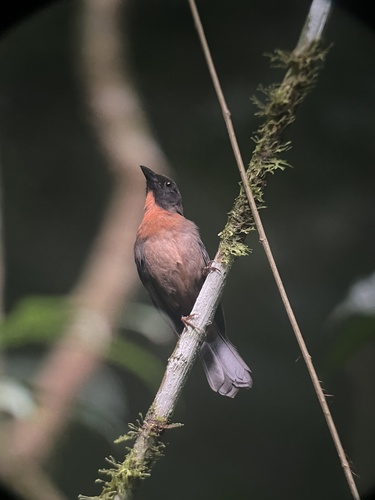
Black-cheeked Ant Tanager
Black-cheeked Ant TanagerRoger A. Morales-Flores · CC BY

Osa holds the largest lowland rainforest left on the Pacific coast of Central America, with Scarlet Macaws in flocks and Black-cheeked Ant-Tanager, which lives here and nowhere else. Corcovado entry requires a licensed local guide, and the lodges around Drake Bay and the Golfo Dulce are reached by boat or a rough road.

Look for: Scarlet Macaw, Black-cheeked Ant-Tanager, White-crested Coquette, Yellow-billed Cotinga

Also recorded in the parks here: Baird's Trogon, Black-striped Woodcreeper, Rufous Piha, Turquoise Cotinga, White-throated Shrike-Tanager, Black-faced Antthrush

National parks: Corcovado National Park, Piedras Blancas National Park

Stops: , the remote station at the heart of Corcovado, reached by boat and requiring a licensed guide and a booking , a pull-in on the road onto the peninsula, scanned at first light. The classic spot for Yellow-billed Cotinga over the mangroves , a public trail along the coast between the lodges, walked in either direction , ridge forest above the gulf, reached through the lodges that hold it. Black-cheeked Ant-Tanager country

Also covers: Drake Bay, Golfito, Piedras Blancas, Puerto Jiménez

Also watch for: All four Costa Rican monkey species live here, along with Baird's tapir and, with luck and patience, jaguar tracks. Humpback whales are in the Golfo Dulce from July to October and again from December to March.

Where to Stay12 places to stay

Every place to stay here either specialises in birding, holds a sustainability certification, or sits inside a protected area. What each certification actually means

Esquinas Rainforest Lodge

Golfo Dulce / Piedras Blancas · Mid-range

Community-owned lodge within Piedras Blancas NP; founded by Austrian NGO ‘Rainforest of the Austrians’; 100% profits to local community.

Birding lodge

A guided activity is included

$80 to $150/€69 to €130/£59 to £111 / night

Visit website See on a map

Playa Nicuesa Rainforest Lodge

Golfo Dulce / Osa · Mid-luxury

Reachable only by boat within Piedras Blancas NP, this lodge protects a 165-acre private rainforest reserve with organic gardens, solar power and marine and forest biodiversity monitoring, offering kayaking, snorkelling, birdwatching, dolphin watching and mangrove tours.

Birding lodge

Birding offered, charged separately

$180 to $350/€156 to €302/£133 to £259 / night

Visit website See on a map

La Paloma Lodge

Drake Bay / Corcovado · Luxury

One of Drake Bay's original eco-lodges, this hilltop property supports rainforest preservation and community programmes while offering Corcovado tours, snorkelling at Caño Island, whale watching, diving and birdwatching.

Birding lodge

A guided activity is included

$200 to $400/€173 to €346/£148 to £296 / night

Visit website See on a map

Aguila de Osa

Drake Bay / Corcovado · Luxury

Jungle-covered hillside overlooking Drake Bay; premier dive and sportfishing base for Osa/Caño Island.

Birding lodge

Birding offered, charged separately

$250 to $500/€216 to €432/£185 to £370 / night

Visit website See on a map

El Remanso Rainforest Lodge

Osa Peninsula · Luxury

Private rainforest reserve bordering Corcovado; tree climbing and waterfall rappelling experiences.

Birding lodge

A guided activity is included

$250 to $450/€216 to €389/£185 to £333 / night

Visit website See on a map

Cielo Lodge

Golfito / Southern Pacific · Luxury

6-suite boutique lodge in 380-acre protected forest in Golfito; 100% renewable energy powered.

Birding lodge

Birding offered, charged separately

$300 to $500/€259 to €432/£222 to £370 / night

Visit website See on a map

Playa Cativo Lodge

Golfito, Puntarenas · Luxury

Playa Cativo Lodge generates its own hydroelectric and solar power for a fully clean energy operation in Golfito, Puntarenas, Costa Rica, and grows much of what it serves on its own organic farm, sourcing the rest from local producers and small scale fishers.

A guided activity is included

$350 to $600/€302 to €518/£259 to £444 / night

Visit website See on a map
Day Tours and Local Operators1 tour

Boca Tapada

Lowland rainforest on the San Carlos river, in the far north

Keel-billed Toucan
Keel-billed ToucanBernard Gagnon · CC0

The most reliable place in the country for Great Green Macaw, which nests in the almendro trees along the river. Lodges here run photography hides and river trips, and the surrounding forest holds the Caribbean lowland list without the crowds at Sarapiqui and La Selva.

Not on the three itineraries above. Add two nights between Arenal and Sarapiqui. It is a long drive on gravel for the last stretch, so it works as a detour from La Fortuna rather than a stop on the way to anywhere.

Look for: Great Green Macaw, Great Curassow, Keel-billed Toucan, Snowy Cotinga, Semiplumbeous Hawk, Sunbittern, Rufous-winged Woodpecker

Parks and reserves: Maquenque National Wildlife Refuge (national wildlife refuge)

Stops: , a lodge and private reserve whose lagoon, almendro trees and feeder deck are open to day visitors. Great Green Macaw nests in season , a boat trip on the border river arranged through the lodges. Kingfishers, Sungrebe and Sunbittern from the water , a national wildlife refuge of lowland forest and lagoons, and the quietest Caribbean lowland birding on this page

Also watch for: Spectacled caiman in the lagoons, two-toed sloth in the lodge grounds, and a strong dart frog list on the trails. The area is quiet enough that mammals show themselves more readily than on the busier routes.

Where to Stay1 place to stay

Every place to stay here either specialises in birding, holds a sustainability certification, or sits inside a protected area. What each certification actually means

Maquenque Ecolodge

Boca Tapada, San Carlos, Alajuela

Maquenque Ecolodge, founded in 2009, is built around conservation of the Refugio de Vida Silvestre Maquenque in Boca Tapada, San Carlos, Alajuela, Costa Rica, employing more than 45 local families and sourcing local products for its operation.

Rate not published

Visit website See on a map

San Vito and Coto Brus

Highland forest and a botanical garden at 1,200 metres, near the Panama border

Turquoise Cotinga
Turquoise CotingaAnthony Mora Aguilar · CC BY 4.0

The Wilson Botanical Garden anchors the birding here, with a highland list that overlaps neither the Talamanca oak forest above nor the Osa lowlands below. Coto Brus is the stronghold for several species that are hard anywhere else in Costa Rica.

Not on the three itineraries above. Add two or three nights on the way south to The Osa Peninsula, Corcovado and Golfo Dulce, or as the far end of a southern loop. It is the longest drive on this page from San Jose, so it suits a trip of two weeks or more.

Look for: Turquoise Cotinga, White-crested Coquette, Silvery-throated Jay, Fiery-billed Aracari, Spot-crowned Euphonia, Marbled Wood Quail, Black-thighed Grosbeak

National park: La Amistad International Park

Stops: , a botanical garden and research station run by the Organization for Tropical Studies, with rooms, a restaurant and trails. The base almost everyone uses here , the block of primary forest behind the garden, on the same trail network. Chiriqui highland species , the farm where Alexander Skutch wrote his life's work, now a reserve open to visitors and run by the Tropical Science Center , marsh and pond edge below the town, a short drive for a completely different habitat

Also watch for: Agouti, coati and both squirrel species through the Wilson Botanical Garden, and the surrounding forest fragments hold olingo on night walks. Amphibians are at their most active from May to November.

Birding Community

Costa Rican birding runs through local clubs and guides. These are the national organisations to start with, and several run trips that visitors can join. Find a birding organisation near you in our worldwide directory

Live Cameras

Check out our worldwide database of live bird cameras.

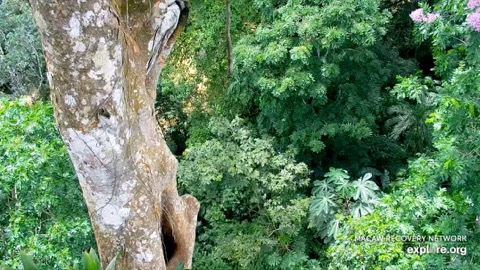
Great Green Macaw Nest stream preview LIVE

Great Green Macaw Nest

Macaw Recovery Network on explore.org

Nesting December to June; the cavity is monitored year round.

Macaw Recovery Network Feeder stream preview LIVE

Macaw Recovery Network Feeder

Macaw Recovery Network on explore.org

Streams all year at a macaw conservation site.

Toucan TV stream preview LIVE

Toucan TV

explore.org

Streams all year in rainforest canopy.

Preparation

The BeakBrain app Learn Costa Rica's birds by sight and sound before you fly, then keep them straight in the field. Learn these 979 birds before you fly

Frequently Asked Questions

When is the best time for birding in Costa Rica?

December to April brings dry Pacific weather with wintering migrants on top of the residents, and February to April is the heart of quetzal season. September and October are the Caribbean slope's calmest spell and carry the huge southbound raptor passage along that coast. The three seasons, and the best month for each headline bird.

Do I need a guide?

Costa Rica is one of the easiest countries in the tropics to bird independently: distances are short, the roads are good and the lodges are built for birders. A local guide will still find you far more, especially in cloud forest, and Corcovado National Park requires a licensed guide by law. Costa Rican operators selling day tours and guided birding. Your lodge is the other route to one: 10 of the 66 places to stay listed here include a guided activity in the rate, 21 offer birding as an activity you pay for separately, and 35 publish nothing either way, which each card prints rather than leaving blank.

Are the parks free to enter?

No. National parks charge foreign visitors an entry fee, and several also cap daily numbers and have to be booked ahead through SICORE, SINAC's own reservation system. Poas, Irazu, Rincon de la Vieja, Carara, Manuel Antonio, Chirripo, Tapanti, Los Quetzales and both Tortuguero sectors are all on that system. Corcovado additionally requires a licensed local guide. The private reserves that matter most to birders, Monteverde and La Selva among them, sit outside the state system and set their own fees and their own guide rules. Entry sits outside the room rate everywhere: of the 55 places to stay here that publish what the rate covers, none includes a park fee, so budget it per park per day and pay at the gate or through SICORE.

Can I drive myself, and do I need a 4x4?

Yes, and it is one of the pleasures of birding here. Main roads are good and distances are short. Almost everyone collects the car at Juan Santamaria airport outside San Jose, the SJO arrivals hall, where the international and Costa Rican firms all have desks; Liberia airport in the northwest is the other pickup point and suits a trip that starts in Guanacaste, Tenorio and the northern wetlands. Take a 4x4 for the steep approaches to Monteverde, the Dota valley and The Osa Peninsula, Corcovado and Golfo Dulce. Tortuguero is the exception: it is reached by boat or light aircraft, so arrange that transfer rather than driving to it. Mandatory local liability insurance is charged at the desk on top of the headline rate, so read the quote before you compare prices. If you would rather leave the driving to somebody else, ask the lodge when you book the room. 4 of the properties listed here state a transfer in the rate, and they are the ones reached by boat or light aircraft, where the journey is part of the stay. Everywhere else a lodge will book you onto a shared shuttle or arrange a private transfer, and the two networks that carry most of that traffic are named below.

What does a two week trip cost?

Thirteen nights, before international flights. These are the lines that move.

  • Lodges: $80 to $150 a night mid-range, $100 to $300 mid-luxury, $180 to $500 luxury, $400 to $1,000 ultra-luxury. That is per room, so a solo traveller carries the whole of it.
  • Car: A compact 4x4 runs $55 to $85 a day, about $770 to $1,190 for the fortnight.
  • Fuel: The classic loop is about 567 km, so one to two tanks. Under $100 for the trip.
  • Guides: A guided morning with a local guide is $25 to $95, and will find you far more than you will find alone.
  • Meals: Many mid-range lodges include all of them, which removes the food line entirely, so check before you budget for it.

At the mid-range tier that lands at roughly $2,000 to $3,600 for one person travelling alone, or $1,050 to $2,000 each for two sharing, because the room, the car and the fuel all split. A fully guided group trip is a different shape at $250 to $600 per person per day, so $3,500 to $8,400 each for the fortnight, with everything above already inside it. Every place to stay with its published nightly rate, inside its region.

How many species can I expect to see?

The national list stands at 944. A thorough two to three week trip tops 400 species, and even a relaxed week built around three or four lodges commonly passes 250. Every bird on this page carries a collector card.

Which birds are found only in Costa Rica?

Seven, and three of them live 550 kilometres offshore. On the mainland there are four. Coppery-headed Emerald is the one most trips get, on the Caribbean slope at middle elevations around The Central Highlands and again at Monteverde, and it comes to feeders. Cabanis's Ground Sparrow holds the Central Valley scrub and the coffee edges around Turrialba and the Pacuare Valley, which is the only region on this page that reliably has it. Black-cheeked Ant Tanager lives on The Osa Peninsula, Corcovado and Golfo Dulce and nowhere else on earth, so the Osa is the trip that gets it. Mangrove Hummingbird needs Pacific mangrove, and the stands at Guacalillo near Carara and the Tarcoles River and around the Golfo Dulce are where to look.

The other three, Cocos Cuckoo, Cocos Tyrannulet and Cocos Finch, live on Cocos Island alone. It is a national park 550 kilometres out in the Pacific, reached by a liveaboard dive boat over about 36 hours each way, and no birding itinerary on this page goes there. A four endemic mainland trip is the realistic target, and getting all four means the Osa, the Pacific mangroves and the Caribbean slope in one route, which is what the Full Sweep does.

Is it worth going out at night?

Yes, and it is the part of a Costa Rican trip most visitors skip. A night walk on lodge trails is how you get Pauraque off the track ahead of you, Great Potoo on a bare snag, and the owls that stay invisible by day: Spectacled Owl and Crested Owl in lowland forest, Black-and-white Owl around lit clearings and town edges, and Costa Rican Pygmy Owl calling in the middle of the afternoon on the Caribbean slope, which is the one that breaks the rule. Ask at the desk when you check in, because most lodges run a guided night walk on their own trails for a small fee and it is rarely advertised in advance.

Two hours after dusk is the window. Bring a head torch with a red setting, walk slowly, and let the guide use the light rather than sweeping it yourself. On playback, the private reserves and the state parks set their own rules and several ban it outright in the breeding season; a resident guide knows which, and at a feeder or a known nest the answer is to sit still instead.

What is an army ant swarm, and how do I find one?

It is the best thing that can happen to a morning in lowland forest. A swarm of army ants drives insects up out of the leaf litter and a following flock of birds takes them, which brings species down to eye level that are otherwise a rumour in the canopy. Ocellated Antbird, Bicolored Antbird and Spotted Antbird are the professionals that live off swarms, and Northern Barred Woodcreeper and Grey-headed Tanager join them. Sarapiqui and La Selva, Tortuguero, The Osa Peninsula, Corcovado and Golfo Dulce and Boca Tapada are where it happens most.

You find one by listening. The birds are noisy and the sound carries further than the ants do, so a guide who stops walking and turns their head is worth the fee for this alone. A swarm moves slowly enough to stay with for an hour. Stand still at the edge and let it come past you, because walking into it moves the birds and gets you bitten.

What should I bring?

Binoculars first, and 8x42 suits most people here: the forest is close and often dark, so bright, easy binoculars beat powerful ones. A telescope is worth carrying only for the Tarcoles boat and the Guanacaste, Tenorio and the Northern Wetlands wetlands, and you can happily travel without one. Rubber boots matter more than you would expect, and most lowland lodges lend them, so ask before buying. Rain gear that folds small beats a heavy coat, because the rain arrives in the afternoon and passes. Take a fleece and a hat for San Gerardo de Dota and the Talamanca Highlands, where the paramo sits above 3,000 metres and mornings start close to freezing.

The field guide is Garrigues and Dean, The Birds of Costa Rica: A Field Guide, which is the one guides in the country carry. Learning its plates before you fly makes a real difference. A head torch with a red setting, a dry bag for your optics on boat days, and insect repellent for the Caribbean lowlands finish the list.

Where does the bird photography happen?

At feeders, at hides and on the water, far more than on the trail. Lodge hummingbird feeders and fruit tables are set up for it across The Central Highlands, Monteverde and Turrialba and the Pacuare Valley, and several lodges run purpose-built hides where you pay for a half day sitting still. The Carara and the Tarcoles River boat and the Tortuguero canals both put you at eye level with herons and kingfishers from a stable platform, which is the shot a trail rarely gives you.

How accessible is birding here?

Much of the best birding in Costa Rica happens without a hard walk. A great deal of it is done from lodge feeders and balconies, from boats on the Tortuguero canals and the Tarcoles River, and from the car on quiet roads. Several reserves keep flat, well surfaced trails, and the hanging bridge circuits at Arenal and Monteverde are graded rather than stepped. The genuinely demanding parts are optional: the 500 steps down to the La Fortuna waterfall, the steeper highland trails above San Gerardo de Dota, and Corcovado, which is a long hike in heat. Cloud forest mornings are cold, so bring a layer. Boat and feeder based regions. For accessibility detail before you book, the Birdability Map records step free access, surface, gradient, seating and accessible toilets at birding sites; it is crowd sourced and much stronger in the United States than in Costa Rica, so treat a blank area as unrecorded rather than unsuitable, and ask the lodge directly. Their Access Considerations guide is the best list of questions to ask.

What are the visa and health requirements?

Entry rules depend on your nationality, so there is no single answer, but there are directories that cover every country. Many nationalities are admitted visa free for up to 180 days. Check yours against your own government travel advice, for example the UK FCDO entry requirements page, or a nationality aware tool such as Sherpa. For health, two directories publish a page for every destination and are free to read: CDC Travelers Health and TravelHealthPro. Routine vaccinations cover most travellers, and dengue precautions are worth taking in the lowlands.

How far ahead should I book?

The lodges that fill first are the small ones in the places birders want most. Monteverde and San Gerardo de Dota go earliest, and the peak window from December to April is the one that sells out, so aim to hold rooms three to six months ahead for a February or March trip. The green season from May to August is far more forgiving and can often be built a few weeks out. Guides book on the same rhythm as the lodges, so ask for a guide when you hold the room rather than after you arrive.

Can I do this without driving?

Yes, and plenty of birders do. Two networks cover it.

  • Shared shuttles: Door to door minibuses run between every place on this page, and Interbus holds a Costa Rica CST certification. Slower than driving and far cheaper than a private transfer.
  • Domestic flights: Sansa flies San Jose to Drake Bay, Puerto Jimenez, Tortuguero, Golfito, Quepos, Nosara and Tamarindo, which turns the long southern legs of the full sweep from a day of driving into under an hour.
  • Lodge transfers: Most lodges will arrange the pickup themselves, and for Tortuguero that is the only way in, so it is arranged for you either way.

The trade off is flexibility: roadside stops and dawn starts at your own pace are the reason most birders take the car.


Updated August 2026. Spotted an error, or run a Costa Rica operation that belongs here? Tell us.