Learn what every symbol on the card means.Full credits and sources at beakbrain.com/symbols
 ForestDomed nestMedium · 156 g
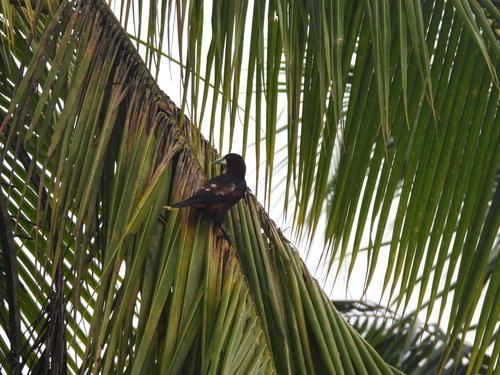
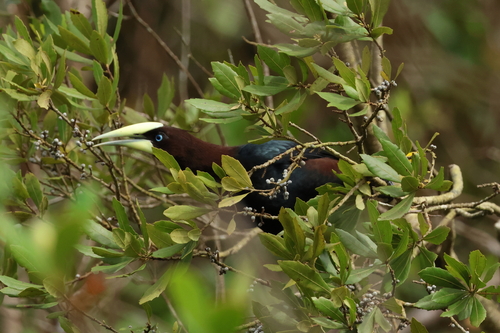
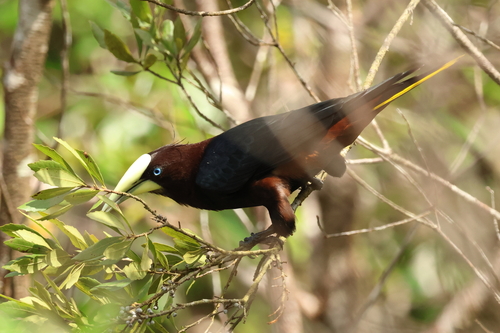
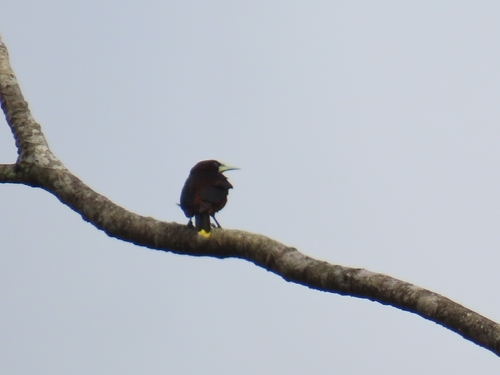
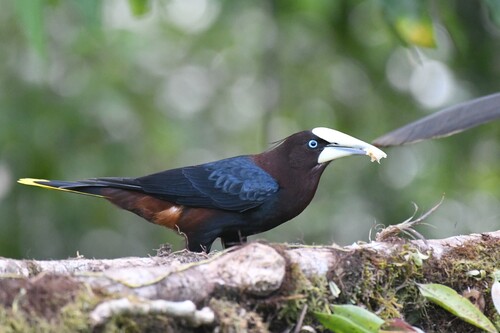
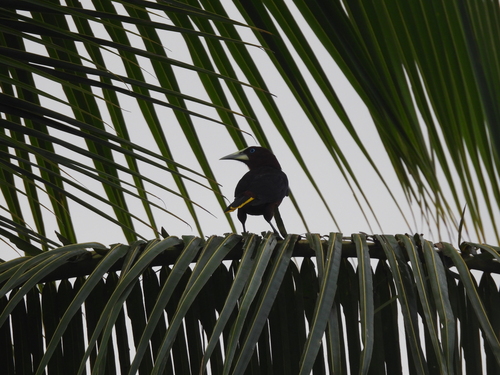
What the Chestnut-headed Oropendola sounds like


ID tip
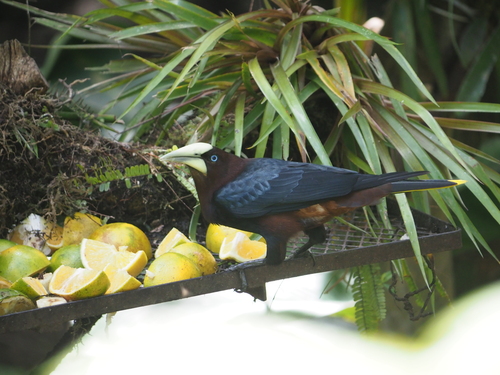
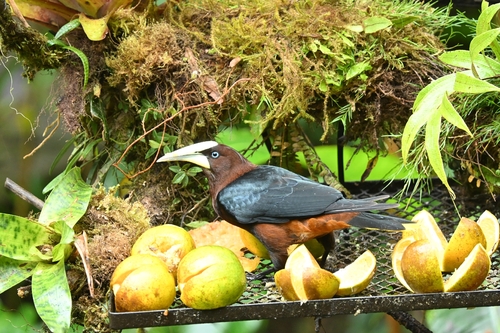
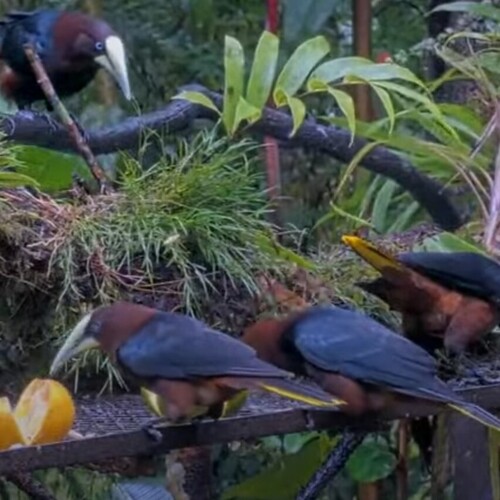
Chestnut-headed oropendola males average 35 cm (14 in) long and females 28 cm (11 in). Males weigh an average of 214 g (7.5 oz) and females 113 g (4.0 oz). The species looks very long-winged in flight. Males have a slight crest. Adult males of the nominate subspecies have a dark purplish chestnut head, throat, and upper breast. Their body and wings are mostly black with a bluish gloss. Their rump and uppertail coverts are dark chestnut and their rear flanks and undertail coverts a medium chestnut.
Text from Wikipedia, licensed CC BY-SA 4.0.
When to see the Chestnut-headed Oropendola
One bar for each month. Filled bars are the 11 months with records; pale bars are months with none. The wide bar is March, the month with the most records.
Where to see the Chestnut-headed Oropendola
The map shades 10 countries with regular records. Everything unshaded has no records. Countries are listed below the map.
About the Chestnut-headed Oropendola
The chestnut-headed oropendola is a species of bird in the family Icteridae, the oropendolas, New World orioles, and New World blackbirds. It is found in Mexico, in every Central American country except El Salvador, and in Colombia and Ecuador.
Text adapted from Wikipedia, licensed CC BY-SA 4.0.
Easily confused with
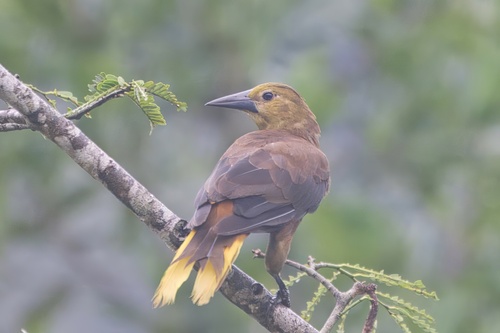 Russet-backed OropendolaPsarocolius angustifronsRusset-backed oropendola males are 44 to 48 cm (17 to 19 in) long and females 34 to 38 cm (13 to 15 in).
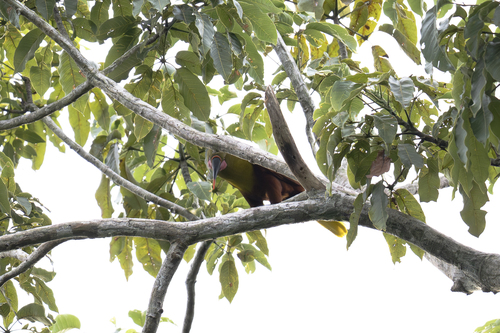 Olive OropendolaPsarocolius bifasciatusThe olive oropendola is the largest member of its genus.
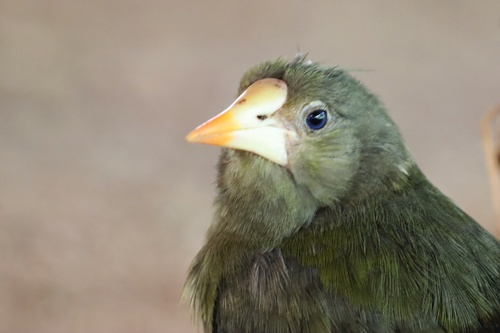 Green OropendolaPsarocolius viridisMale green oropendolas average 48.5 cm (19 in) long and females 37 cm (15 in).
Side by side: Chestnut-headed Oropendola vs Montezuma Oropendola · Chestnut-headed Oropendola vs Crested Oropendola · Chestnut-headed Oropendola vs Russet-backed Oropendola · Austral Blackbird vs Chestnut-headed Oropendola · Chestnut-headed Oropendola vs Olive Oropendola · Chestnut-headed Oropendola vs Green Oropendola
Learn the Chestnut-headed Oropendola in the BeakBrain App
Photo and call practice. Coming soon to iPhone and Android.
Play today's Daily BirdEvery photo and recording on this page is credited to its author under the licence shown. Spotted a problem with this page, or have a better photo? Contribute.