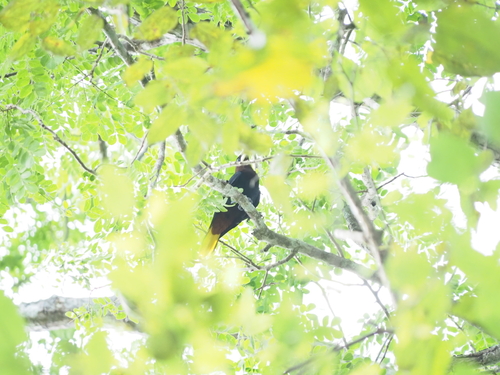
Chestnut-headed Oropendola
Psarocolius wagleri
Chestnut-headed oropendola males average 35 cm (14 in) long and females 28 cm (11 in). Males weigh an average of 214 g (7.5 oz) and females 113 g (4.0 oz). The species looks very long-winged in flight. Males have a slight crest. Adult males of the nominate subspecies have a dark purplish chestnut head, throat, and upper breast. Their body and wings are mostly black with a bluish gloss. Their rump and uppertail coverts are dark chestnut and their rear flanks and undertail coverts a medium chestnut.
ID text from Wikipedia, CC BY-SA 4.0

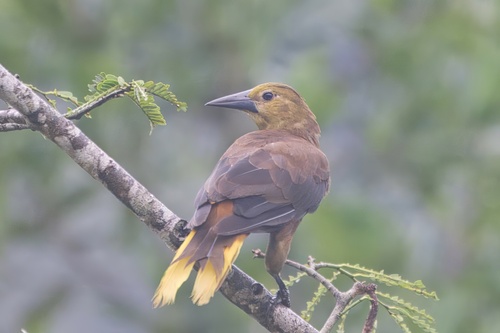
Russet-backed Oropendola
Psarocolius angustifrons
Russet-backed oropendola males are 44 to 48 cm (17 to 19 in) long and females 34 to 38 cm (13 to 15 in). Males weigh about 250 to 470 g (8.8 to 17 oz) and females about 170 to 230 g (6.0 to 8.1 oz). Adult males have long feathers on their nape that form a crest and females do not; their plumage is otherwise the same. Adult males of the nominate subspecies P. a. angustifrons have an olivaceous-brown head and a mostly brown body and wings with a russet tinge. Their rump and uppertail coverts are paler russet-brown.
ID text from Wikipedia, CC BY-SA 4.0

Where you might meet both
Learn this pair in the BeakBrain App
Photo and call practice. Coming soon to iPhone and Android.
Play today's Daily BirdPhotos and recordings are credited to their authors under the licence shown. Full profiles: Chestnut-headed Oropendola and Russet-backed Oropendola.