Learn what every symbol on the card means.Full credits and sources at beakbrain.com/symbols
 ForestDomed nestMedium · 272 g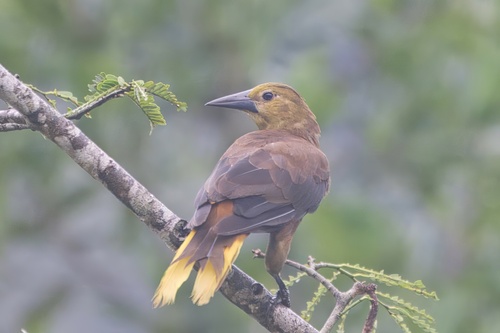
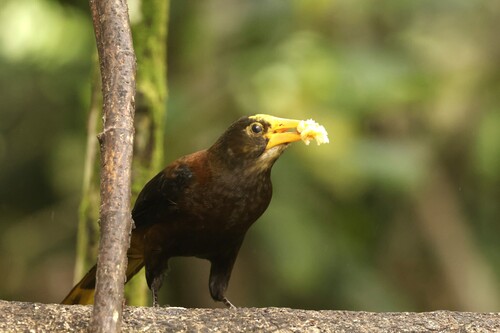
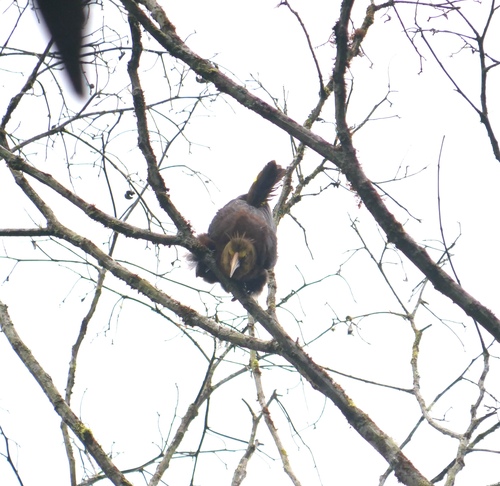
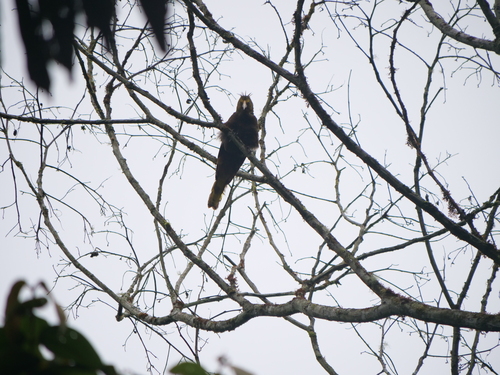


What the Russet-backed Oropendola sounds like


ID tip
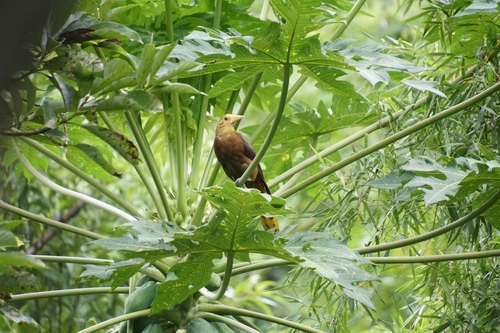
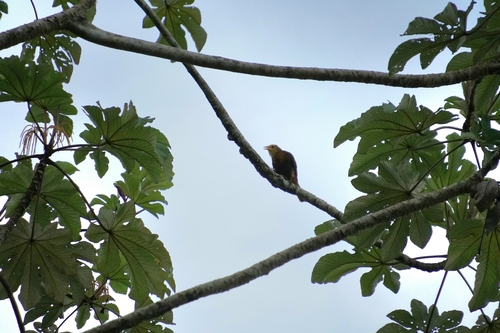
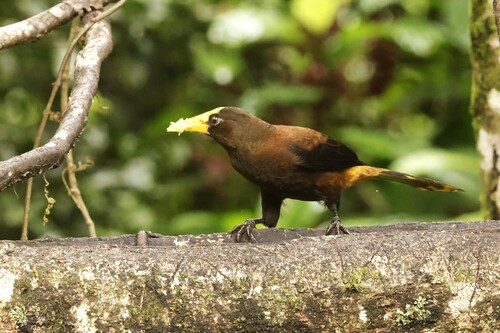
Russet-backed oropendola males are 44 to 48 cm (17 to 19 in) long and females 34 to 38 cm (13 to 15 in). Males weigh about 250 to 470 g (8.8 to 17 oz) and females about 170 to 230 g (6.0 to 8.1 oz). Adult males have long feathers on their nape that form a crest and females do not; their plumage is otherwise the same. Adult males of the nominate subspecies P. a. angustifrons have an olivaceous-brown head and a mostly brown body and wings with a russet tinge. Their rump and uppertail coverts are paler russet-brown.
Text from Wikipedia, licensed CC BY-SA 4.0.
When to see the Russet-backed Oropendola
One bar for each month, and every month is filled: this bird is recorded here in all twelve. The wide bar is October, the month with the most records.
Where to see the Russet-backed Oropendola
The map shades 6 countries with regular records. Everything unshaded has no records. Countries are listed below the map.
About the Russet-backed Oropendola
The russet-backed oropendola is a species of bird in the family Icteridae, the oropendolas, New World orioles, and New World blackbirds. It is found in Bolivia, Brazil, Colombia, Ecuador, Peru, and Venezuela. It is a "noisy and social bird that forages, nests, and roosts in groups".
Text adapted from Wikipedia, licensed CC BY-SA 4.0.
Easily confused with
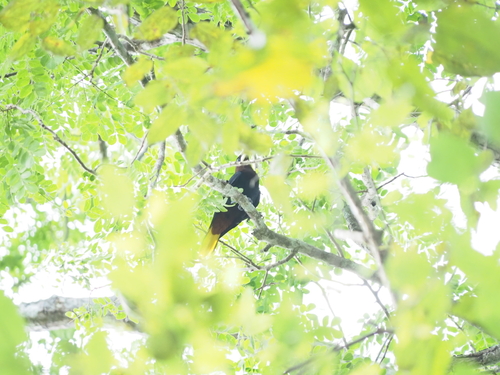 Chestnut-headed OropendolaPsarocolius wagleriChestnut-headed oropendola males average 35 cm (14 in) long and females 28 cm (11 in).
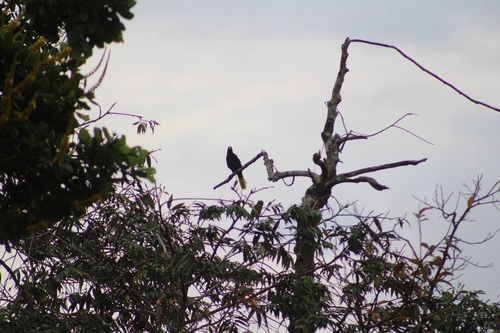 Crested OropendolaPsarocolius decumanusMale crested oropendolas of the nominate subspecies P. d. decumanus average 47 cm (19 in) long and females 37 cm (15 in).
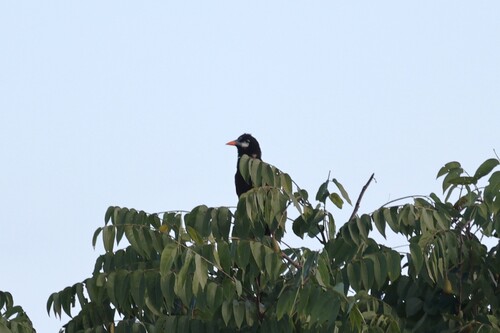 Montezuma OropendolaPsarocolius montezumaAdult males are mainly chestnut with a blackish head and rump, and a tail which is bright yellow apart from two dark central feathers.
Side by side: Montezuma Oropendola vs Russet-backed Oropendola · Crested Oropendola vs Russet-backed Oropendola · Chestnut-headed Oropendola vs Russet-backed Oropendola
Learn the Russet-backed Oropendola in the BeakBrain App
Photo and call practice. Coming soon to iPhone and Android.
Play today's Daily BirdEvery photo and recording on this page is credited to its author under the licence shown. Spotted a problem with this page, or have a better photo? Contribute.