Learn what every symbol on the card means.Full credits and sources at beakbrain.com/symbols
 ForestCup nestTiny · 5 g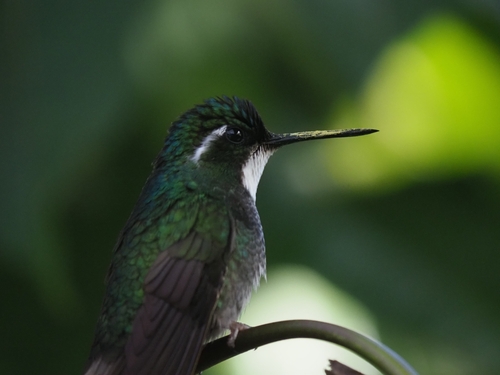
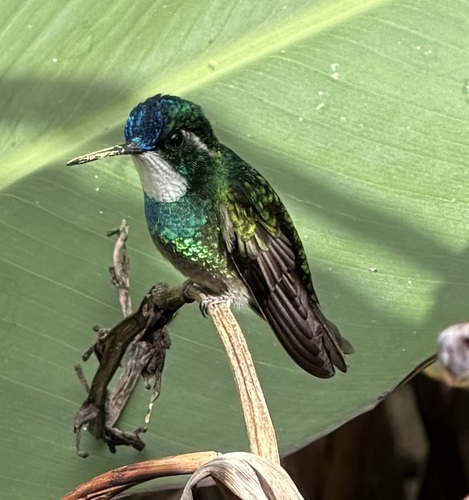
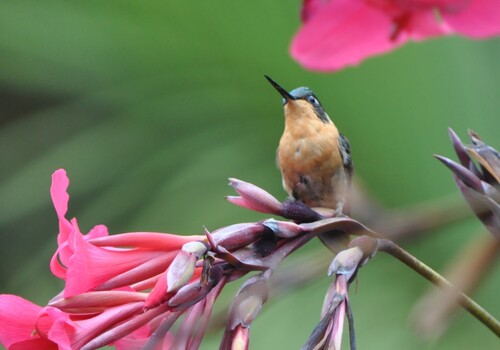
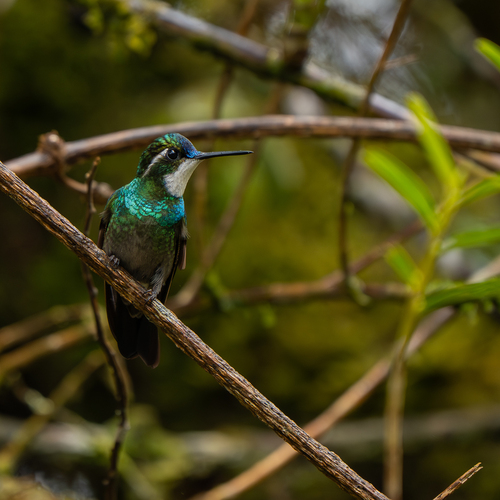
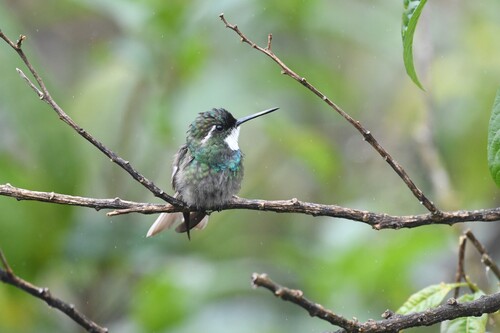
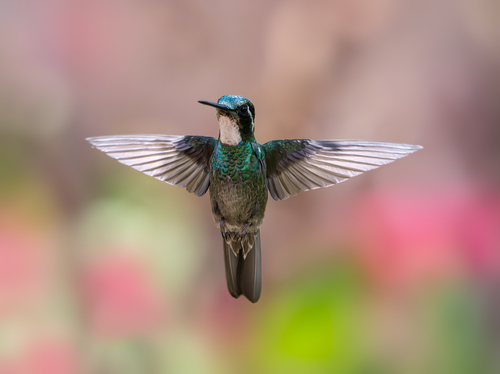

ID tip
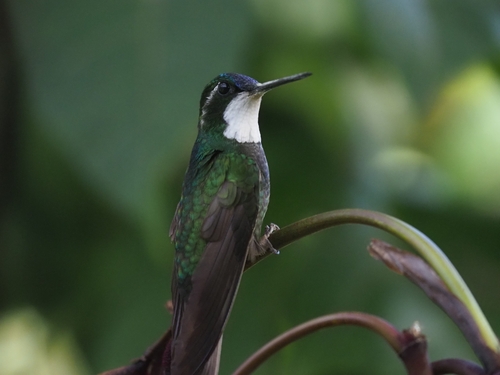
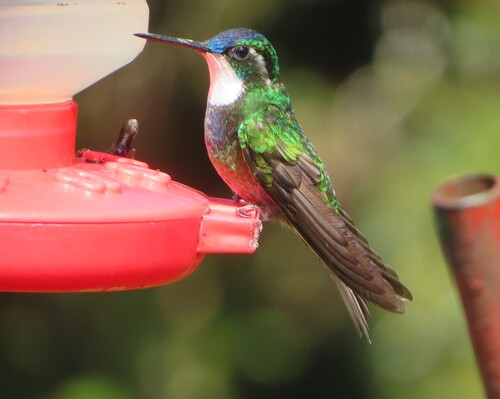
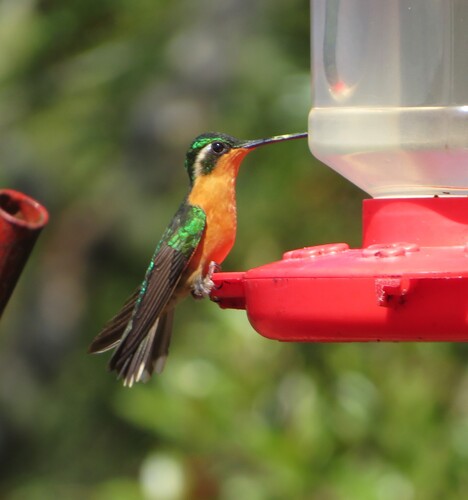
The grey-tailed mountaingem is about 12 cm (4.7 in) long and weighs about 5 to 6 g (0.18 to 0.21 oz). It has a medium-length straight black bill, dark cheeks, and a white stripe behind the eye. Males have mostly dark bronzy green upperparts with an emerald green crown and a black to bluish black tail. Their chin and throat are white, the sides of the neck and upper breast bright green, and the lower breast and vent area dark gray. Females have entirely bright green upperparts. Their central tail feathers are dark metallic to bronze green and the outer ones paler. Voice: The white-throated mountaingem makes high pitched calls described as "ziit or ziip" and also "a 'sputtery, bubbly' song".
Text from Wikipedia, licensed CC BY-SA 4.0.
When to see the White-throated Mountaingem
One bar for each month. Filled bars are the 10 months with records; pale bars are months with none. The wide bar is March, the month with the most records.
Where to see the White-throated Mountaingem
The map shades 2 countries with regular records. Everything unshaded has no records. Countries are listed below the map.
About the White-throated Mountaingem
The white-throated mountaingem or white-throated mountain-gem is a species of hummingbird in tribe Lampornithini of subfamily Trochilinae. It is endemic to the highlands of Costa Rica and Panama.
Text adapted from Wikipedia, licensed CC BY-SA 4.0.
Easily confused with
 Purple-throated MountaingemLampornis calolaemusThe purple-throated mountaingem is 10 to 11.5 cm (3.9 to 4.5 in) long and weighs 4.5 to 6 g (0.16 to 0.21 oz).
 Green-throated MountaingemLampornis viridipallensThe green-throated mountaingem is 11 to 12 cm (4.3 to 4.7 in) long and weighs about 5.4 g (0.19 oz).
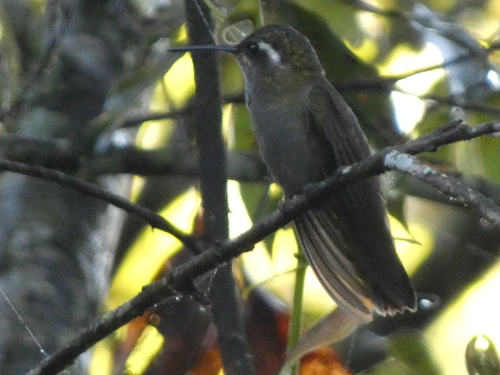 Amethyst-throated MountaingemLampornis amethystinusThe amethyst-throated mountaingem is 11.5 to 12.5 cm (4.5 to 4.9 in) long.
Side by side: Blue-throated Mountaingem vs White-throated Mountaingem · Purple-throated Mountaingem vs White-throated Mountaingem · Green-throated Mountaingem vs White-throated Mountaingem · Amethyst-throated Mountaingem vs White-throated Mountaingem
Learn the White-throated Mountaingem in the BeakBrain App
Photo and call practice. Coming soon to iPhone and Android.
Play today's Daily BirdEvery photo and recording on this page is credited to its author under the licence shown. Spotted a problem with this page, or have a better photo? Contribute.