Learn what every symbol on the card means.Full credits and sources at beakbrain.com/symbols
 WetlandCup nestMedium · 63 g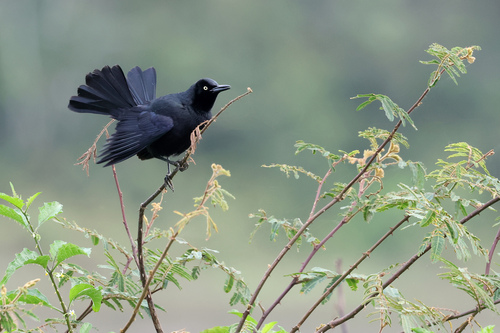
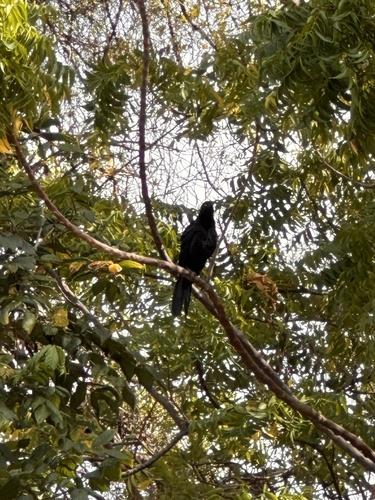


ID tip
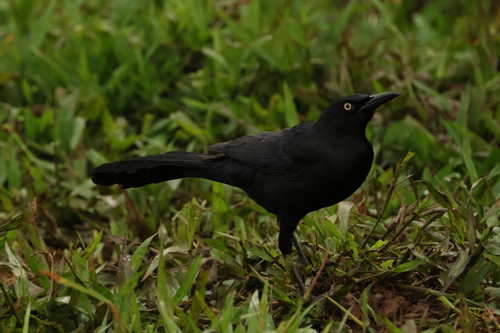
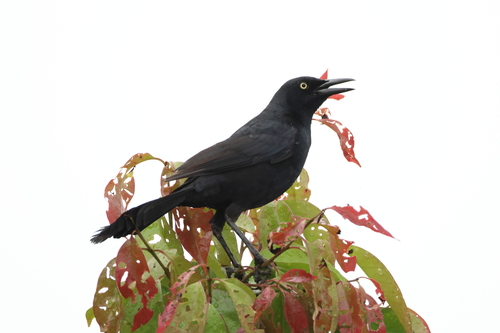
It is a medium-sized bird with a long, graduated tail and fairly long bill and legs. The bill and legs are black and the eye is pale yellow. The male is about 31 cm long while the female is 25 cm. The adult male's plumage is entirely black with an iridescent gloss. The gloss is violet on the belly and tail, violet-green on the head, back, and breast, and blue-green on most of the wings. The tail of the male is V-shaped, rising from the centre to the outer feathers. Immature males are duller and less glossy than the adults, with a brown belly and thighs.
Text from Wikipedia, licensed CC BY-SA 4.0.
When to see the Nicaraguan Grackle
One bar for each month. Filled bars are the 9 months with records; pale bars are months with none. The wide bar is March, the month with the most records.
Where to see the Nicaraguan Grackle
The map shades 2 countries with regular records. Everything unshaded has no records. Countries are listed below the map.
About the Nicaraguan Grackle
The Nicaraguan grackle is a species of passerine bird belonging to the genus Quiscalus, a genus of grackles in the New World blackbird family, Icteridae. It is found only in Nicaragua and northernmost Costa Rica.
Text adapted from Wikipedia, licensed CC BY-SA 4.0.
Easily confused with
 Greater Antillean GrackleQuiscalus nigerThe Greater Antillean grackle is 25 to 30 cm (9.8 to 12 in) long.
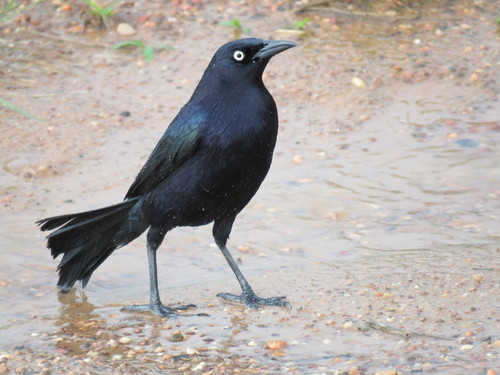 Carib GrackleQuiscalus lugubrisMale Carib grackles average 26 cm (10 in) long and females about 22 cm (8.7 in).
 Boat-tailed GrackleQuiscalus majorThe male boat-tailed grackle is 37–43 cm (15–17 in) long and weighs 165–250 g (5.8–8.8 oz).
Side by side: Boat-tailed Grackle vs Nicaraguan Grackle · Carib Grackle vs Nicaraguan Grackle · Greater Antillean Grackle vs Nicaraguan Grackle
Learn the Nicaraguan Grackle in the BeakBrain App
Photo and call practice. Coming soon to iPhone and Android.
Play today's Daily BirdEvery photo and recording on this page is credited to its author under the licence shown. Spotted a problem with this page, or have a better photo? Contribute.