Learn what every symbol on the card means.Full credits and sources at beakbrain.com/symbols
 RiverineScrapeMedium · 298 g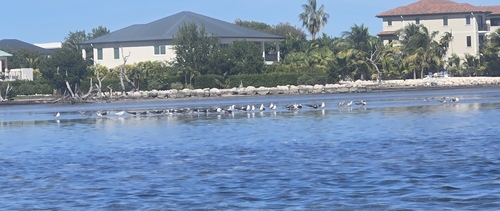
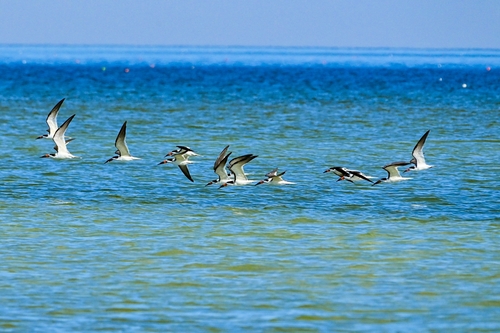
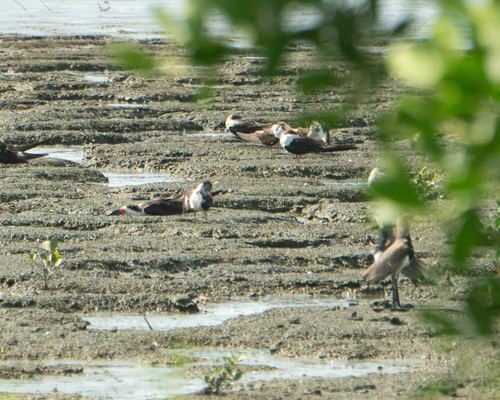
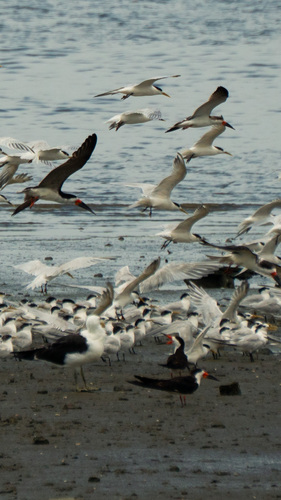


ID tip
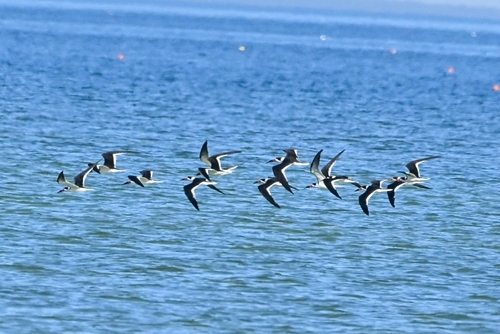
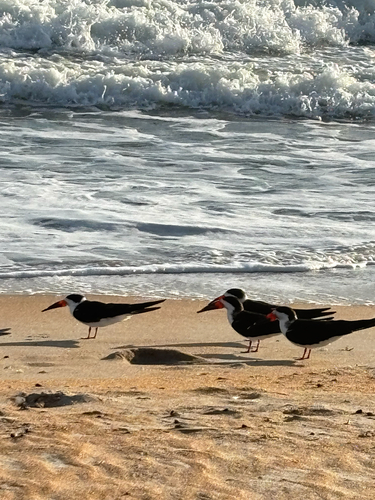
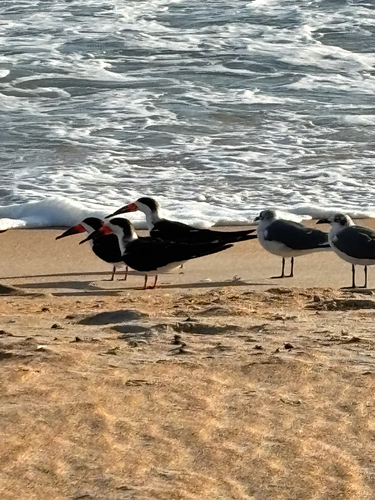
The black skimmer is the largest of the three skimmer species. It measures 40–50 cm (16–20 in) long with a 107–127 cm (42–50 in) wingspan. This species ranges from 212 to 447 g (7.5 to 15.8 oz), with males averaging about 349 g (12.3 oz), as compared to the smaller females 254 g (9.0 oz). The basal half of the bill is red, the rest mainly black, and the lower mandible is much-elongated. The eye has a dark brown iris and catlike vertical pupil, unique for a bird. The legs are red. The call is a barking kak-kak-kak. Adults in breeding plumage have a black crown, nape and upper body.
Text from Wikipedia, licensed CC BY-SA 4.0.
When to see the Black Skimmer
One bar for each month, and every month is filled: this bird is recorded here in all twelve. The wide bar is May, the month with the most records.
Where to see the Black Skimmer
The map shades 33 countries with regular records, and 5 more in a lighter tone where the bird turns up only as a stray. Everything unshaded has no records. Countries are listed below the map.
Recorded as a rare visitor in Canada, South Africa, St. Martin, Dominican Republic, Guadeloupe.
About the Black Skimmer
The black skimmer is a tern-like seabird, one of three similar bird species in the skimmer genus Rynchops in the gull family Laridae. It breeds in North and South America. Northern populations winter in the warmer waters of the Caribbean and the tropical and subtropical Pacific and Atlantic coasts, but South American populations make only shorter movements in response to annual floods which extend their feeding areas in the river shallows.
Text adapted from Wikipedia, licensed CC BY-SA 4.0.
Easily confused with
 African SkimmerRynchops flavirostrisAfrican skimmers have long wings, with a black back, hindneck, and crown.
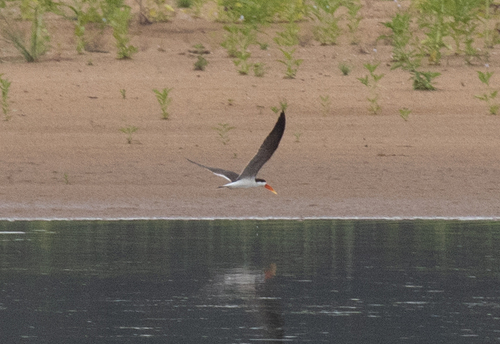
 Indian SkimmerRynchops albicollisThis bird has a black cap and orange bill that contrasts with the white body.
Side by side: African Skimmer vs Black Skimmer
Learn the Black Skimmer in the BeakBrain App
Photo and call practice. Coming soon to iPhone and Android.
Play today's Daily BirdEvery photo and recording on this page is credited to its author under the licence shown. Spotted a problem with this page, or have a better photo? Contribute.