Learn what every symbol on the card means.Full credits and sources at beakbrain.com/symbols
 WetlandPlatform nestLarge · 617 g


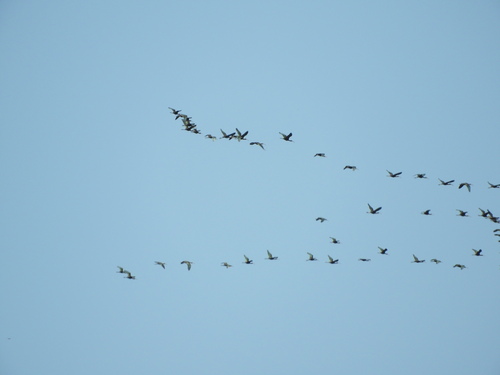
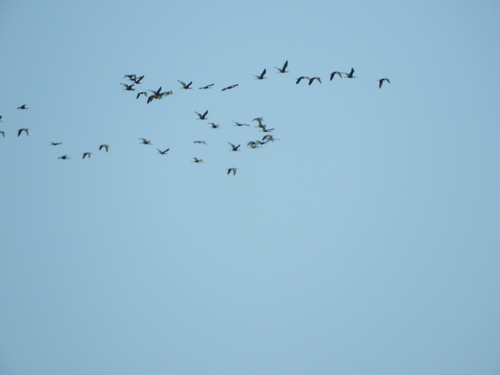
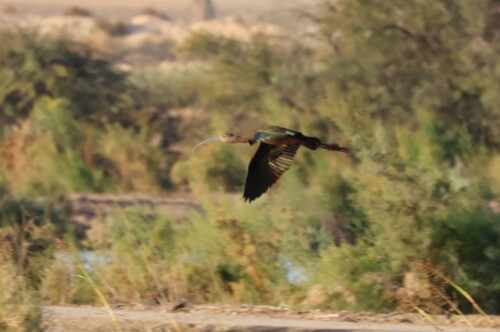

ID tip
In its non-breeding plumage, the white-faced ibis is very similar to the glossy ibis except that it tends to be slightly smaller and its plumage has a somewhat warmer color. Breeding adults have a pink, bare face bordered with white feathers (rather than a bluish bare face with no bordering feathers), a grey bill, and brighter-colored, redder legs. Adults have red eyes year-round, whereas glossy ibises have dark eyes. Juveniles of the two species are nearly identical. Measurements: Length: 18.1-22.1 in (46-56 cm) Weight: 15.9-18.5 oz (450-525 g) Wingspan: 35.4-36.6 in (90-93 cm)
Text from Wikipedia, licensed CC BY-SA 4.0.
When to see the White-faced Ibis
One bar for each month, and every month is filled: this bird is recorded here in all twelve. The wide bar is April, the month with the most records.
Where to see the White-faced Ibis
The map shades 16 countries with regular records, and 2 more in a lighter tone where the bird turns up only as a stray. Everything unshaded has no records. Countries are listed below the map.
Recorded as a rare visitor in Costa Rica, Colombia.
About the White-faced Ibis
The white-faced ibis is a wading bird in the ibis family, Threskiornithidae.
Text adapted from Wikipedia, licensed CC BY-SA 4.0.
Easily confused with
 Glossy IbisPlegadis falcinellusThis species is a mid-sized ibis.
 Puna IbisPlegadis ridgwayiThe puna ibis is a medium-sized waterbird, weighing 478–608 g (16.9–21.4 oz) and about 56–61 cm (22–24 in) tall.
Side by side: Glossy Ibis vs White-faced Ibis · Puna Ibis vs White-faced Ibis
Learn the White-faced Ibis in the BeakBrain App
Photo and call practice. Coming soon to iPhone and Android.
Play today's Daily BirdEvery photo and recording on this page is credited to its author under the licence shown. Spotted a problem with this page, or have a better photo? Contribute.