Learn what every symbol on the card means.Full credits and sources at beakbrain.com/symbols
 WetlandPlatform nestLarge · 627 g
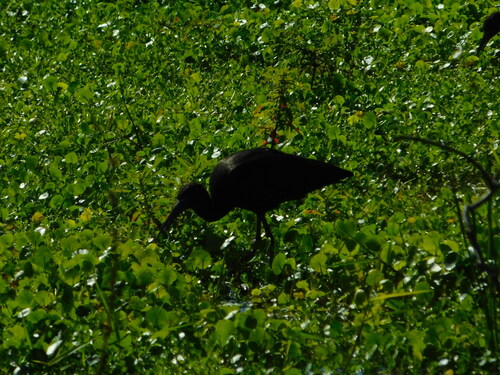
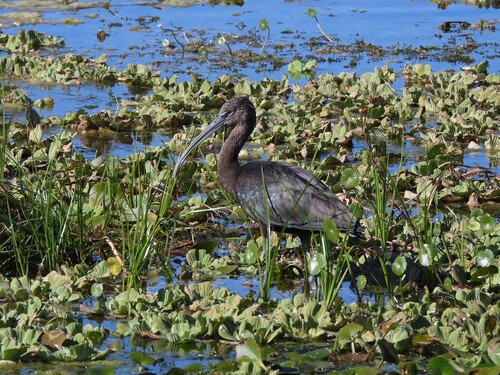
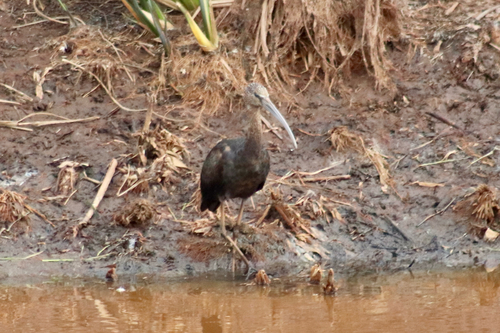
What the Glossy Ibis sounds like


ID tip
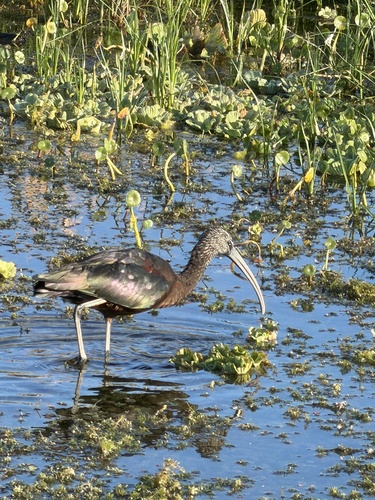
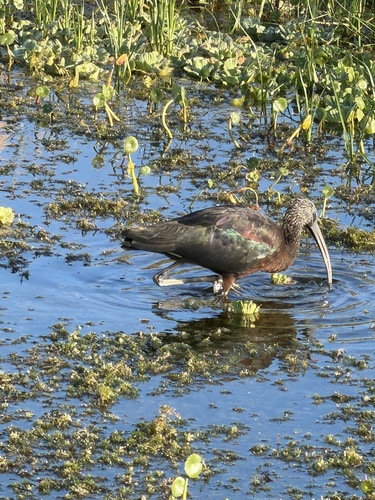
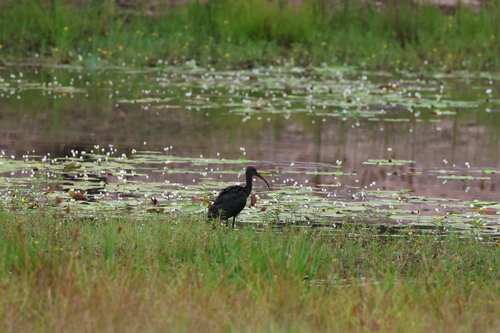
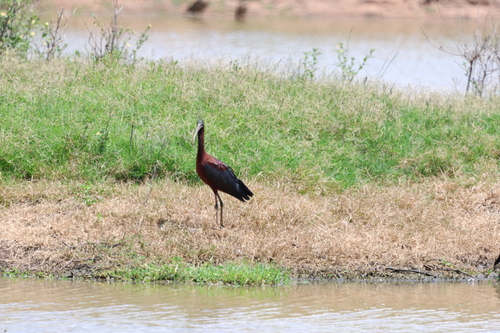
This species is a mid-sized ibis. It is 48–66 cm (19–26 in) long, averaging around 59.4 cm (23.4 in) with an 80–105 cm (31–41 in) wingspan. The culmen measures 9.7 to 14.4 cm (3.8 to 5.7 in) in length, each wing measures 24.8–30.6 cm (9.8–12.0 in), the tail is 9–11.2 cm (3.5–4.4 in) and the tarsus measures 6.8–11.3 cm (2.7–4.4 in). The weight can range from 485 to 970 g (1.069 to 2.138 lb). Breeding adults have reddish-brown bodies and strongly iridescent wing feathers, bottle-green to bronzed or purple depending on the light angle.
Text from Wikipedia, licensed CC BY-SA 4.0.
When to see the Glossy Ibis
One bar for each month, and every month is filled: this bird is recorded here in all twelve. The wide bar is May, the month with the most records.
Where to see the Glossy Ibis
The map shades 165 countries with regular records, and 9 more in a lighter tone where the bird turns up only as a stray. Everything unshaded has no records. Countries are listed below the map.
Recorded as a rare visitor in Finland, Japan, Libya, Guernsey, Isle of Man, Gambia, Anguilla, British Virgin Islands, St. Barthélemy.
About the Glossy Ibis
The glossy ibis is a water bird in the order Pelecaniformes and the ibis and spoonbill family Threskiornithidae. The scientific name derives from Ancient Greek plegados and Latin, falcis, both meaning "sickle" and referring to the distinctive shape of the bill.
Text adapted from Wikipedia, licensed CC BY-SA 4.0.
Easily confused with
 White-faced IbisPlegadis chihiIn its non-breeding plumage, the white-faced ibis is very similar to the glossy ibis except that it tends to be slightly smaller and its plumage has a somewhat warmer color.
 Puna IbisPlegadis ridgwayiThe puna ibis is a medium-sized waterbird, weighing 478–608 g (16.9–21.4 oz) and about 56–61 cm (22–24 in) tall.
Side by side: Glossy Ibis vs White-faced Ibis · Glossy Ibis vs Puna Ibis
Learn the Glossy Ibis in the BeakBrain App
Photo and call practice. Coming soon to iPhone and Android.
Play today's Daily BirdEvery photo and recording on this page is credited to its author under the licence shown. Spotted a problem with this page, or have a better photo? Contribute.