Learn what every symbol on the card means.Full credits and sources at beakbrain.com/symbols
 ShrublandCavity nestSmall · 49 g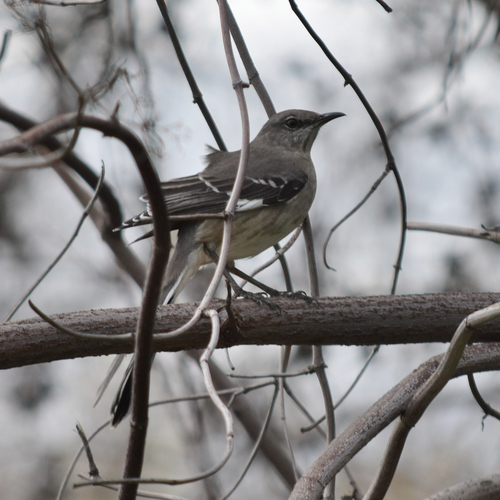
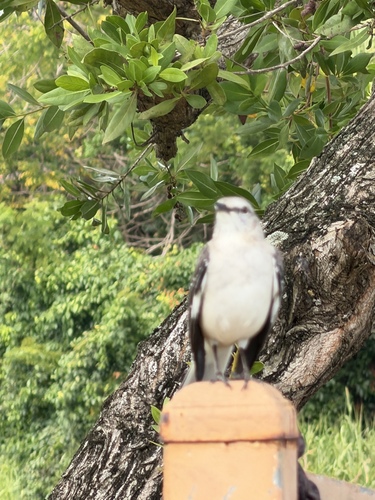
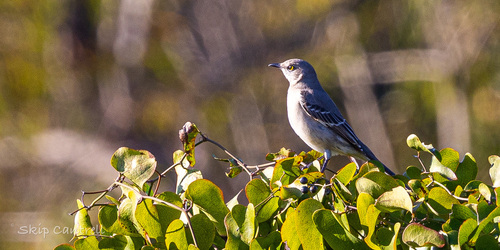
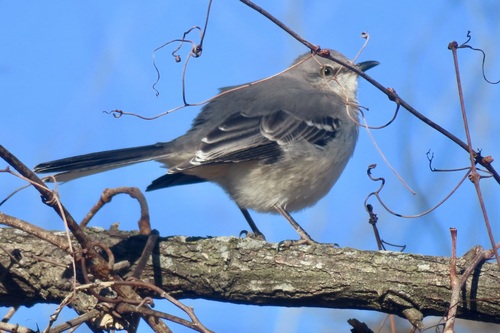
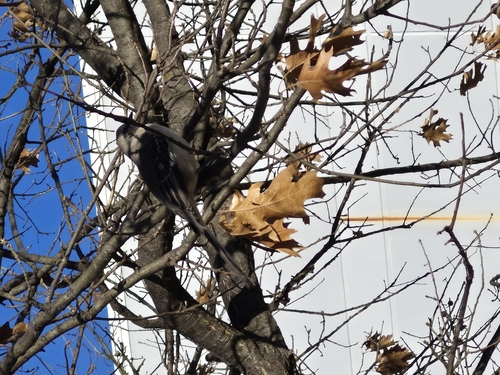
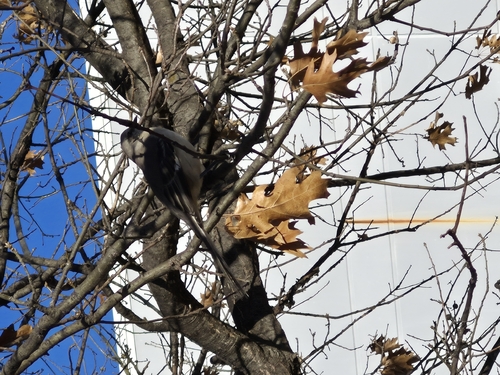
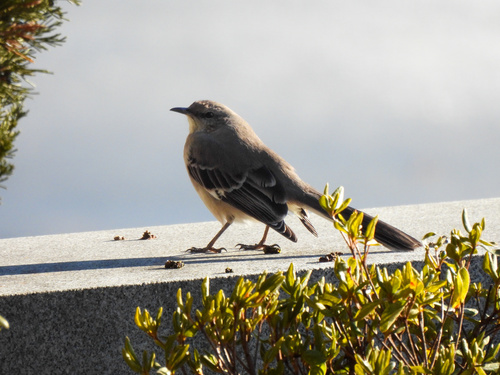
What the Northern Mockingbird sounds like


ID tip
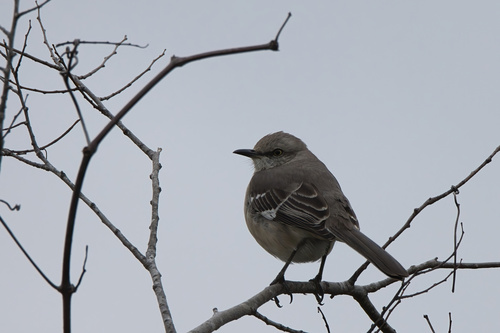
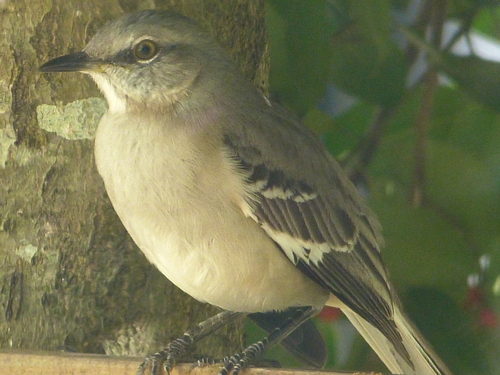
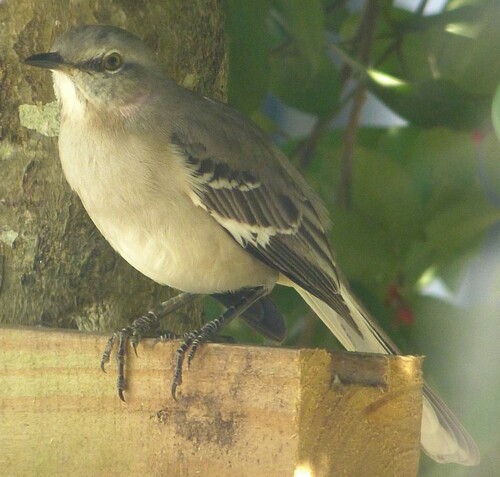
The northern mockingbird is a medium-sized mimid that has long legs and tail. Males and females look alike. Its upper parts are colored gray, while its underparts have a white or whitish-gray color. It has parallel wing bars on the half of the wings connected near the white patch giving it a distinctive appearance in flight. The black central rectrices and typical white lateral rectrices are also noticeable in flight. The iris is usually a light green-yellow or a yellow, but there have been instances of an orange color. The bill is black with a brownish black appearance at the base. Voice: Although many species of bird imitate the vocalizations of other birds, the northern mockingbird is the species best known in North America for doing so.
Text from Wikipedia, licensed CC BY-SA 4.0.
When to see the Northern Mockingbird
One bar for each month, and every month is filled: this bird is recorded here in all twelve. The wide bar is April, the month with the most records.
Where to see the Northern Mockingbird
The map shades 17 countries with regular records, and 5 more in a lighter tone where the bird turns up only as a stray. Everything unshaded has no records. Countries are listed below the map.
Recorded as a rare visitor in United Kingdom, Belize, Spain, Costa Rica, Honduras.
About the Northern Mockingbird
The northern mockingbird is a mockingbird commonly found in North America, of the family Mimidae. The species is also found in some parts of the Caribbean, as well as on the Hawaiian Islands. It is typically a permanent resident across much of its range, but northern mockingbirds may move farther south during inclement weather or prior to the onset of winter. The northern mockingbird has gray to brown upper feathers and a paler belly. Its tail and wings have white patches which are visible in flight.
Text adapted from Wikipedia, licensed CC BY-SA 4.0.
Easily confused with
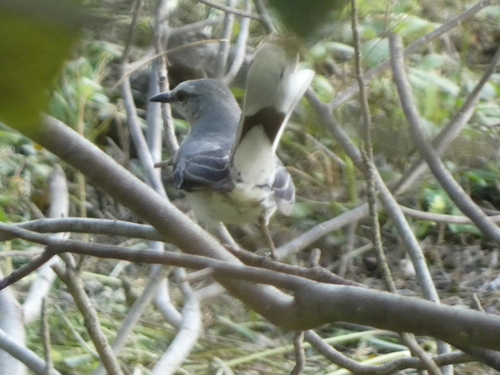 Tropical MockingbirdMimus gilvusAdult tropical mockingbirds are 23 to 25.5 cm (9.1 to 10.0 in) long.
 Chalk-browed MockingbirdMimus saturninusThe chalk-browed mockingbird is 23.5 to 26 cm (9.3 to 10.2 in) long and weighs 55 to 73 g (1.9 to 2.6 oz).
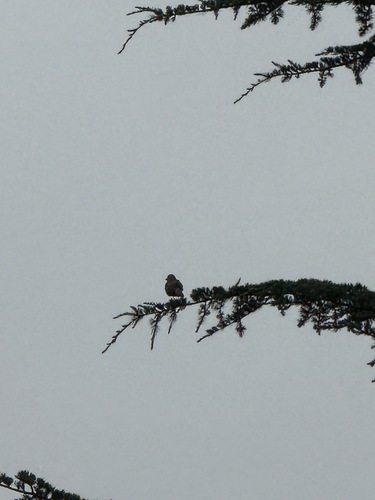 Chilean MockingbirdMimus thencaThe Chilean mockingbird is 28 to 29 cm (11.0 to 11.4 in) long and weighs 66 g (2.3 oz).
Side by side: Grey Catbird vs Northern Mockingbird · Northern Mockingbird vs Tropical Mockingbird · Chalk-browed Mockingbird vs Northern Mockingbird · Chilean Mockingbird vs Northern Mockingbird
Learn the Northern Mockingbird in the BeakBrain App
Photo and call practice. Coming soon to iPhone and Android.
Play today's Daily BirdEvery photo and recording on this page is credited to its author under the licence shown. Spotted a problem with this page, or have a better photo? Contribute.