Learn what every symbol on the card means.Full credits and sources at beakbrain.com/symbols
 ForestCup nestSmall · 19 g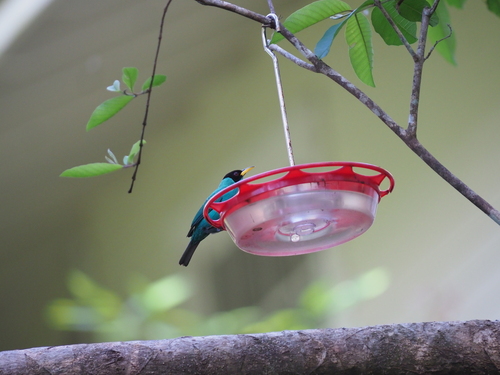


What the Green Honeycreeper sounds like

ID tip
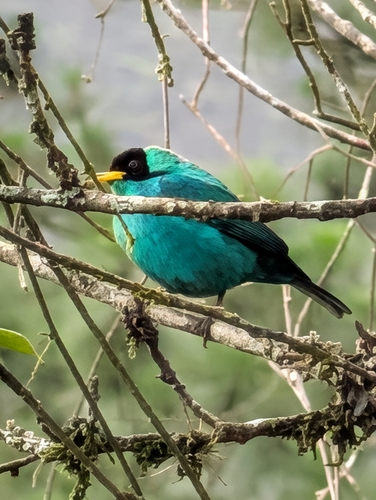
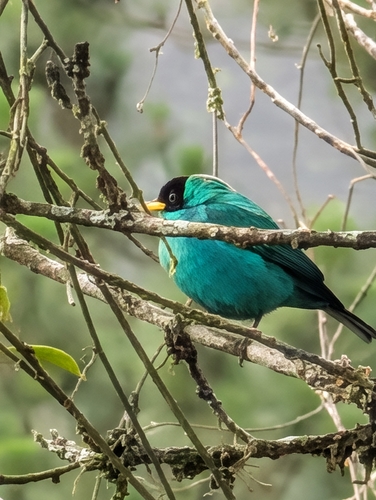
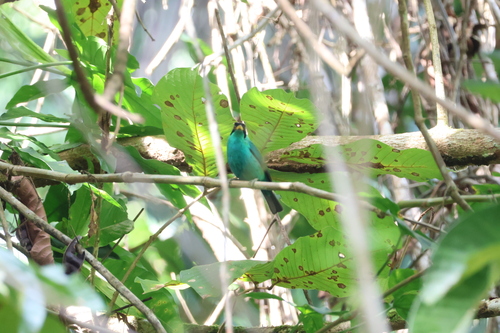
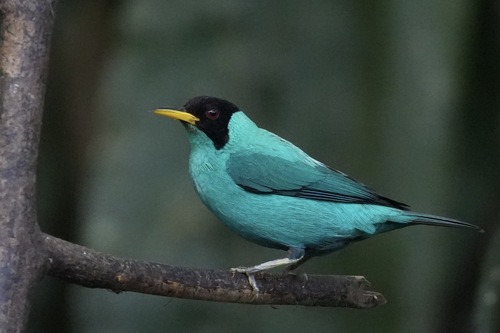
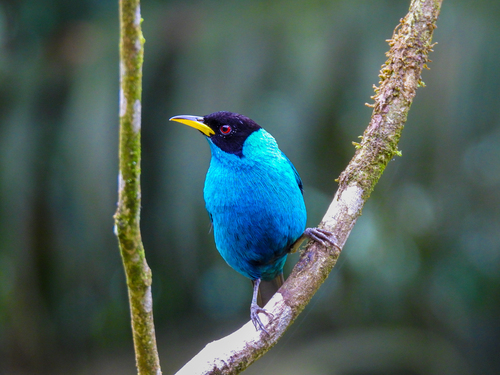
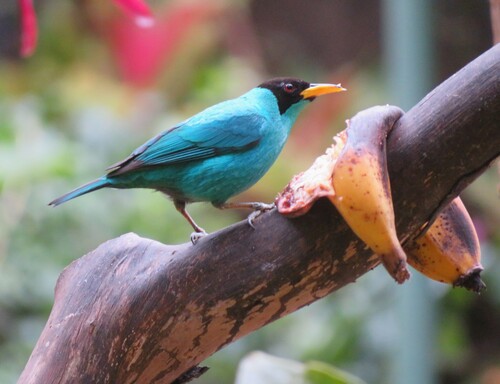
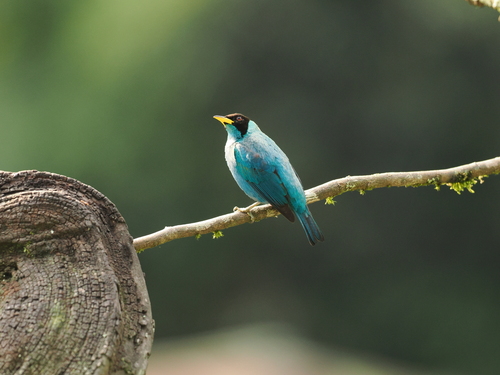
The green honeycreeper is 13–14 cm (5.1–5.5 in) long and weighs 14 to 23 grams (0.49 to 0.81 oz), averaging about 19 grams (0.67 oz). It has a long decurved bill. The male is mainly blue-tinged green with a black head and a mostly bright yellow bill. The female green honeycreeper is grass-green, paler on the throat, and lacks the male's iridescence and black head. Immatures are plumaged similarly to females. The call is a sharp chip.
Text from Wikipedia, licensed CC BY-SA 4.0.
When to see the Green Honeycreeper
One bar for each month, and every month is filled: this bird is recorded here in all twelve. The wide bar is March, the month with the most records.
Where to see the Green Honeycreeper
The map shades 17 countries with regular records. Everything unshaded has no records. Countries are listed below the map.
About the Green Honeycreeper
The green honeycreeper is a small bird in the tanager family. It is found in the tropical New World from southern Mexico south to Brazil, and on Trinidad. It is the only member of the genus Chlorophanes.
Text adapted from Wikipedia, licensed CC BY-SA 4.0.
Easily confused with
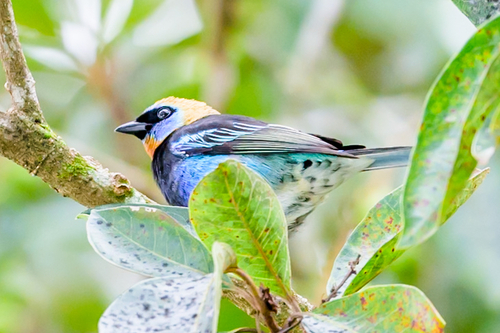 Golden-hooded TanagerStilpnia larvataThe golden-hooded tanager is a medium-sized passerine bird.
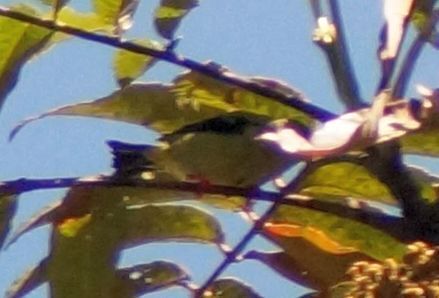 Red-legged HoneycreeperCyanerpes cyaneusThe red-legged honeycreeper is on average 12.2 cm (4.8 in) long, weighs 14 g (0.49 oz) and has a medium-long black, slightly decurved, bill.
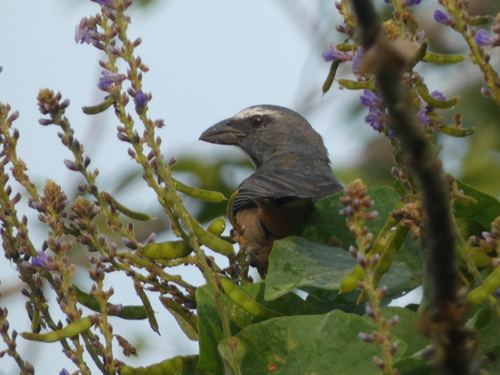 Cinnamon-bellied SaltatorSaltator grandisThe cinnamon-bellied saltator or northern grey saltator is a passerine bird in the tanager family Thraupidae.
Side by side: Green Honeycreeper vs Red-legged Honeycreeper
Learn the Green Honeycreeper in the BeakBrain App
Photo and call practice. Coming soon to iPhone and Android.
Play today's Daily BirdEvery photo and recording on this page is credited to its author under the licence shown. Spotted a problem with this page, or have a better photo? Contribute.