Learn what every symbol on the card means.Full credits and sources at beakbrain.com/symbols
 ForestCavity nestSmall · 57 g


ID tip
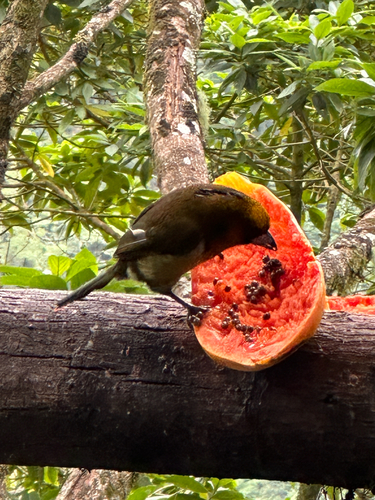
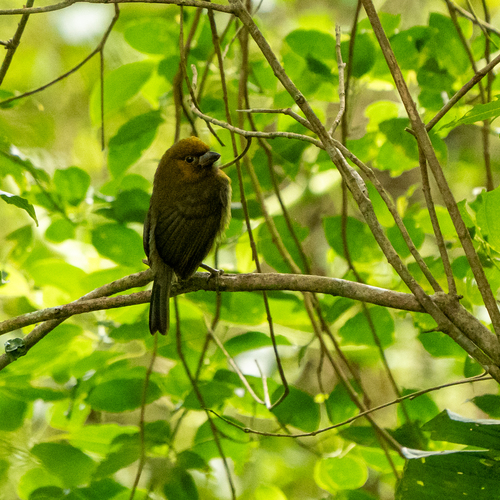
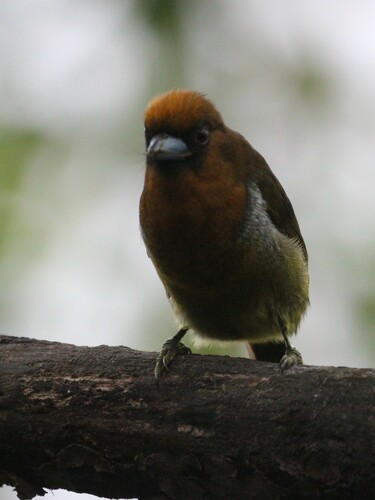
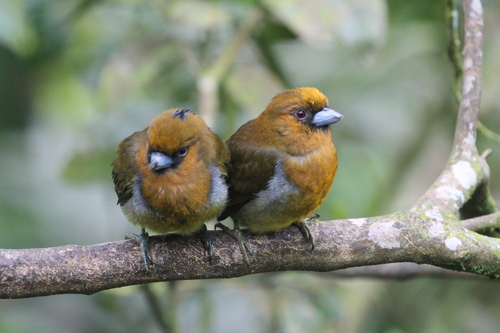
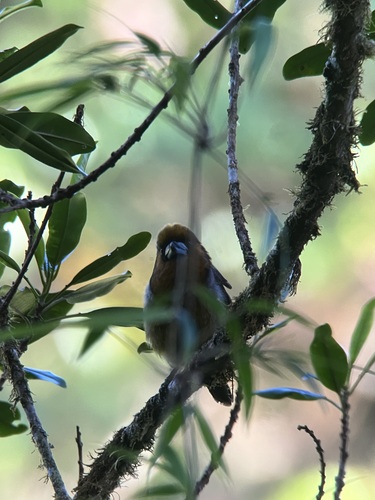
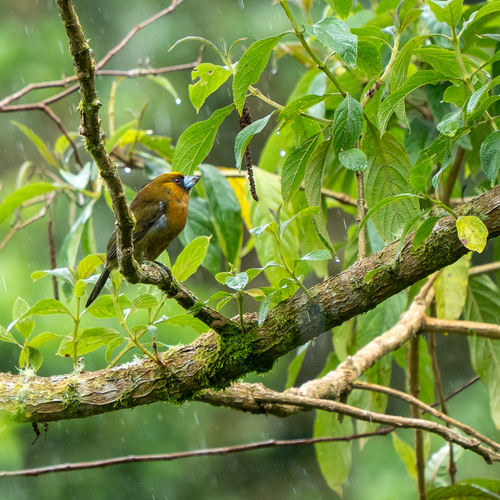
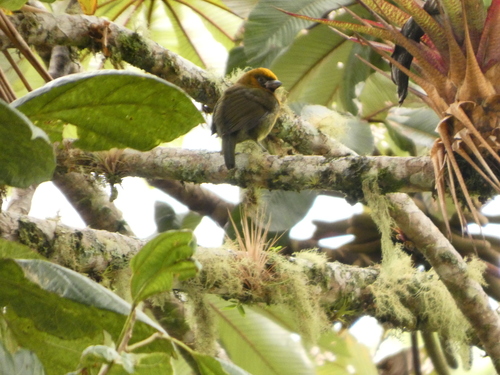
The prong-billed barbet is 17 to 18.5 cm (6.7 to 7.3 in) long and weighs about 60 to 70 g (2.1 to 2.5 oz). Its bill is silvery gray to bluish with a dark tip; a notch on the tip of the mandible provides its English name. The maxilla has a hooked tip and a notch on the side. Adults have a dull golden brown crown, brownish olive nape and upper back, and olive green lower back, rump, and uppertail coverts. Males have a glossy black tuft of feathers at the rear of the crown; females lack it. Both sexes have dull slaty black lores, cheeks, and chin. Voice: The prong-billed barbet's song has been described as "a deep cwa-cwa-cwa-cwa...repeated many times" and as "a resonant, far-carrying, rather throaty cwa-cwa-cwa-cwa". Both sexes sing, frequently in duet, and also in a "chorus" by several birds.
Text from Wikipedia, licensed CC BY-SA 4.0.
When to see the Prong-billed Barbet
One bar for each month, and every month is filled: this bird is recorded here in all twelve. The wide bar is March, the month with the most records.
Where to see the Prong-billed Barbet
The map shades 2 countries with regular records. Everything unshaded has no records. Countries are listed below the map.
About the Prong-billed Barbet
The prong-billed barbet is a distinctive, relatively large-billed bird native to humid highland forest of Costa Rica and western Panama.
Text adapted from Wikipedia, licensed CC BY-SA 4.0.
Easily confused with

Side by side: Prong-billed Barbet vs Toucan Barbet
Learn the Prong-billed Barbet in the BeakBrain App
Photo and call practice. Coming soon to iPhone and Android.
Play today's Daily BirdEvery photo and recording on this page is credited to its author under the licence shown. Spotted a problem with this page, or have a better photo? Contribute.