Learn what every symbol on the card means.Full credits and sources at beakbrain.com/symbols
 WoodlandScrapeSmall · 58 g


What the Pauraque sounds like


ID tip
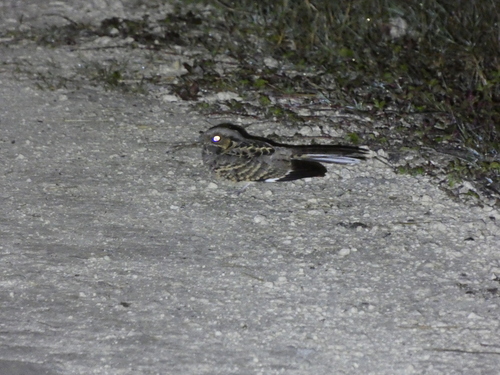
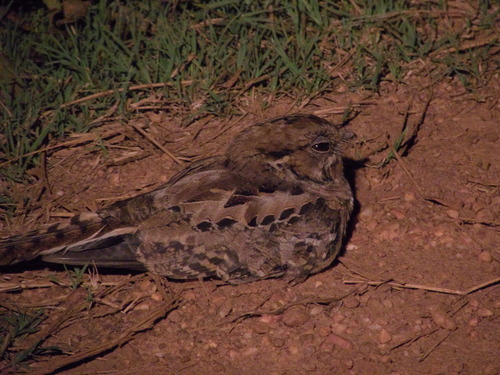
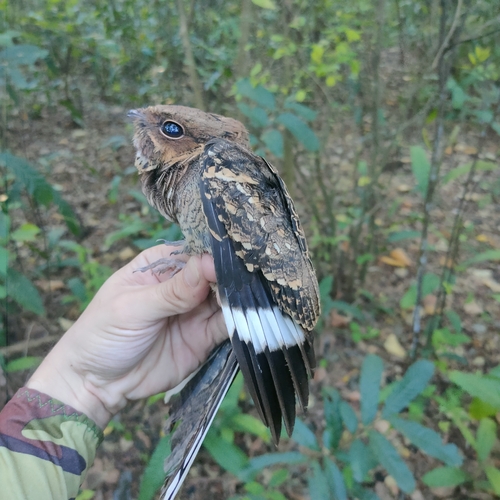
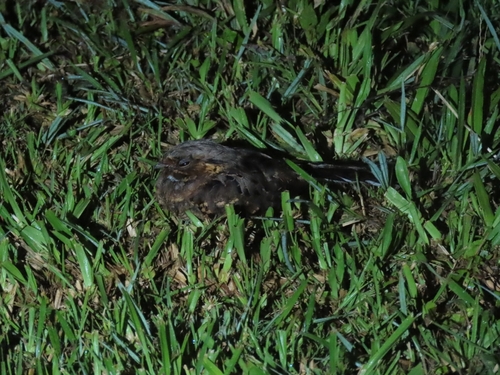
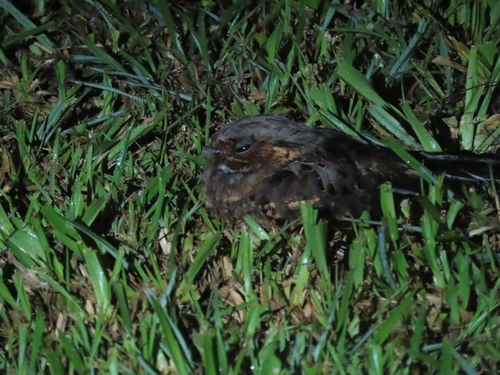
This medium-sized nightjar is 8.7–11 in (22–28 cm) long and has two colour morphs, the plumage being variegated greyish-brown or rufous-brown. It is long-tailed and has broad rounded wings. The buff 'eye-ring' and 'facial stripe' contrast with the reddish sides of the face. The adult male pauraque has a white band near the wing tips, and the outer tail feathers are mainly white. The female's wing band is narrower and the white in the outer tail is more restricted. There are seven subspecies of the pauraque, differing in size and greyness.
Text from Wikipedia, licensed CC BY-SA 4.0.
When to see the Pauraque
One bar for each month, and every month is filled: this bird is recorded here in all twelve. The wide bar is March, the month with the most records.
Where to see the Pauraque
The map shades 22 countries with regular records. Everything unshaded has no records. Countries are listed below the map.
About the Pauraque
The pauraque – also called the common pauraque to distinguish it from similar species – is a nightjar species, one of two birds in the genus Nyctidromus. It breeds in the subtropical and tropical regions of the New World, and except for northernmost birds it is largely resident all year round.
Text adapted from Wikipedia, licensed CC BY-SA 4.0.
Easily confused with
Learn the Pauraque in the BeakBrain App
Photo and call practice. Coming soon to iPhone and Android.
Play today's Daily BirdEvery photo and recording on this page is credited to its author under the licence shown. Spotted a problem with this page, or have a better photo? Contribute.