Learn what every symbol on the card means.Full credits and sources at beakbrain.com/symbols
 ForestCup nestSmall · 27 g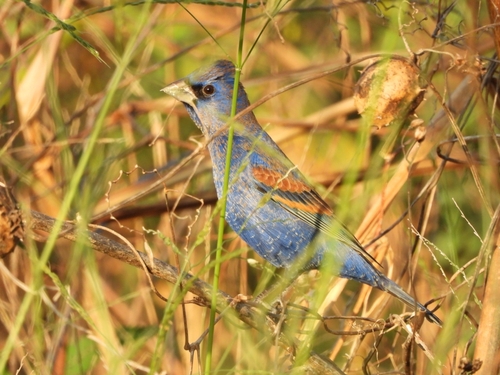


What the Blue Grosbeak sounds like

ID tip
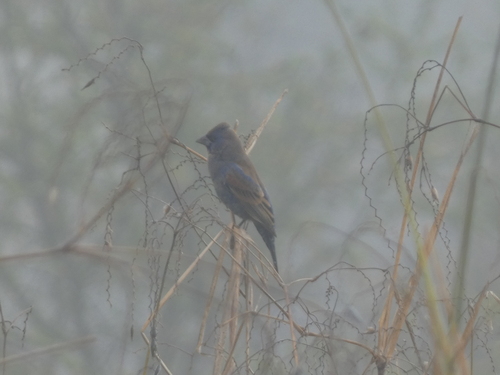
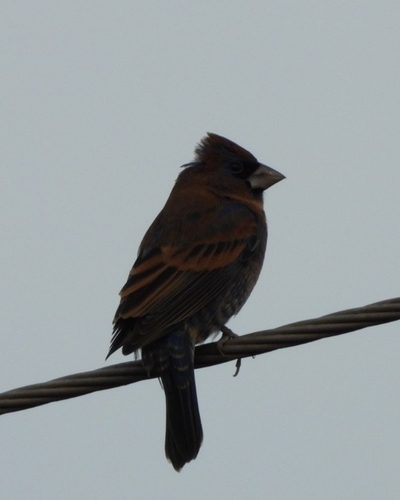
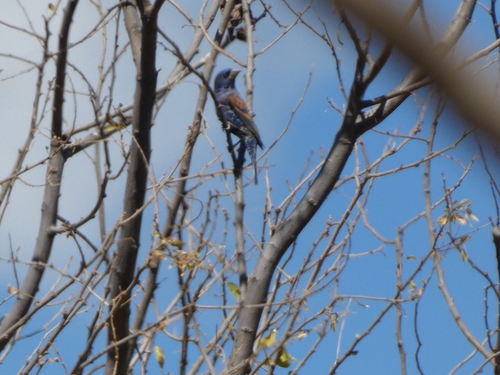
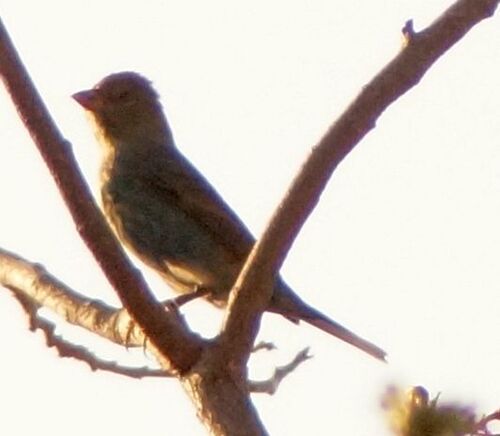
The male blue grosbeak is deep blue, with both black and brown on its wings. The female is mostly brown. Both sexes are distinguished by their large, deep bill and double wing bars. These features, as well as the grosbeak's relatively larger size, distinguish this species from the indigo bunting. Length can range from 14 to 19 cm (5.5 to 7.5 in) and wingspan is from 26 to 29 cm (10 to 11 in). Body mass is typically from 26 to 31.5 g (0.92 to 1.11 oz).
Text from Wikipedia, licensed CC BY-SA 4.0.
When to see the Blue Grosbeak
One bar for each month. Filled bars are the 6 months with records; pale bars are months with none. The wide bar is May, the month with the most records.
Where to see the Blue Grosbeak
The map shades 24 countries with regular records, and 3 more in a lighter tone where the bird turns up only as a stray. Everything unshaded has no records. Countries are listed below the map.
About the Blue Grosbeak
The blue grosbeak is a medium-sized North American passerine bird in the cardinal family Cardinalidae. It is mainly migratory, wintering in Central America and breeding in northern Mexico and the southern United States. The male is blue with two brown wing bars. The female is mainly brown with scattered blue feathers on the upperparts and two brown wing bars.
Text adapted from Wikipedia, licensed CC BY-SA 4.0.
Easily confused with
 Lazuli BuntingPasserina amoenaMeasurements:
Length: 5.1–5.9 in (13–15 cm)
Weight: 0.5–0.6 oz (13–18 g)
Wingspan: 8.7 in (22 cm)
The male is easily recognized by its bright blue head and back (lighter than the closely related indigo bunting), its conspicuous white wingbars, and its light rusty breast and white belly.
Lazuli BuntingPasserina amoenaMeasurements:
Length: 5.1–5.9 in (13–15 cm)
Weight: 0.5–0.6 oz (13–18 g)
Wingspan: 8.7 in (22 cm)
The male is easily recognized by its bright blue head and back (lighter than the closely related indigo bunting), its conspicuous white wingbars, and its light rusty breast and white belly.
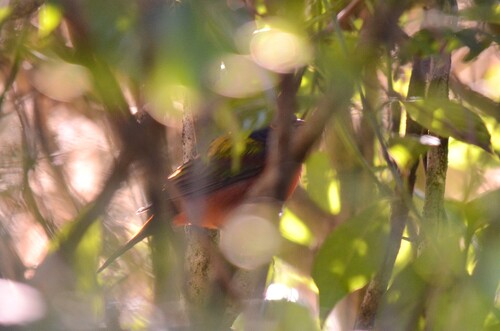 Painted BuntingPasserina cirisThe male painted bunting is often described as the most beautiful bird in North America and as such has been nicknamed nonpareil, or "without equal".
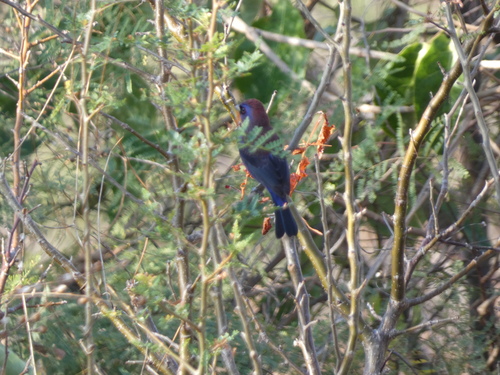 Varied BuntingPasserina versicolorThe varied bunting is a species of songbird in the cardinal family, Cardinalidae.
Side by side: Blue Grosbeak vs Indigo Bunting · Blue Grosbeak vs Lazuli Bunting · Blue Grosbeak vs Painted Bunting
Learn the Blue Grosbeak in the BeakBrain App
Photo and call practice. Coming soon to iPhone and Android.
Play today's Daily BirdEvery photo and recording on this page is credited to its author under the licence shown. Spotted a problem with this page, or have a better photo? Contribute.