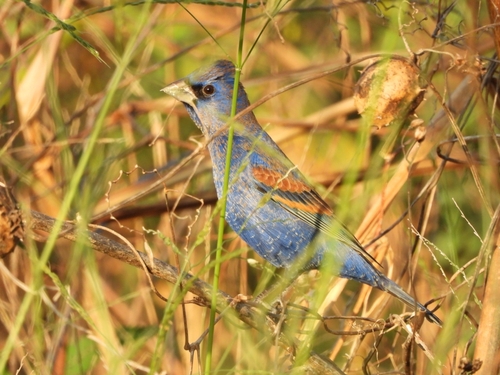
Blue Grosbeak
Passerina caerulea
The male blue grosbeak is deep blue, with both black and brown on its wings. The female is mostly brown. Both sexes are distinguished by their large, deep bill and double wing bars. These features, as well as the grosbeak's relatively larger size, distinguish this species from the indigo bunting. Length can range from 14 to 19 cm (5.5 to 7.5 in) and wingspan is from 26 to 29 cm (10 to 11 in). Body mass is typically from 26 to 31.5 g (0.92 to 1.11 oz).
ID text from Wikipedia, CC BY-SA 4.0

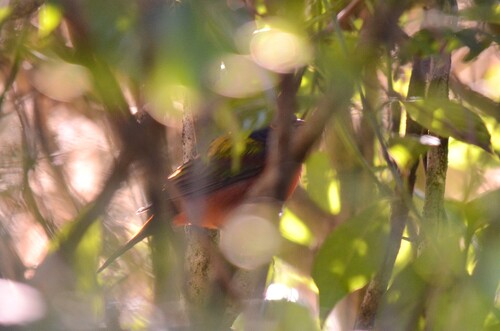
Painted Bunting
Passerina ciris
The male painted bunting is often described as the most beautiful bird in North America and as such has been nicknamed nonpareil, or "without equal". Its colors, dark blue head, green back, red rump, and underparts, make it extremely easy to identify, but it can still be difficult to spot since it often skulks in foliage even when it is singing. The plumage of female and juvenile painted buntings is green and yellow-green, serving as camouflage. Once seen, the adult female is still distinctive, since it is a brighter, truer green than other similar songbirds.
ID text from Wikipedia, CC BY-SA 4.0
Where you might meet both
Learn this pair in the BeakBrain App
Photo and call practice. Coming soon to iPhone and Android.
Play today's Daily BirdPhotos and recordings are credited to their authors under the licence shown. Full profiles: Blue Grosbeak and Painted Bunting.