Learn what every symbol on the card means.Full credits and sources at beakbrain.com/symbols
 ForestDomed nestTiny · 6 g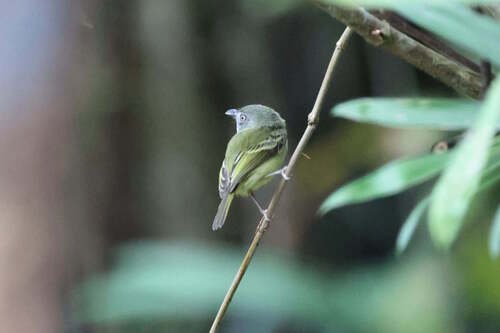
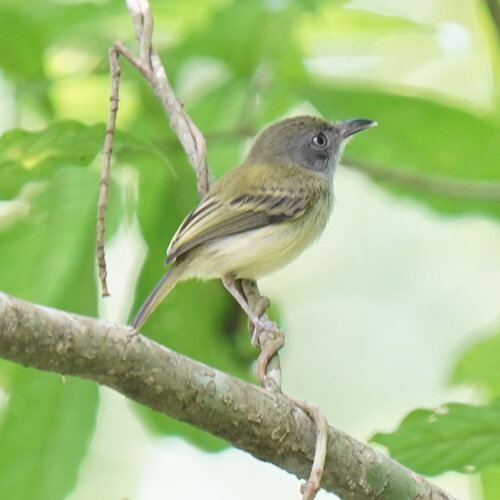
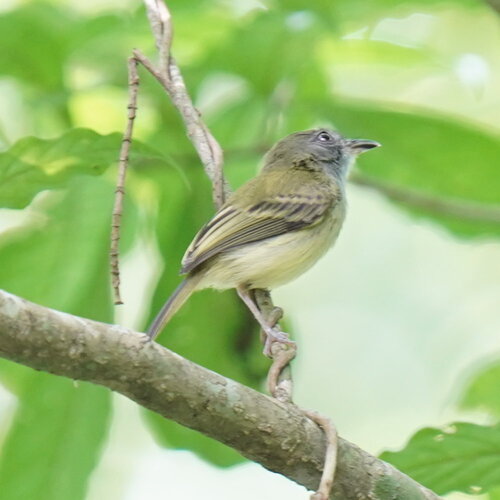
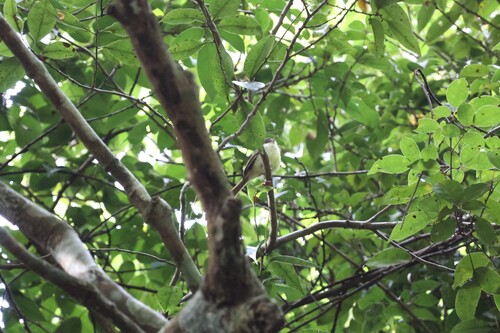
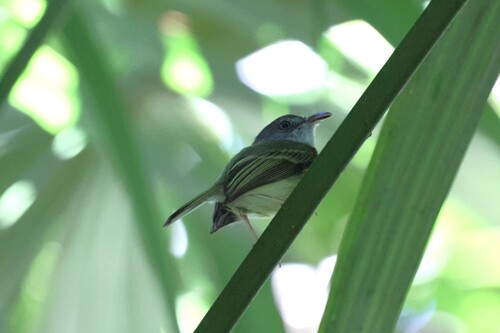
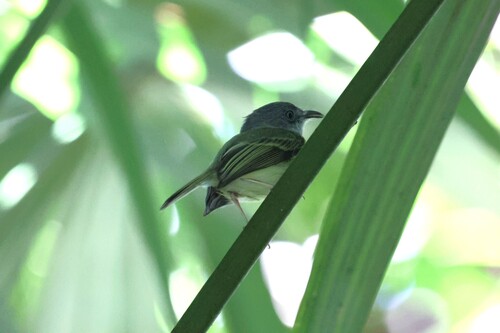
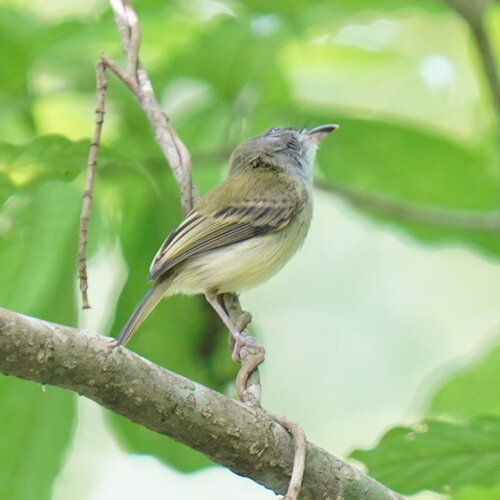
ID tip
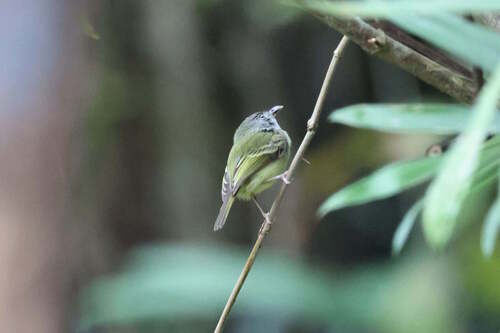
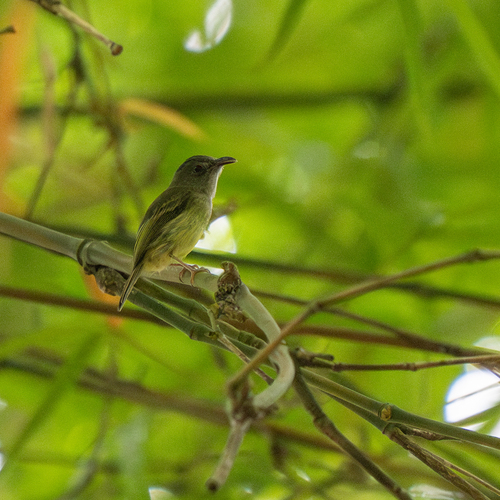
The northern bentbill is 9.5 to 10.5 cm (3.7 to 4.1 in) long and weighs about 4.5 to 7 g (0.16 to 0.25 oz). It has a distinctive fairly thick downcurved bill. The sexes have the same plumage. Adults have a mostly pale gray head whose crown is slightly darker. Their back, rump, and uppertail coverts are olive. Their wings are dusky with lemon yellow edges on the flight feathers and tips on the coverts; the latter show as two wing bars. Their tail is dusky. Their throat and breast are pale gray with olive streaks and their belly pale lemon-yellow with an olive wash on the flanks. Voice: The northern bentbill's calls are "a rapid toad-like trill, turrrrrrrrrrr...a trilling prrrr're'e'e'eat!...a single turp!...an a turp!-purrrrrrrrr".
Text from Wikipedia, licensed CC BY-SA 4.0.
When to see the Northern Bentbill
One bar for each month, and every month is filled: this bird is recorded here in all twelve. The wide bar is March, the month with the most records.
Where to see the Northern Bentbill
The map shades 8 countries with regular records. Everything unshaded has no records. Countries are listed below the map.
About the Northern Bentbill
The northern bentbill is a species of bird in the family Tyrannidae, the tyrant flycatchers. It is found in Belize, Colombia, Costa Rica, El Salvador, Guatemala, Honduras, Mexico, Nicaragua, and Panama.
Text adapted from Wikipedia, licensed CC BY-SA 4.0.
Easily confused with

Side by side: Northern Bentbill vs Southern Bentbill
Learn the Northern Bentbill in the BeakBrain App
Photo and call practice. Coming soon to iPhone and Android.
Play today's Daily BirdEvery photo and recording on this page is credited to its author under the licence shown. Spotted a problem with this page, or have a better photo? Contribute.