Learn what every symbol on the card means.Full credits and sources at beakbrain.com/symbols
 ForestScrapeLarge · 422 g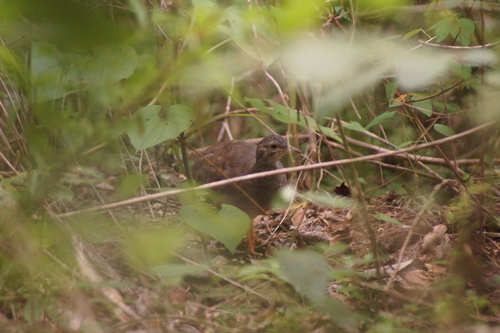


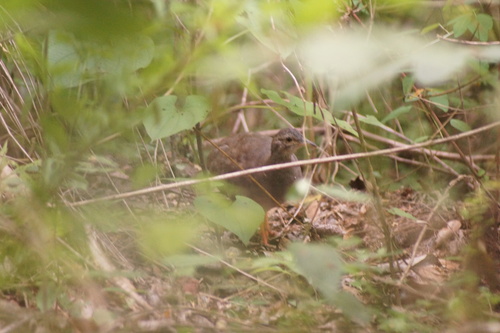
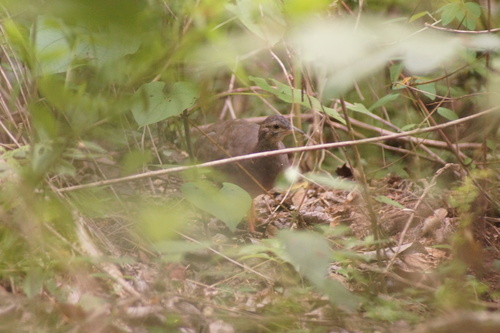
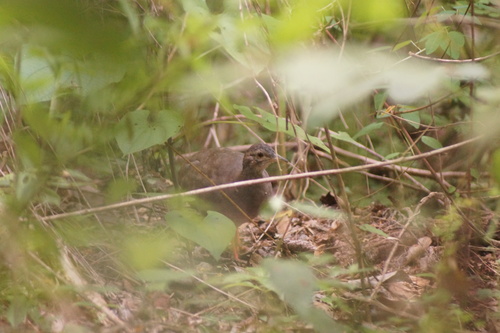
ID tip
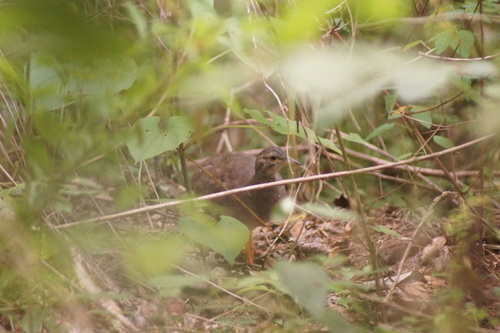
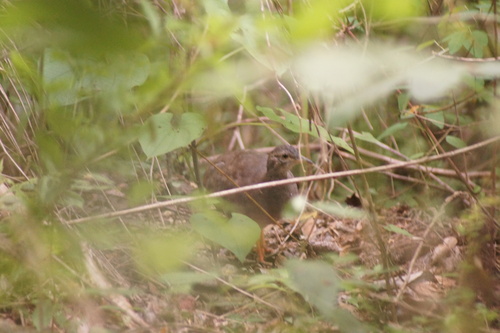
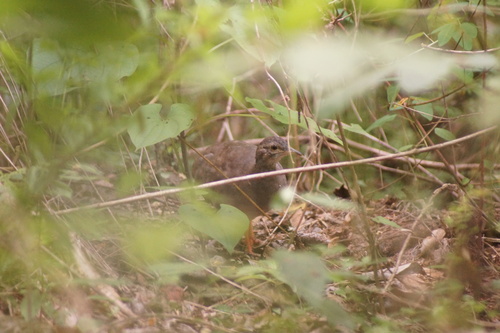
The thicket tinamou is 27 to 29 cm (11–11 in) in length and weighs 440 g (16 oz). Its upper parts are brown, heavily barred blackish on back, rump and wings. Its lowerparts pale brown, cinnamon on breast, greyer on belly and undertail whitish with dark barring. Its head brown with prominent buff supercilium and well-defined ear covert patch with bill brownish and legs red in color.
Text from Wikipedia, licensed CC BY-SA 4.0.
When to see the Thicket Tinamou
One bar for each month. Filled bars are the 11 months with records; pale bars are months with none. The wide bar is May, the month with the most records.
Where to see the Thicket Tinamou
The map shades 7 countries with regular records. Everything unshaded has no records. Countries are listed below the map.
About the Thicket Tinamou
The thicket tinamou or rufescent tinamou is a type of tinamou commonly found in moist forests in subtropical and tropical central Mexico.
Text adapted from Wikipedia, licensed CC BY-SA 4.0.
Easily confused with
 Tataupa TinamouCrypturellus tataupaThe tataupa tinamou is approximately 25 cm (9.8 in) in length.
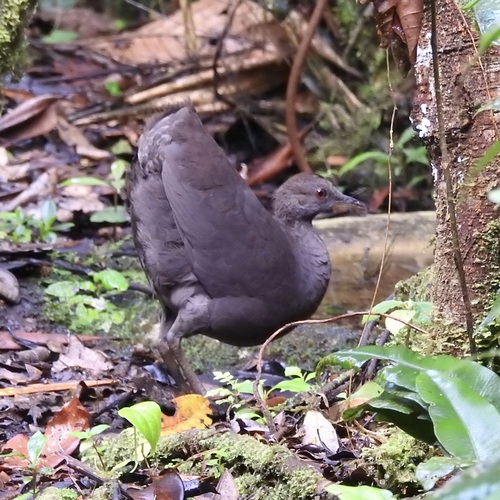 Cinereous TinamouCrypturellus cinereusThe cinereous tinamou is a shy and secretive bird.
 Brown TinamouCrypturellus obsoletusThe brown tinamou is approximately 25 to 30 cm (9.8–11.8 in) in length and it weighs about 350 to 550 g (12–19 oz).
Side by side: Thicket Tinamou vs Undulated Tinamou · Brown Tinamou vs Thicket Tinamou · Cinereous Tinamou vs Thicket Tinamou · Tataupa Tinamou vs Thicket Tinamou · Small-billed Tinamou vs Thicket Tinamou
Learn the Thicket Tinamou in the BeakBrain App
Photo and call practice. Coming soon to iPhone and Android.
Play today's Daily BirdEvery photo and recording on this page is credited to its author under the licence shown. Spotted a problem with this page, or have a better photo? Contribute.