Learn what every symbol on the card means.Full credits and sources at beakbrain.com/symbols
 ForestScrapeLarge · 507 g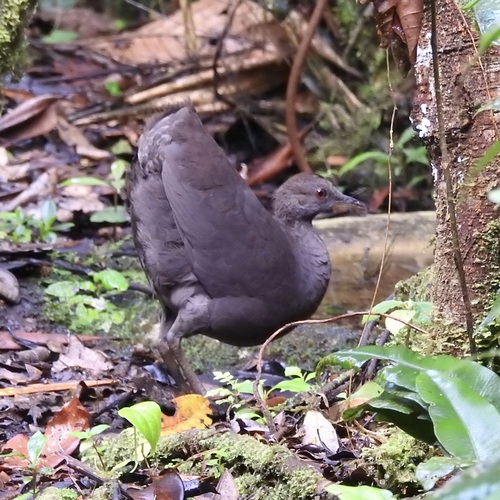
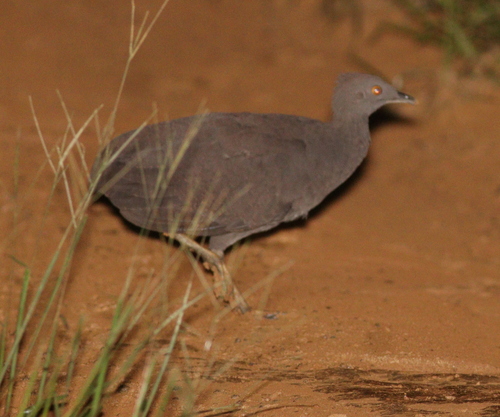
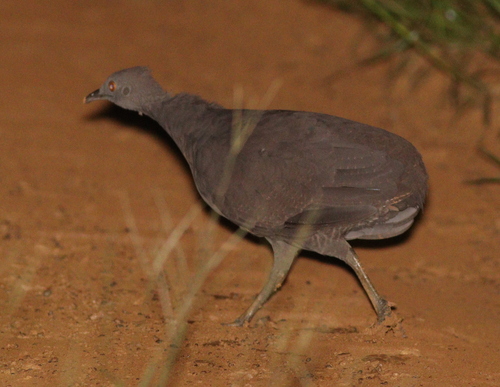
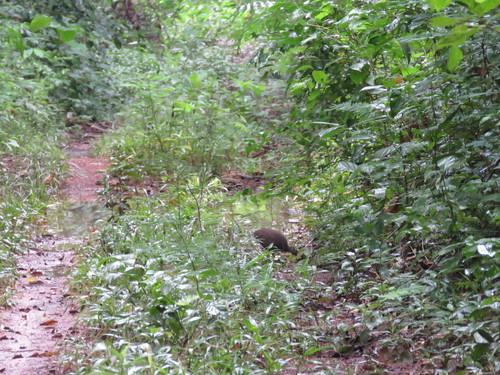
What the Cinereous Tinamou sounds like


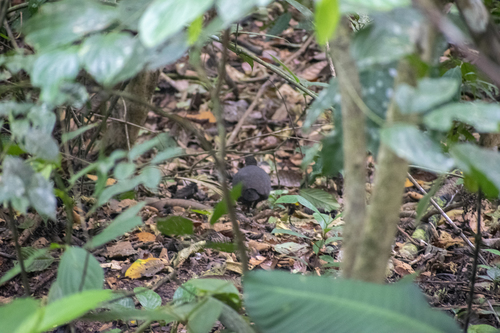
ID tip
The cinereous tinamou is a shy and secretive bird. It is approximately 29–32 cm (11–13 in) in length, and the male bird weighs around 435 grams (15.3 oz) and the female of the species weighs 549–602 grams (19.4–21.2 oz). It is colored similar to the Berlepsch's tinamou in that it is dark brown to sooty brown or brownish black in coloration. It tends to be slightly more brown than the Berlepsch's tinamou. It is recognized by its smoky-grey with reddish-brown crown and nape. The feather shafts on side of its head are white, which shows through on occasion.
Text from Wikipedia, licensed CC BY-SA 4.0.
When to see the Cinereous Tinamou
One bar for each month, and every month is filled: this bird is recorded here in all twelve. The wide bar is May, the month with the most records.
Where to see the Cinereous Tinamou
The map shades 9 countries with regular records. Everything unshaded has no records. Countries are listed below the map.
About the Cinereous Tinamou
The cinereous tinamou, also known as brushland tinamou, is a type of ground bird found in swamp and lowland forests in northern South America. They have some localized names that have been used by the indigenous people such as in Amazonas where they are called inambu-pixuna, and in Pará, Brazil where they are called nambu-sujo. Also, throughout their range they are called inhambu-preto. Cinereous tinamous have been around for many centuries. They are part of the oldest families of the world today and have fossils discovered dating back tens of millions of years. Their quick reflexes play a role in their ability to survive.
Text adapted from Wikipedia, licensed CC BY-SA 4.0.
Easily confused with
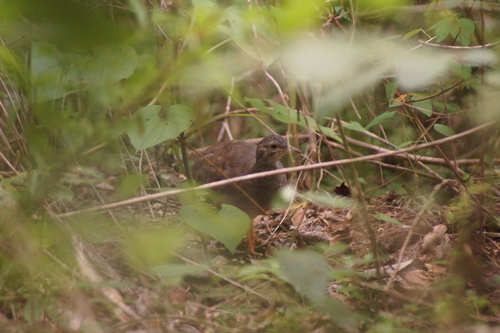 Thicket TinamouCrypturellus cinnamomeusThe thicket tinamou is 27 to 29 cm (11–11 in) in length and weighs 440 g (16 oz).
 Brown TinamouCrypturellus obsoletusThe brown tinamou is approximately 25 to 30 cm (9.8–11.8 in) in length and it weighs about 350 to 550 g (12–19 oz).
 Tataupa TinamouCrypturellus tataupaThe tataupa tinamou is approximately 25 cm (9.8 in) in length.
Side by side: Cinereous Tinamou vs Little Tinamou · Cinereous Tinamou vs Undulated Tinamou · Brown Tinamou vs Cinereous Tinamou · Cinereous Tinamou vs Thicket Tinamou · Cinereous Tinamou vs Tataupa Tinamou
Learn the Cinereous Tinamou in the BeakBrain App
Photo and call practice. Coming soon to iPhone and Android.
Play today's Daily BirdEvery photo and recording on this page is credited to its author under the licence shown. Spotted a problem with this page, or have a better photo? Contribute.