Learn what every symbol on the card means.Full credits and sources at beakbrain.com/symbols
 ForestCup nestSmall · 40 g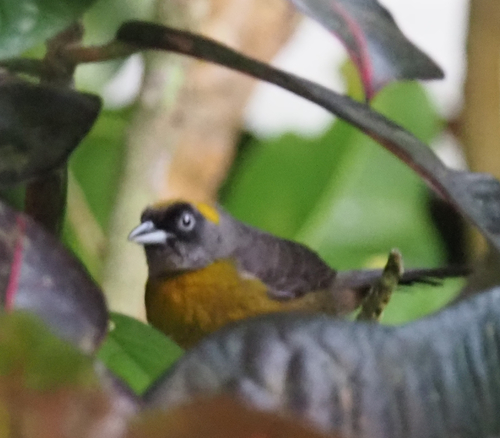


What the Dusky-faced Tanager sounds like


ID tip
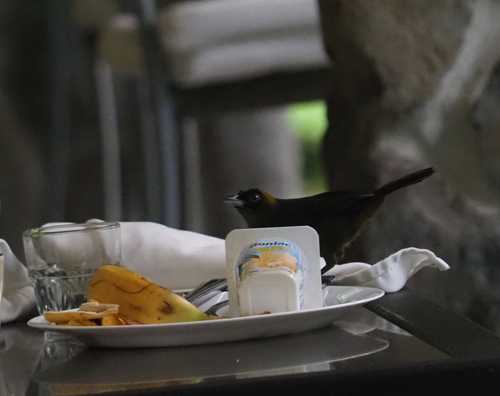
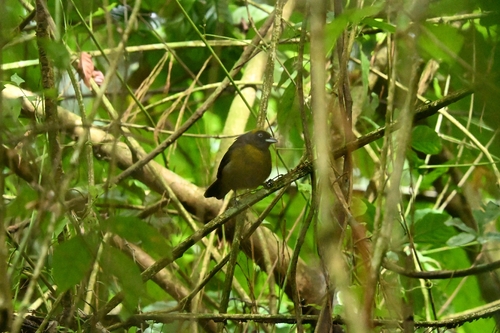
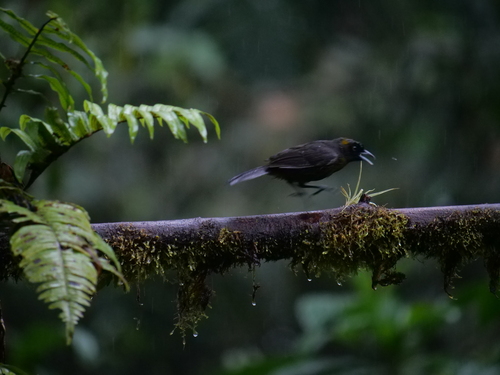
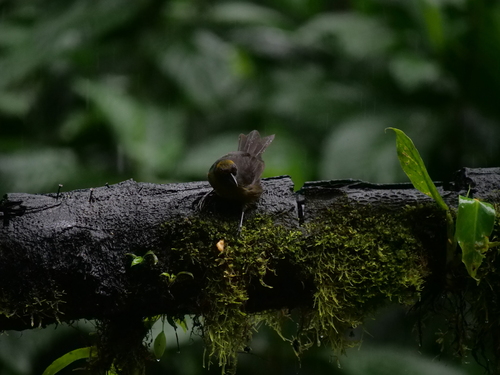
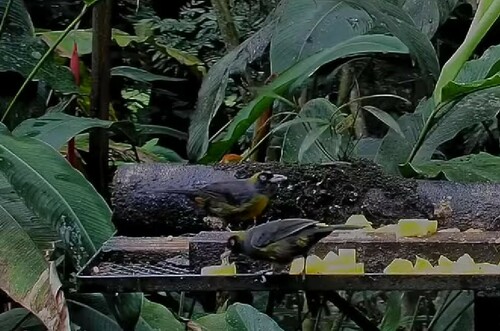
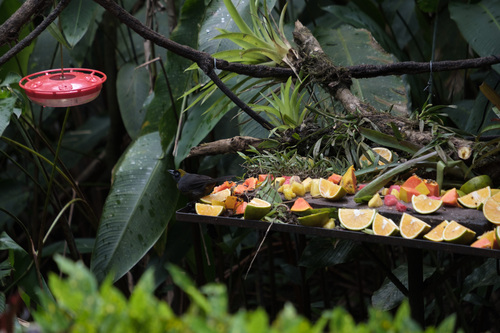
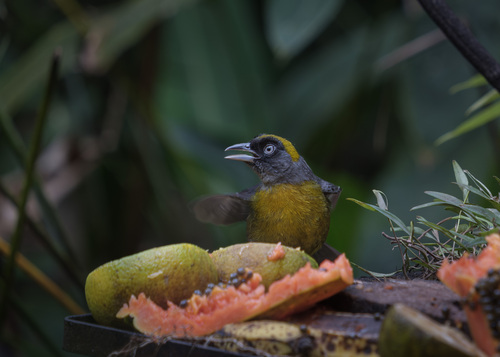
The two subspecies are "very poorly differentiated." The adults are 18 to 18.5 cm (7.1 to 7.3 in) long and weigh 32 to 39 g (1.1 to 1.4 oz). Their crown and nape are mustard yellow. The face has a large black "mask". Their upper parts are lead gray. The throat is light gray transitioning to olive yellow on the breast and flanks and further to a gray-olive-yellow blend on the belly. The juvenile is similar but has less yellow on the crown and a buffy tinge to the underparts. Voice: The dusky-faced tanager's dawn song is "seety, seety, seety, seety, seety" . They chatter all day long with "sputtering notes such as chet or chet-ut" .
Text from Wikipedia, licensed CC BY-SA 4.0.
When to see the Dusky-faced Tanager
One bar for each month, and every month is filled: this bird is recorded here in all twelve. The wide bar is February, the month with the most records.
Where to see the Dusky-faced Tanager
The map shades 5 countries with regular records. Everything unshaded has no records. Countries are listed below the map.
About the Dusky-faced Tanager
The dusky-faced tanager is a species of bird in the family Mitrospingidae. It is found in Colombia, Costa Rica, Ecuador, and Panama.
Text adapted from Wikipedia, licensed CC BY-SA 4.0.
Easily confused with
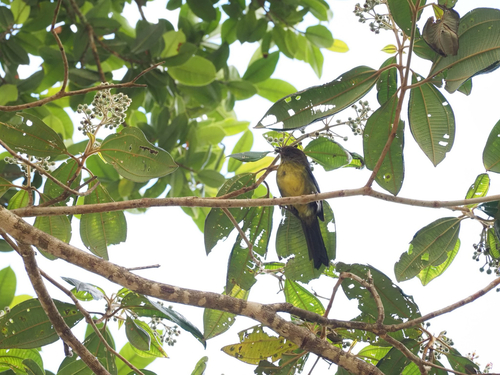
Side by side: Dusky-faced Tanager vs Olive-green Tanager · Dusky-faced Tanager vs Red-billed Pied Tanager
Learn the Dusky-faced Tanager in the BeakBrain App
Photo and call practice. Coming soon to iPhone and Android.
Play today's Daily BirdEvery photo and recording on this page is credited to its author under the licence shown. Spotted a problem with this page, or have a better photo? Contribute.