Learn what every symbol on the card means.Full credits and sources at beakbrain.com/symbols
 ForestScrapeSmall · 40 g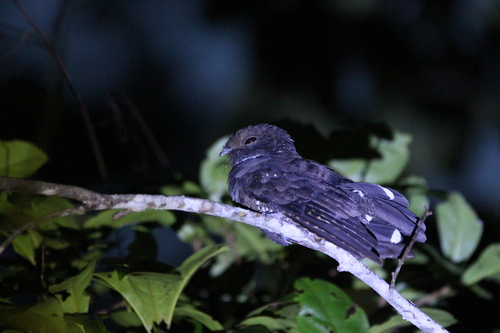
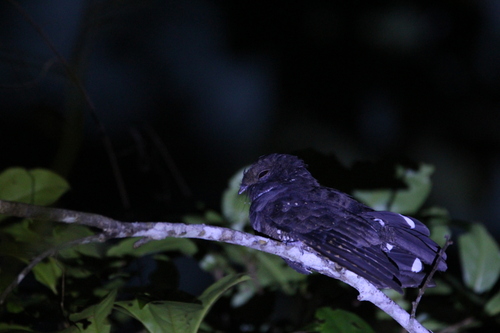
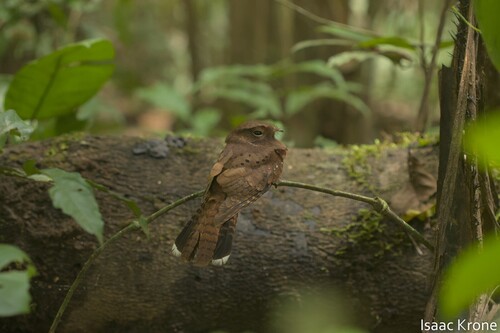
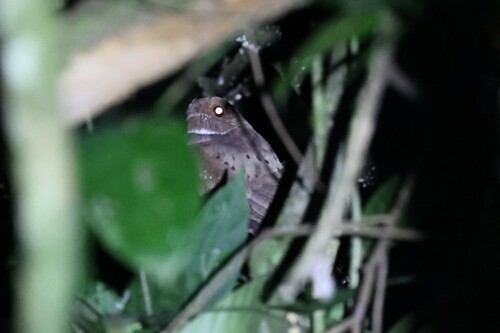
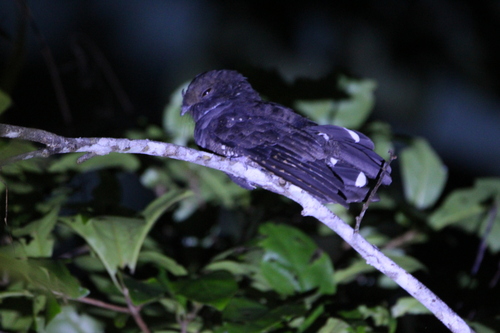
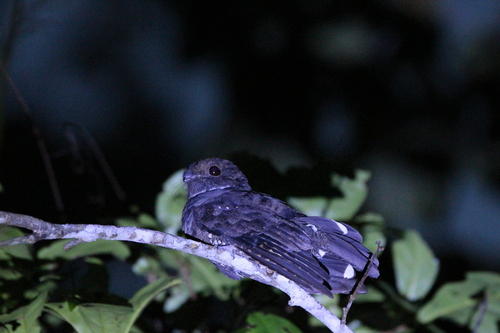
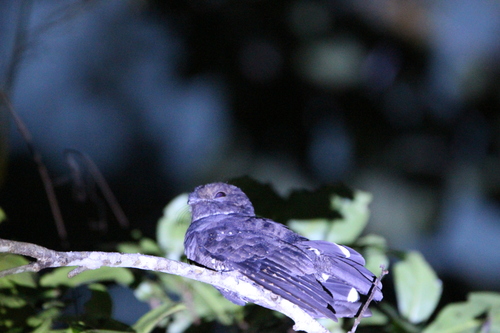
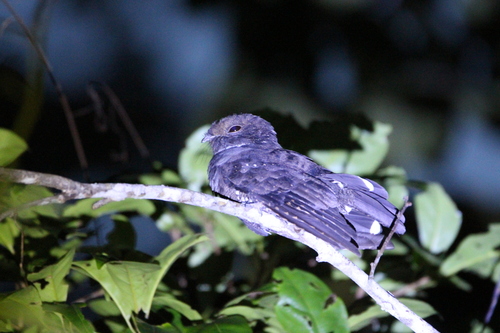
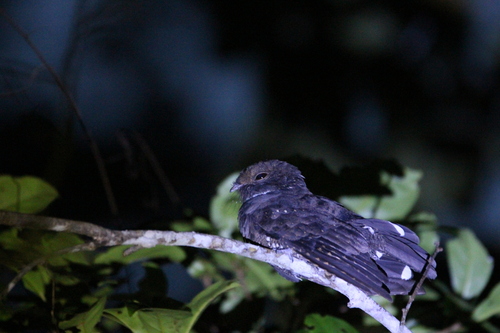
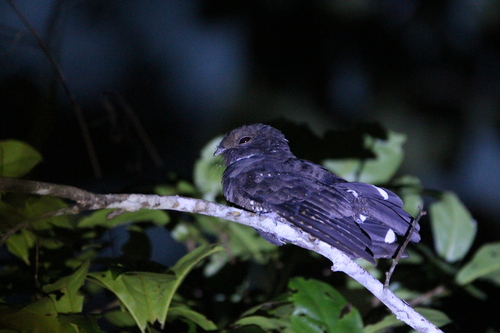
ID tip
The ocellated poorwill is 20 to 21 cm (7.9 to 8.3 in) long. Males weigh 35 to 43 g (1.2 to 1.5 oz) and females 29 to 44 g (1.0 to 1.6 oz). There are two color morphs, one brown and one rufous. The brown morph of the nominate is mostly dark grayish brown with blackish brown spots on the wings and white spots on the belly. The white spots somewhat resemble eyes, which gives the bird its name. It has a bold white band around the throat. The outer three or four tail feathers have narrow white tips. The rufous morph is paler and reddish brown instead of dark brown. N. o. Voice: The male ocellated poorwill's song is "a repetitive trilled 'preeeo' or 'prEEoo'". The call is "a soft, guttural 'wah, wah, wah'."
Text from Wikipedia, licensed CC BY-SA 4.0.
When to see the Ocellated Poorwill
One bar for each month. Filled bars are the 10 months with records; pale bars are months with none. The wide bar is August, the month with the most records.
Where to see the Ocellated Poorwill
The map shades 9 countries with regular records, and 1 more in a lighter tone where the bird turns up only as a stray. Everything unshaded has no records. Countries are listed below the map.
Recorded as a rare visitor in Colombia.
About the Ocellated Poorwill
The ocellated poorwill is a species of nightjar in the family Caprimulgidae. It is found in Argentina, Bolivia, Brazil, Colombia, Costa Rica, Ecuador, Honduras, Nicaragua, Paraguay, and Peru.
Text adapted from Wikipedia, licensed CC BY-SA 4.0.
Easily confused with
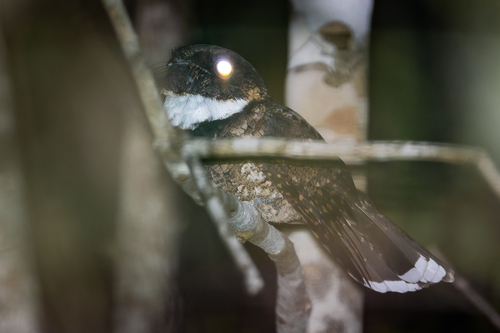 Yucatan PoorwillNyctiphrynus yucatanicusThe Yucatan poorwill is 19.5 to 22 cm (7.7 to 8.7 in) long, making it the smallest species of nightjar in the Yucatán Peninsula.
 Choco PoorwillNyctiphrynus rosenbergiThe Chocó poorwill is 19.5 to 22.5 cm (7.7 to 8.9 in) long; one female weighed 52 g (1.8 oz).
 Eared PoorwillNyctiphrynus mcleodiiThe eared poorwill is 20 to 21 cm (7.9 to 8.3 in) long.
Learn the Ocellated Poorwill in the BeakBrain App
Photo and call practice. Coming soon to iPhone and Android.
Play today's Daily BirdEvery photo and recording on this page is credited to its author under the licence shown. Spotted a problem with this page, or have a better photo? Contribute.