Learn what every symbol on the card means.Full credits and sources at beakbrain.com/symbols
 ForestCup nestTiny · 12 g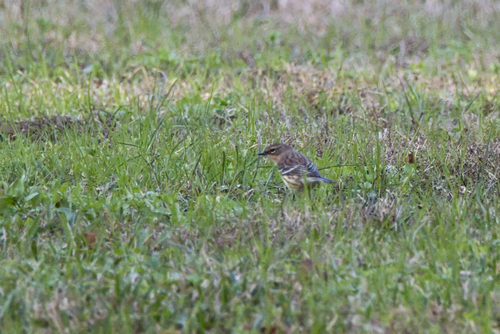
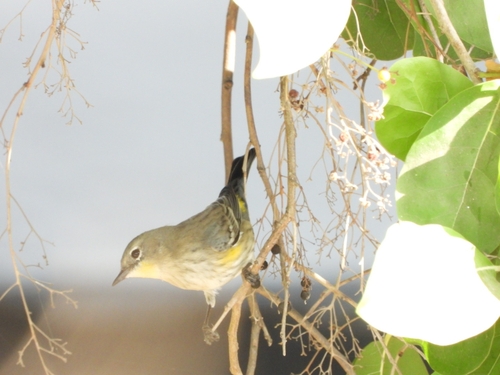
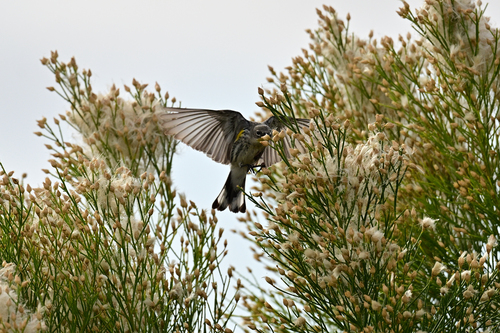
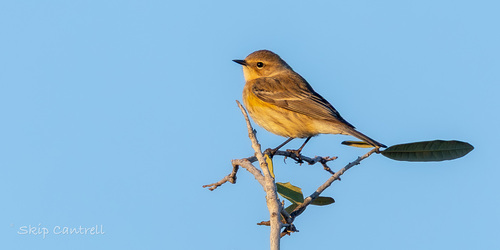
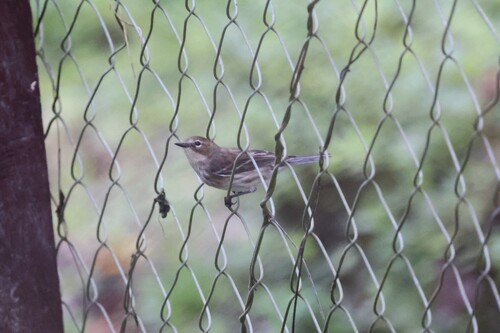
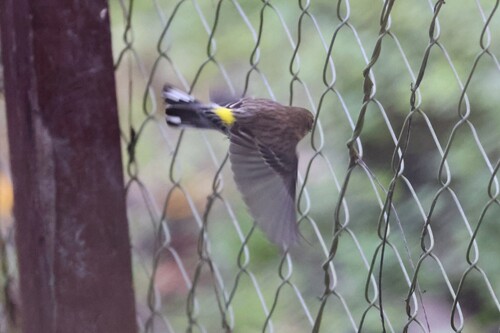

What the Yellow-rumped Warbler sounds like


ID tip
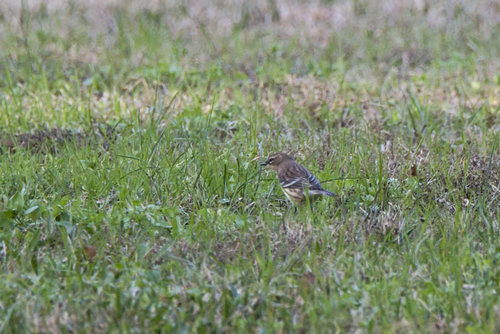
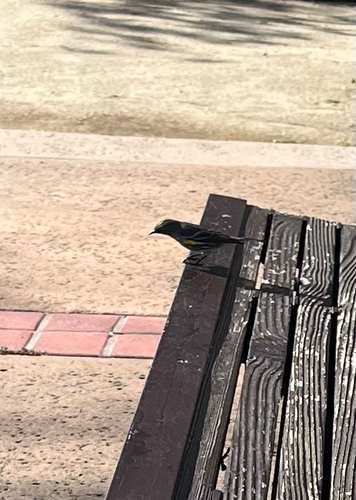
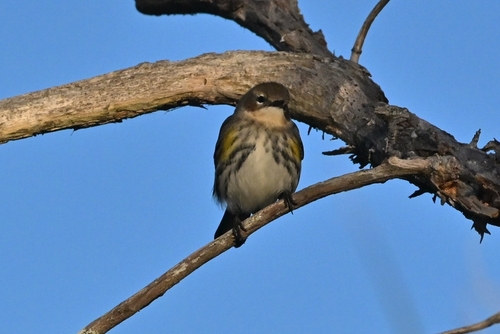
The yellow-rumped warbler has an average length of 14 cm and weight of 12.5 g, its appearance is different across its subspecies groups, especially the two major ones: the coronata group (myrtle warbler) and the auduboni group (Audubon's warbler); intra-group variations are also observed. In spite of varying appearances, the yellow rump (as suggested by its name) is present in all subspecies and thus characterizes the yellow-rumped warbler.
Text from Wikipedia, licensed CC BY-SA 4.0.
When to see the Yellow-rumped Warbler
One bar for each month. Filled bars are the 9 months with records; pale bars are months with none. The wide bar is May, the month with the most records.
Where to see the Yellow-rumped Warbler
The map shades 35 countries with regular records, and 4 more in a lighter tone where the bird turns up only as a stray. Everything unshaded has no records. Countries are listed below the map.
Recorded as a rare visitor in Norway, Martinique, Japan, Netherlands.
About the Yellow-rumped Warbler
The yellow-rumped warbler is a North American bird species that can be commonly observed all across the continent. Its extensive range connects both the Pacific and Atlantic coasts of the U.S. as well as Canada and Central America, with the population concentrated in the continent's northern reaches during the breeding season and migrating southwards to southern North and Central America in the winter. It generally prefers coniferous forests or mixed coniferous-deciduous forests as its breeding habitat, while during the winter it can be found inhabiting more open areas such as shrublands that offer food resources.
Text adapted from Wikipedia, licensed CC BY-SA 4.0.
Easily confused with
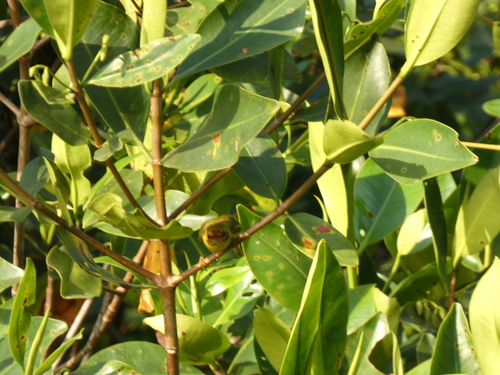 Mangrove WarblerSetophaga petechiaThe mangrove warbler is around 13 cm (5.1 in) in length.
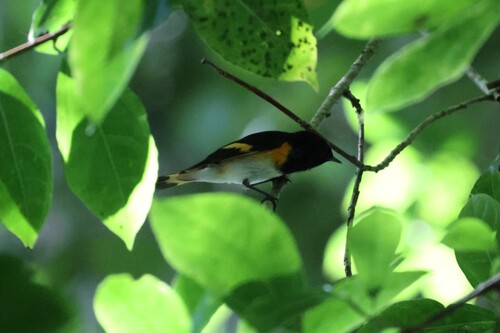 American RedstartSetophaga ruticillaThe American redstart is a smallish warbler.
 Northern ParulaSetophaga americanaThe northern parula is one of the smaller North American migratory warblers, often being one of the smallest birds in a mixed feeding flock besides kinglets or gnatcatchers.
Side by side: Mangrove Warbler vs Yellow-rumped Warbler · American Redstart vs Yellow-rumped Warbler · Northern Parula vs Yellow-rumped Warbler
Learn the Yellow-rumped Warbler in the BeakBrain App
Photo and call practice. Coming soon to iPhone and Android.
Play today's Daily BirdEvery photo and recording on this page is credited to its author under the licence shown. Spotted a problem with this page, or have a better photo? Contribute.