Learn what every symbol on the card means.Full credits and sources at beakbrain.com/symbols
 ForestCup nestSmall · 41 g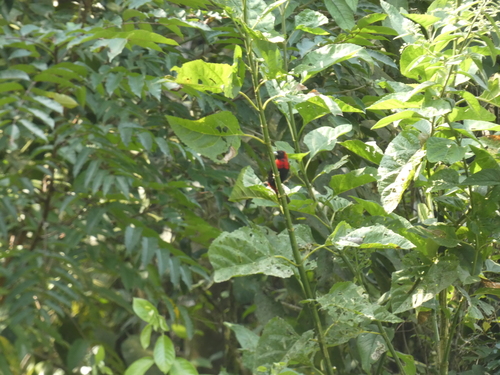
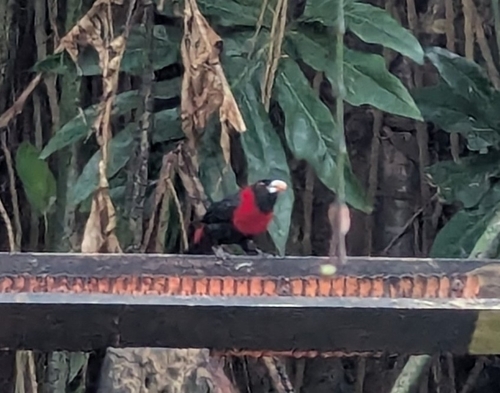
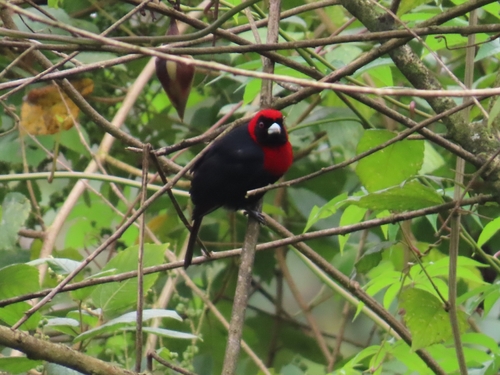
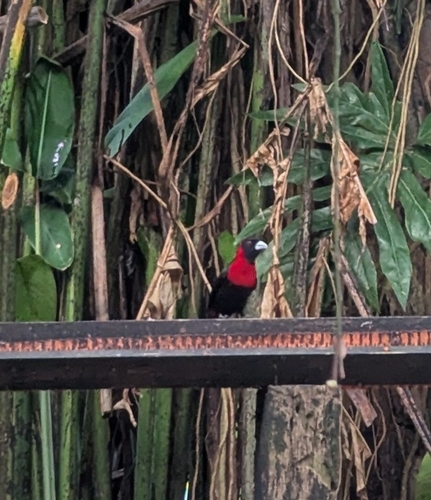
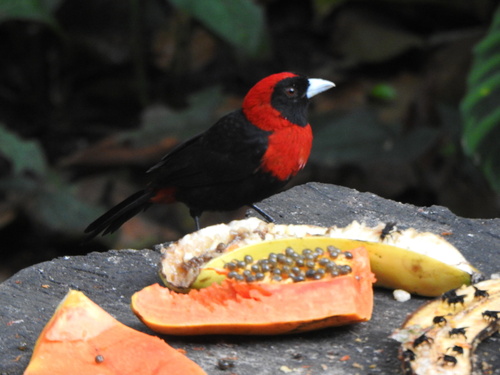
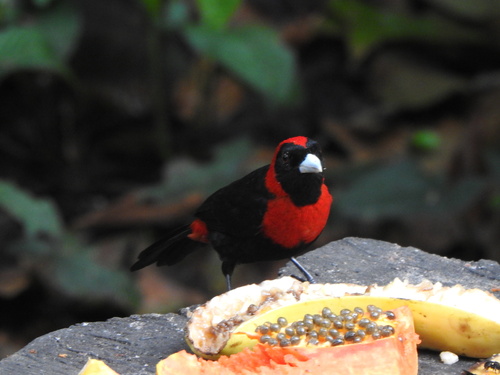

ID tip
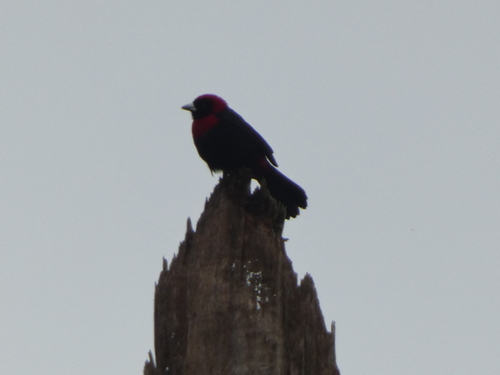
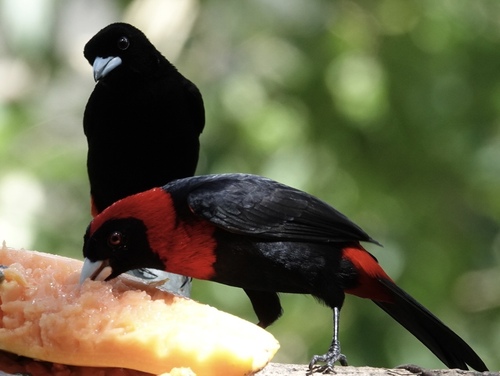
Crimson-collared tanagers average 19–20 cm (7.5–8 in) long. The adult plumage is black with a red collar covering the nape, neck, and breast (remarkably similar to the pattern of the male crimson-collared grosbeak). All tail coverts are also red. The bill is striking pale blue and the legs are blue-gray. In adults, the irides are crimson, contrary to what is shown in Howell and Webb. Females average slightly duller than males, but are sometimes indistinguishable from them.
Text from Wikipedia, licensed CC BY-SA 4.0.
When to see the Crimson-collared Tanager
One bar for each month, and every month is filled: this bird is recorded here in all twelve. The wide bar is March, the month with the most records.
Where to see the Crimson-collared Tanager
The map shades 7 countries with regular records. Everything unshaded has no records. Countries are listed below the map.
About the Crimson-collared Tanager
The crimson-collared tanager is a rather small Middle American songbird. It was first described by the French naturalist René-Primevère Lesson in 1831, its specific epithet from the Latin adjective sanguinolentus, "bloodied", referring to its red plumage.
Text adapted from Wikipedia, licensed CC BY-SA 4.0.
Easily confused with
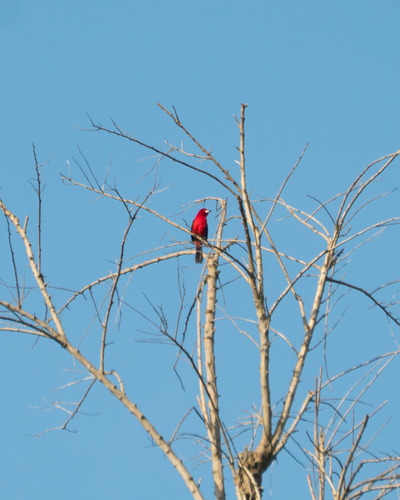 Brazilian TanagerRamphocelus bresiliaThe Brazilian tanager is a species of bird in the family Thraupidae.
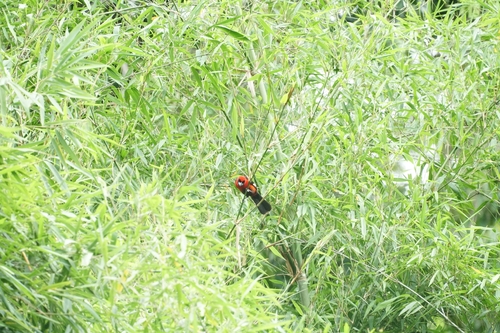 Masked Crimson TanagerRamphocelus nigrogularisThe masked crimson tanager is a species of bird in the family Thraupidae.
 Huallaga TanagerRamphocelus melanogasterThe Huallaga tanager or black-bellied tanager, is a species of bird in the family Thraupidae.
Side by side: Crimson-collared Tanager vs Flame-rumped Tanager
Learn the Crimson-collared Tanager in the BeakBrain App
Photo and call practice. Coming soon to iPhone and Android.
Play today's Daily BirdEvery photo and recording on this page is credited to its author under the licence shown. Spotted a problem with this page, or have a better photo? Contribute.