Learn what every symbol on the card means.Full credits and sources at beakbrain.com/symbols
 ShrublandCup nestSmall · 35 g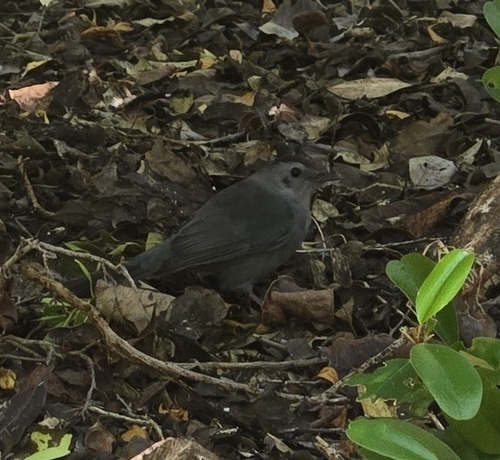

What the Grey Catbird sounds like


ID tip
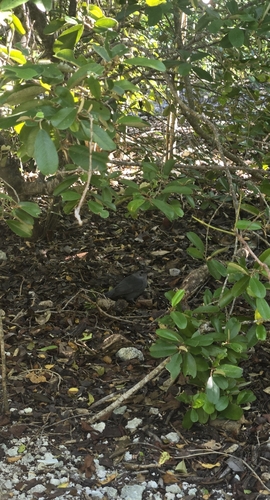
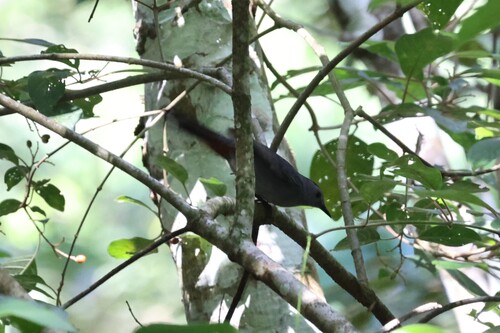
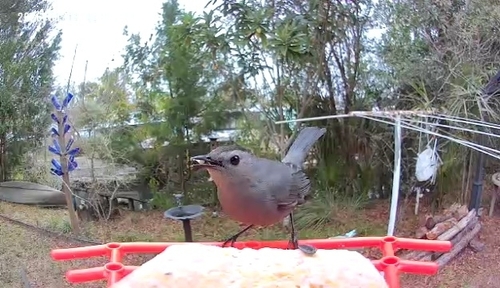
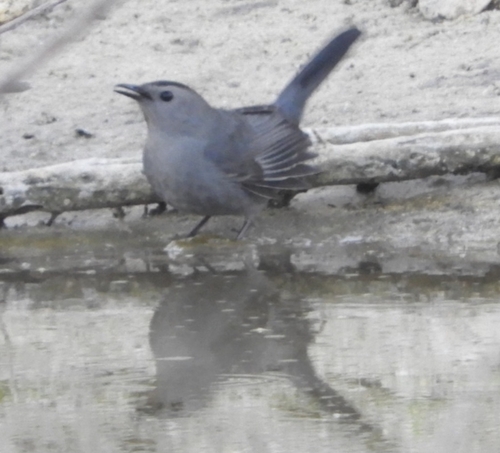
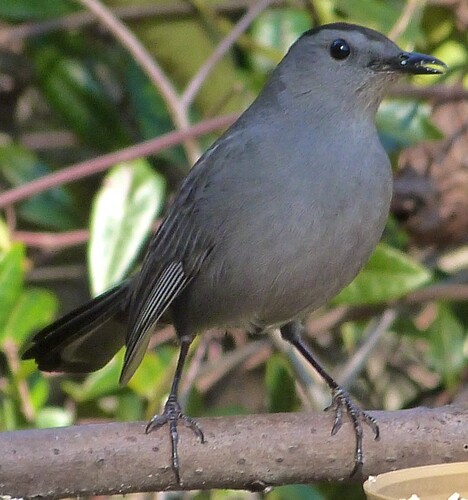
Adults weigh from 23.2 to 56.5 g (0.8 to 2.0 oz), with an average of 35–40 g (1.2–1.4 oz) They range in length from 20.5 to 24 cm (8.1 to 9.4 in) and span 22 to 30 cm (8.7 to 11.8 in) across the wings. Among standard measurements, the wing chord is 8.4 to 9.8 cm (3.3 to 3.9 in), the tail is 7.2 to 10.3 cm (2.8 to 4.1 in), the culmen is 1.5 to 1.8 cm (0.6 to 0.7 in) and the tarsus is 2.7 to 2.9 cm (1.1 to 1.1 in). Gray catbirds are plain lead gray almost all over. The top of the head is darker. Voice: This species is named for its cat-like call. Like many members of the Mimidae (in particular mockingbirds), it also mimics the songs of other birds, as well as those of Hylidae (tree frogs), and even mechanical sounds. Because of its well-developed songbird syrinx, it is able to make two sounds at the same time. The alarm call resembles the quiet calls of a male mallard.
Text from Wikipedia, licensed CC BY-SA 4.0.
When to see the Grey Catbird
One bar for each month. Filled bars are the 7 months with records; pale bars are months with none. The wide bar is May, the month with the most records.
Where to see the Grey Catbird
The map shades 22 countries with regular records, and 5 more in a lighter tone where the bird turns up only as a stray. Everything unshaded has no records. Countries are listed below the map.
Recorded as a rare visitor in United Kingdom, Belgium, Spain, St. Barthélemy, U.S. Virgin Islands.
About the Grey Catbird
The gray catbird, also spelled grey catbird, is a medium-sized North American and Central American perching bird of the mimid family. It is the only member of the "catbird" genus Dumetella. Like the black catbird, it is among the basal lineages of the Mimidae, probably a closer relative of the Caribbean thrasher and trembler assemblage than of the mockingbirds and Toxostoma thrashers. In some areas it is known as the slate-colored mockingbird.
Text adapted from Wikipedia, licensed CC BY-SA 4.0.
Easily confused with
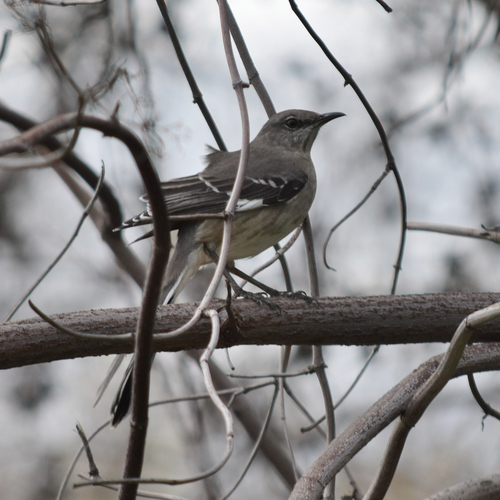 Northern MockingbirdMimus polyglottosThe northern mockingbird is a medium-sized mimid that has long legs and tail.
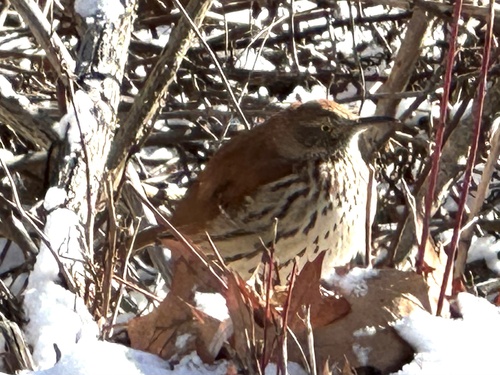 Brown ThrasherToxostoma rufumThe brown thrasher is bright reddish-brown above with thin, dark streaks on its buffy underparts.
 Curve-billed ThrasherToxostoma curvirostreThe curve-billed thrasher is immediately recognized as a thrasher by its long tail and short wings.
Side by side: Grey Catbird vs Northern Mockingbird · Brown Thrasher vs Grey Catbird · Curve-billed Thrasher vs Grey Catbird
Learn the Grey Catbird in the BeakBrain App
Photo and call practice. Coming soon to iPhone and Android.
Play today's Daily BirdEvery photo and recording on this page is credited to its author under the licence shown. Spotted a problem with this page, or have a better photo? Contribute.