Learn what every symbol on the card means.Full credits and sources at beakbrain.com/symbols
 WoodlandCup nestSmall · 27 g


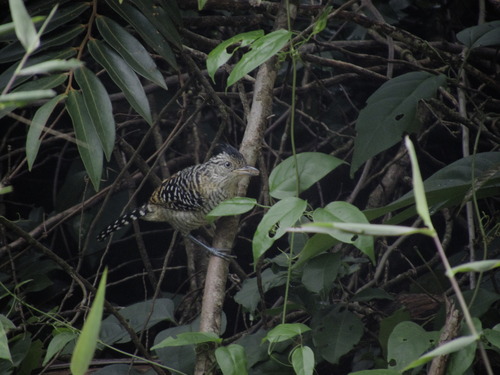
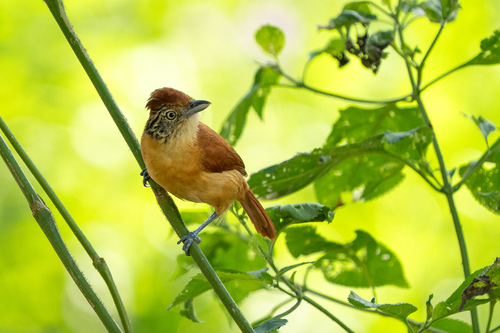
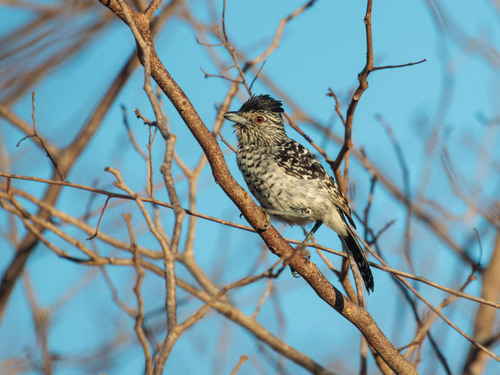
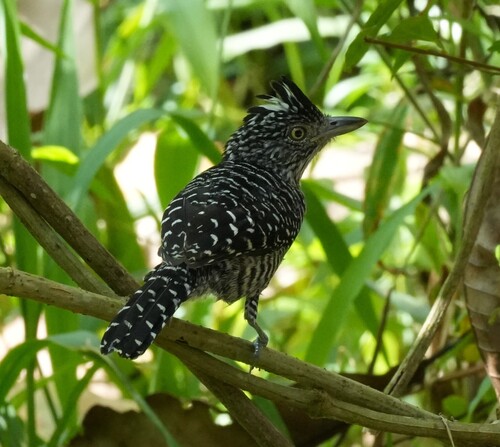
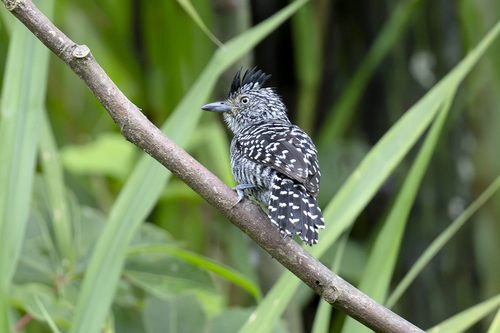
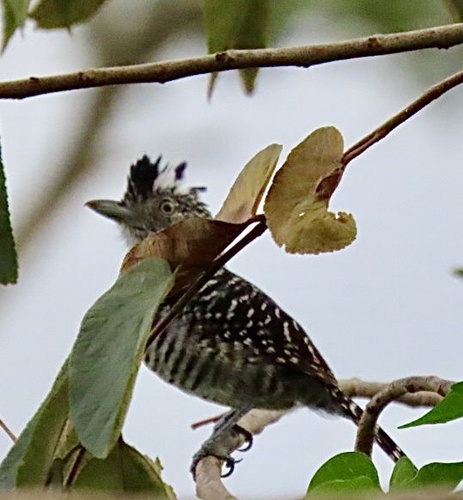
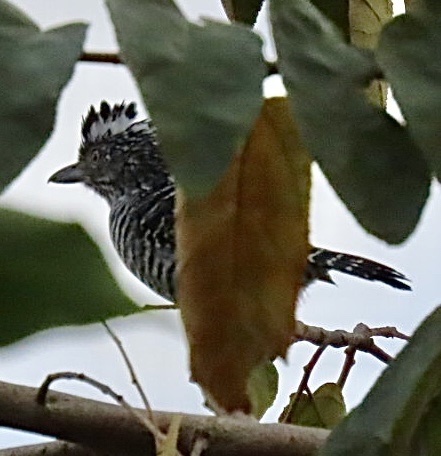
What the Barred Antshrike sounds like


ID tip
The barred antshrike is 15 to 18.5 cm (5.9 to 7.3 in) long and weighs 24 to 32 g (0.85 to 1.1 oz). Members of genus Thamnophilus are largish members of the antbird family; all have stout bills with a hook like those of true shrikes. This species exhibits marked sexual dimorphism though both sexes have a bushy crest. Adult males of the nominate subspecies T. d. doliatus are almost entirely plumaged with alternating black and white bars. The black bars on their upperparts are thicker than the white bars; on their underparts the black bars are thinner than the white ones. Voice: Both sexes of the barred antshrike sing; while singing they stretch their neck, bow forward, and pump their tails up and down. Males erect their crest, which shows the feathers' white bases in the subspecies that have them.
Text from Wikipedia, licensed CC BY-SA 4.0.
When to see the Barred Antshrike
One bar for each month, and every month is filled: this bird is recorded here in all twelve. The wide bar is March, the month with the most records.
Where to see the Barred Antshrike
The map shades 20 countries with regular records, and 1 more in a lighter tone where the bird turns up only as a stray. Everything unshaded has no records. Countries are listed below the map.
Recorded as a rare visitor in United States.
About the Barred Antshrike
The barred antshrike is a passerine bird in subfamily Thamnophilinae of family Thamnophilidae, the "typical antbirds". It is found in the Neotropics in Mexico, every country in Central America, Trinidad and Tobago, and every mainland South American country except Chile and Uruguay. There is also one accepted record from southern Texas.
Text adapted from Wikipedia, licensed CC BY-SA 4.0.
Easily confused with
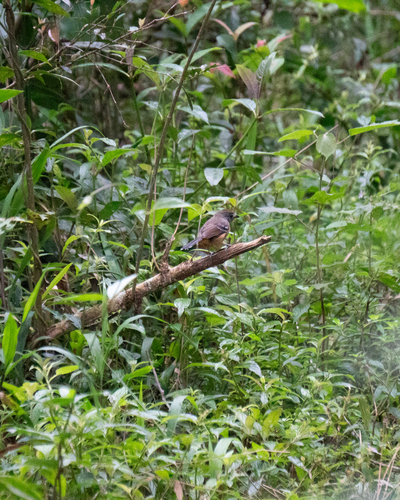 Variable AntshrikeThamnophilus caerulescensThe variable antshrike, as its common name suggests, is arguably the species of antbird with the most variable plumage.
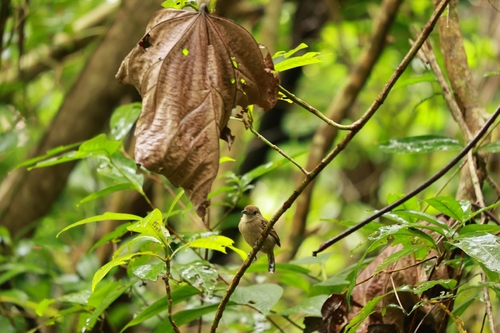 Black-crowned AntshrikeThamnophilus atrinuchaThe black-crowned antshrike is 14 to 15 cm (5.5 to 5.9 in) long and weighs 20 to 28.5 g (0.71 to 1.0 oz).
 Bar-crested AntshrikeThamnophilus multistriatusThe bar-crested antshrike is 15 to 16.5 cm (5.9 to 6.5 in) long and weighs 21 to 23 g (0.74 to 0.81 oz).
Side by side: Barred Antshrike vs Variable Antshrike · Barred Antshrike vs Black-crowned Antshrike · Bar-crested Antshrike vs Barred Antshrike
Learn the Barred Antshrike in the BeakBrain App
Photo and call practice. Coming soon to iPhone and Android.
Play today's Daily BirdEvery photo and recording on this page is credited to its author under the licence shown. Spotted a problem with this page, or have a better photo? Contribute.