Learn what every symbol on the card means.Full credits and sources at beakbrain.com/symbols
 WetlandScrapeSmall · 52 g


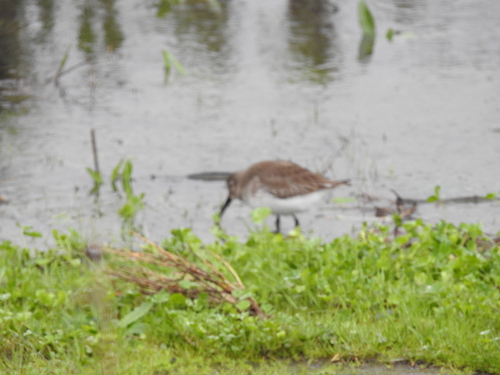
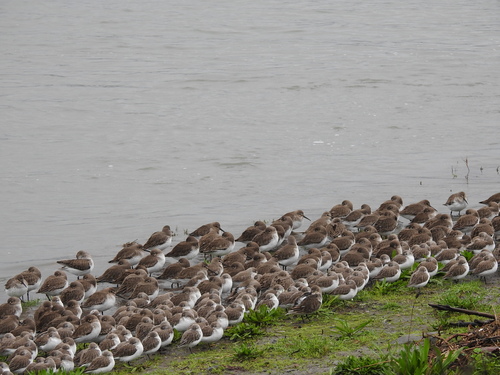
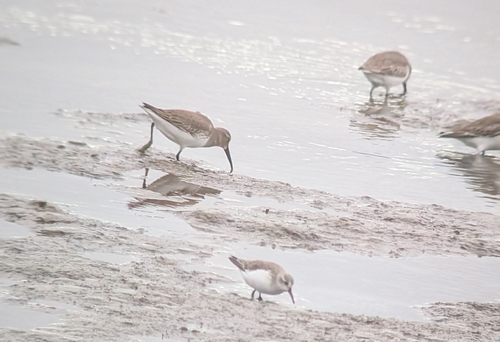
What the Dunlin sounds like


ID tip
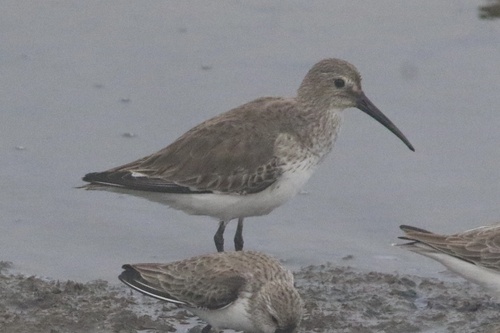
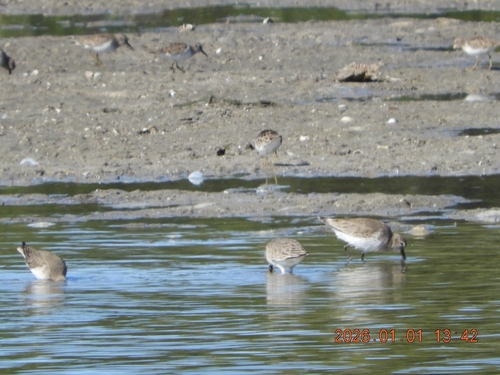
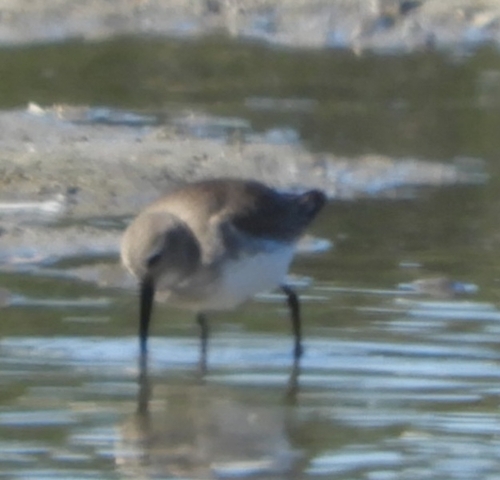
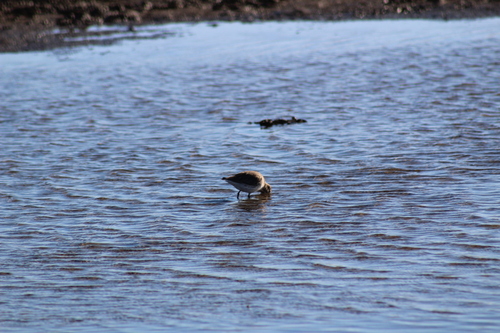
Measurements: Length: 16–20 cm (6.3–7.9 in) Weight: 34–77 g (1+1⁄4–2+3⁄4 oz) Wingspan: 38–43 cm (15–17 in) An adult dunlin in breeding plumage shows the distinctive black belly which no other similar-sized wader possesses. In winter, dunlins are greyish-brown above and white below. Juveniles are brown above with two weak whitish "V" shapes on the back, though less obvious than the same feature on little stint and some other species in the genus. They usually have black marks on the flanks or belly. All ages show a narrow white wingbar in flight. The legs and slightly decurved bill are black.
Text from Wikipedia, licensed CC BY-SA 4.0.
When to see the Dunlin
One bar for each month. Filled bars are the 11 months with records; pale bars are months with none. The wide bar is May, the month with the most records.
Where to see the Dunlin
The map shades 124 countries with regular records, and 11 more in a lighter tone where the bird turns up only as a stray. Everything unshaded has no records. Countries are listed below the map.
Recorded as a rare visitor in Colombia, Venezuela, Costa Rica, Somalia, Ecuador, Australia, New Zealand, Northern Mariana Islands, Cameroon, Dominican Republic, Paraguay.
About the Dunlin
The dunlin is a small wader in the genus Calidris. The English name is a dialect form of "dunling", first recorded in 1531–1532. It derives from dun, "dull brown", with the suffix -ling, meaning a person or thing with the given quality.
Text adapted from Wikipedia, licensed CC BY-SA 4.0.
Easily confused with
 Least SandpiperCalidris minutillaThis species has yellow-green legs and a short, thin, dark bill.
 SanderlingCalidris albaThe sanderling is a small plump sandpiper, 18–20 cm (7–8 in) in length.
 Semipalmated SandpiperCalidris pusillaIt is a small sandpiper, 15–18 centimetres (6–7 inches) long and weighing around 18–51.5 grams (0.63–1.82 ounces).
Side by side: Dunlin vs Least Sandpiper · Dunlin vs Sanderling · Dunlin vs Semipalmated Sandpiper
Learn the Dunlin in the BeakBrain App
Photo and call practice. Coming soon to iPhone and Android.
Play today's Daily BirdEvery photo and recording on this page is credited to its author under the licence shown. Spotted a problem with this page, or have a better photo? Contribute.