Learn what every symbol on the card means.Full credits and sources at beakbrain.com/symbols
 WetlandPlatform nestSmall · 23 g


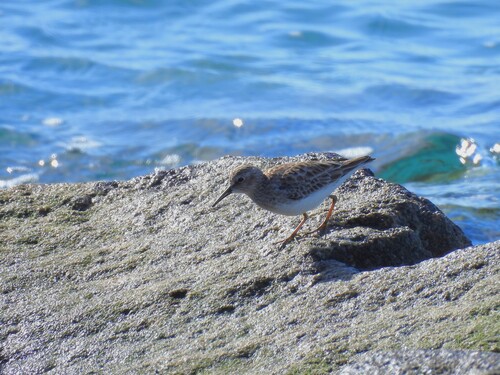
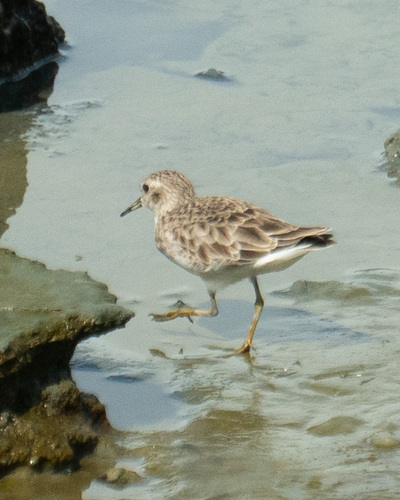
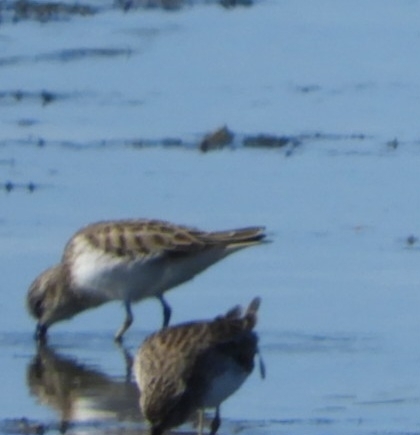
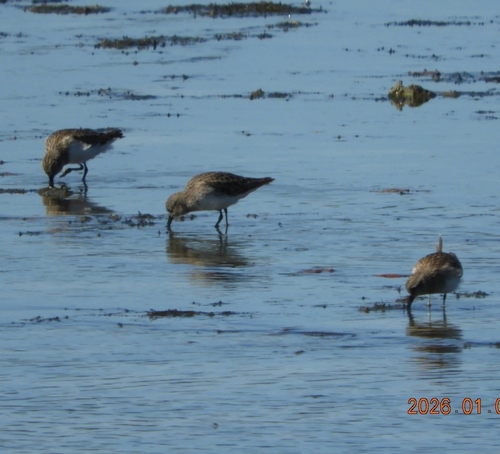
ID tip
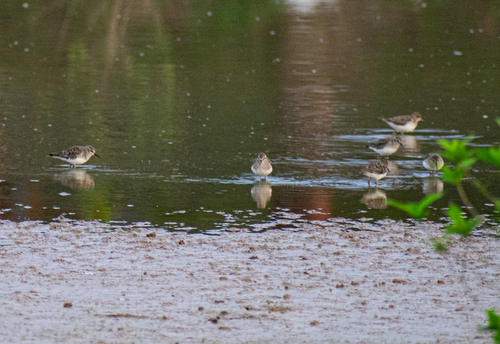
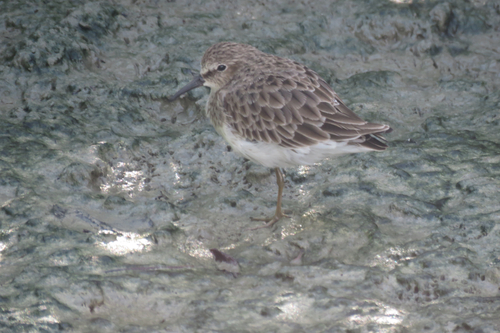
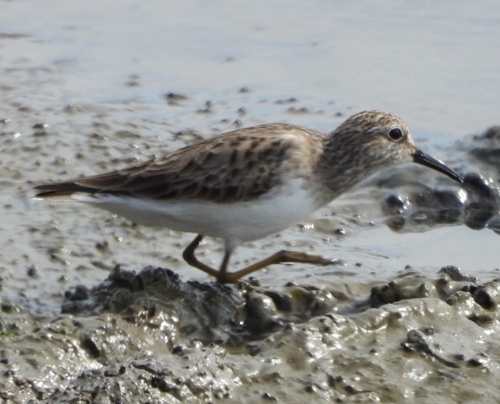
This species has yellow-green legs and a short, thin, dark bill. Breeding adults are brown with dark brown streaks on top and white underneath. They have a light line above the eye and a dark crown. In winter, Least sandpipers are grey above. The juveniles are brightly patterned above with rufous colour and white mantle stripes. This bird can be difficult to distinguish from other similar tiny shorebirds; these are known collectively as "peeps" or "stints". In particular, least sandpiper is very similar to its Asian counterpart, long-toed stint.
Text from Wikipedia, licensed CC BY-SA 4.0.
When to see the Least Sandpiper
One bar for each month. Filled bars are the 11 months with records; pale bars are months with none. The wide bar is August, the month with the most records.
Where to see the Least Sandpiper
The map shades 56 countries with regular records, and 5 more in a lighter tone where the bird turns up only as a stray. Everything unshaded has no records. Countries are listed below the map.
Recorded as a rare visitor in Belgium, Spain, France, Ireland, Iceland.
About the Least Sandpiper
The least sandpiper is the smallest shorebird. The genus name is from Ancient Greek kalidris or skalidris, a term used by Aristotle for some grey-coloured waterside birds. The specific minutilla is Medieval Latin for "very small".
Text adapted from Wikipedia, licensed CC BY-SA 4.0.
Easily confused with
 DunlinCalidris alpinaMeasurements:
Length: 16–20 cm (6.3–7.9 in)
Weight: 34–77 g (1+1⁄4–2+3⁄4 oz)
Wingspan: 38–43 cm (15–17 in)
An adult dunlin in breeding plumage shows the distinctive black belly which no other similar-sized wader possesses.
DunlinCalidris alpinaMeasurements:
Length: 16–20 cm (6.3–7.9 in)
Weight: 34–77 g (1+1⁄4–2+3⁄4 oz)
Wingspan: 38–43 cm (15–17 in)
An adult dunlin in breeding plumage shows the distinctive black belly which no other similar-sized wader possesses.
 SanderlingCalidris albaThe sanderling is a small plump sandpiper, 18–20 cm (7–8 in) in length.
 Semipalmated SandpiperCalidris pusillaIt is a small sandpiper, 15–18 centimetres (6–7 inches) long and weighing around 18–51.5 grams (0.63–1.82 ounces).
Side by side: Dunlin vs Least Sandpiper · Least Sandpiper vs Sanderling · Least Sandpiper vs Semipalmated Sandpiper
Learn the Least Sandpiper in the BeakBrain App
Photo and call practice. Coming soon to iPhone and Android.
Play today's Daily BirdEvery photo and recording on this page is credited to its author under the licence shown. Spotted a problem with this page, or have a better photo? Contribute.