Learn what every symbol on the card means.Full credits and sources at beakbrain.com/symbols
 ForestDomed nestTiny · 14 g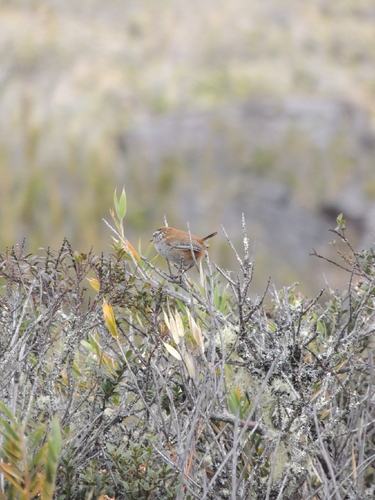
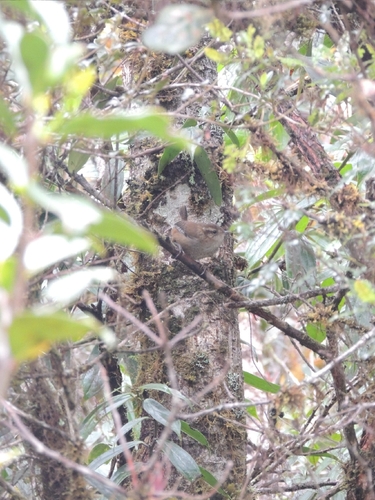
What the Timberline Wren sounds like


ID tip
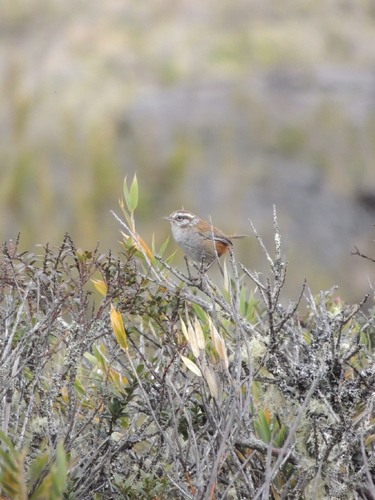
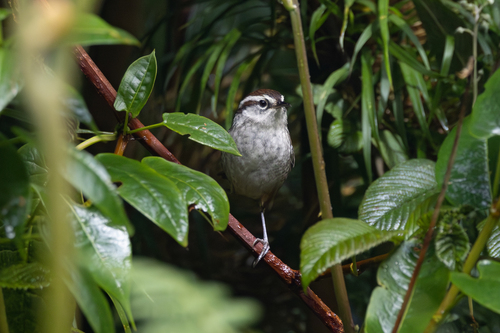
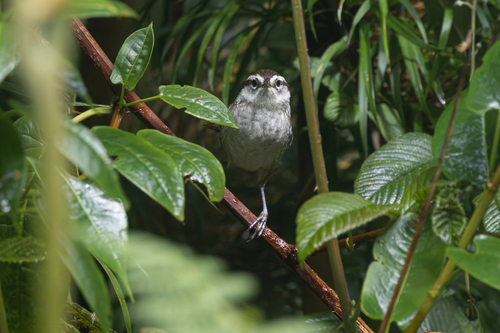
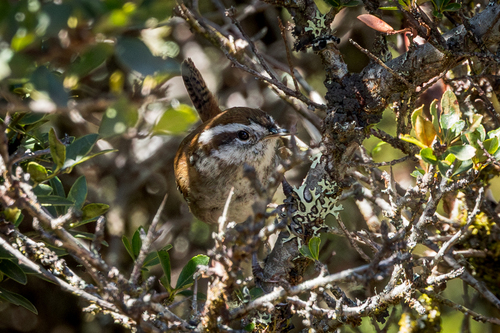
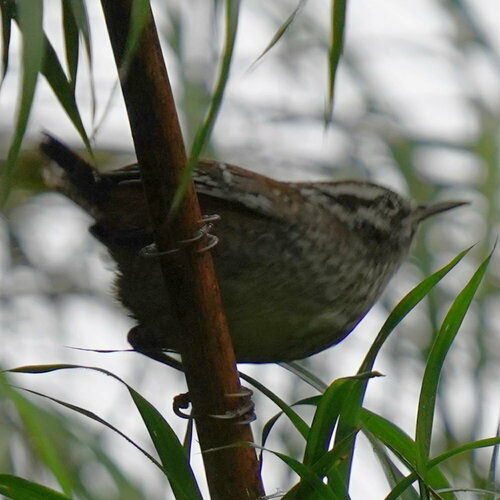
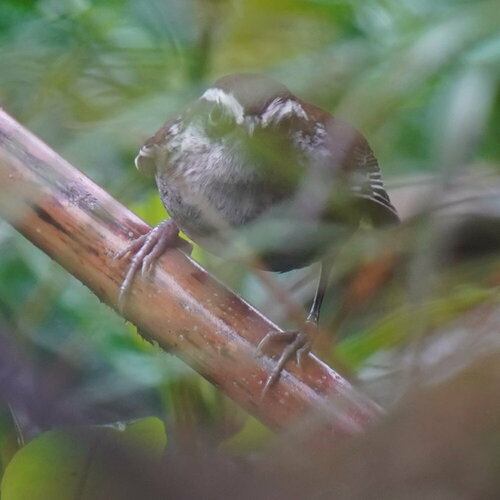
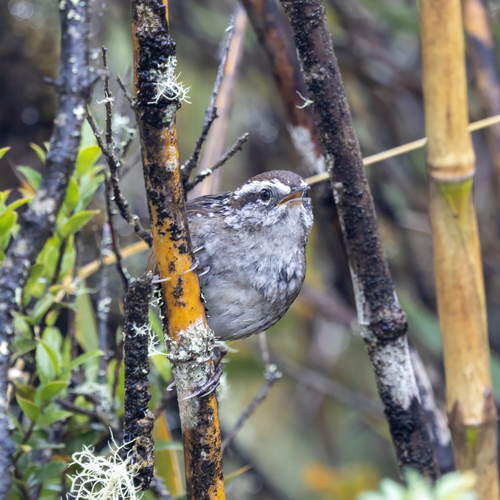
The timberline wren is 10 cm (3.9 in) long and weighs 14 g (0.49 oz). The adult of the nominate subspecies has rich chestnut brown crown and upperparts and a reddish brown tail with thin dark bars. It has a broad gray-white supercilium, a chocolate brown stripe behind the eye, and grayish cheeks with narrow black markings. Its throat and chest are grayish white, its upper belly a mottled grayish white, its lower belly brown, and its flanks and vent area reddish brown. The juvenile is grayer below with a scalloped appearance. T. b. Voice: The timberline wren's song is quite different from that of any Troglodytes wren; it is a repeated "series of half a dozen scratchy, warbling notes, lasting 2–3 seconds". Its call is "a harsh scolding 'churr'".
Text from Wikipedia, licensed CC BY-SA 4.0.
When to see the Timberline Wren
One bar for each month. Filled bars are the 11 months with records; pale bars are months with none. The wide bar is March, the month with the most records.
Where to see the Timberline Wren
The map shades 2 countries with regular records. Everything unshaded has no records. Countries are listed below the map.
About the Timberline Wren
The timberline wren is a species of bird in the family Troglodytidae. It is found in Costa Rica and western Panama.
Text adapted from Wikipedia, licensed CC BY-SA 4.0.
Easily confused with
 Fawn-breasted WrenCantorchilus guarayanusThe fawn-breasted wren is 13.5 cm (5.3 in) long and weighs 13 to 14 g (0.46 to 0.49 oz).
 White-headed WrenCampylorhynchus albobrunneusThe white-headed wren is 18.5 cm (7.3 in) long and weighs 27.5 to 39 g (0.97 to 1.38 oz).
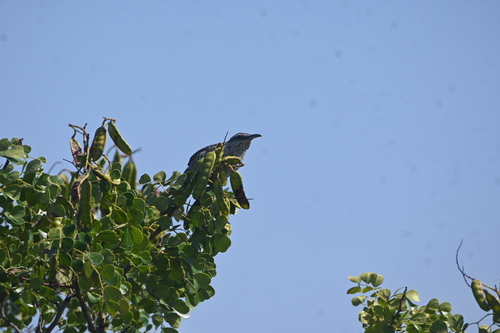 Yucatan WrenCampylorhynchus yucatanicusThe adult Yucatan wren is a small species about 18 centimetres (7 in) long.
Side by side: Fawn-breasted Wren vs Timberline Wren · Timberline Wren vs White-headed Wren · Timberline Wren vs Yucatan Wren
Learn the Timberline Wren in the BeakBrain App
Photo and call practice. Coming soon to iPhone and Android.
Play today's Daily BirdEvery photo and recording on this page is credited to its author under the licence shown. Spotted a problem with this page, or have a better photo? Contribute.