Learn what every symbol on the card means.Full credits and sources at beakbrain.com/symbols
 ForestPlatform nestLarge · 756 g


ID tip
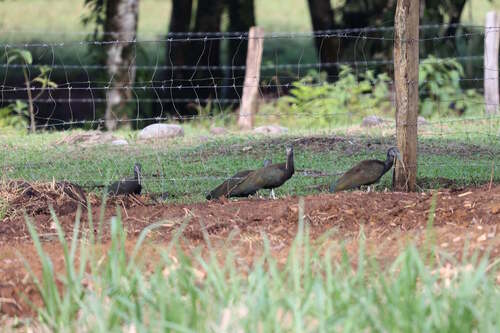
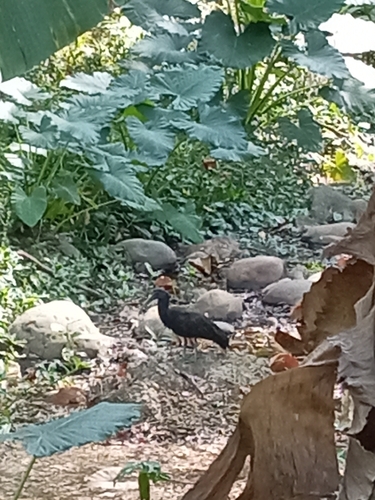
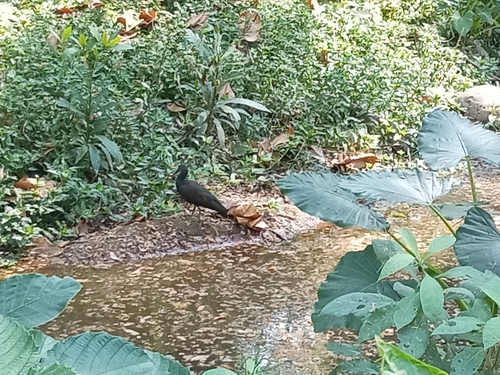
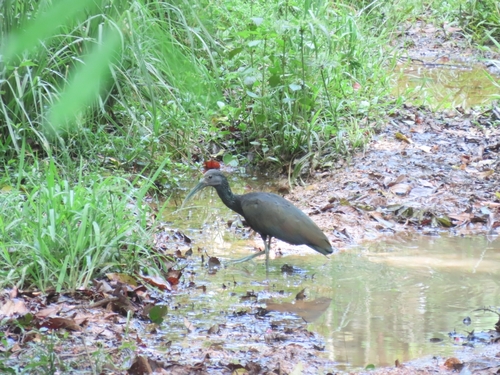
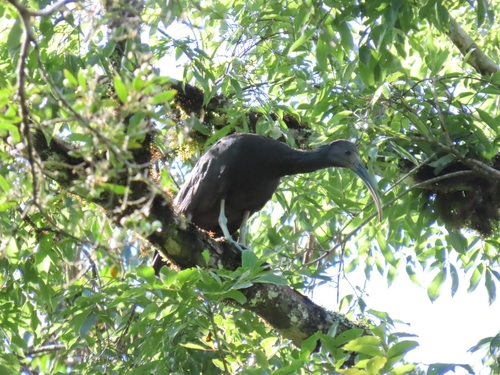
The green ibis is a medium-sized ibis, with short legs and a long, slender, decurved bill. It measures 45–60 cm (18–24 in) in length and ranges from 700 to 890 g (1.5 to 2.0 lb) in mass. The sexes, which are identical in plumage, overlap somewhat in measurements, though the largest birds are male. Breeding adults have glossy greenish-black bodies, pale green legs and bill, and grey bare facial skin patches. Juveniles are much duller, but can be distinguished from the similar glossy ibis by their bulkier shape, shorter legs and broader wings.
Text from Wikipedia, licensed CC BY-SA 4.0.
When to see the Green Ibis
One bar for each month, and every month is filled: this bird is recorded here in all twelve. The wide bar is October, the month with the most records.
Where to see the Green Ibis
The map shades 15 countries with regular records, and 1 more in a lighter tone where the bird turns up only as a stray. Everything unshaded has no records. Countries are listed below the map.
Recorded as a rare visitor in Kenya.
About the Green Ibis
The green ibis, also known as the Cayenne ibis, is a wading bird in the ibis family Threskiornithidae. It is the only member of the genus Mesembrinibis.
Text adapted from Wikipedia, licensed CC BY-SA 4.0.
Easily confused with
 Black-faced IbisTheristicus melanopisIt has a total length of approximately 75 centimetres (30 in).
 Buff-necked IbisTheristicus caudatusIt has a total length of approximately 75 centimetres (30 in).
 African SpoonbillPlatalea albaThe African spoonbill is a long-legged wading bird of the ibis and spoonbill family Threskiornithidae.
Side by side: Buff-necked Ibis vs Green Ibis · Black-faced Ibis vs Green Ibis
Learn the Green Ibis in the BeakBrain App
Photo and call practice. Coming soon to iPhone and Android.
Play today's Daily BirdEvery photo and recording on this page is credited to its author under the licence shown. Spotted a problem with this page, or have a better photo? Contribute.