Learn what every symbol on the card means.Full credits and sources at beakbrain.com/symbols
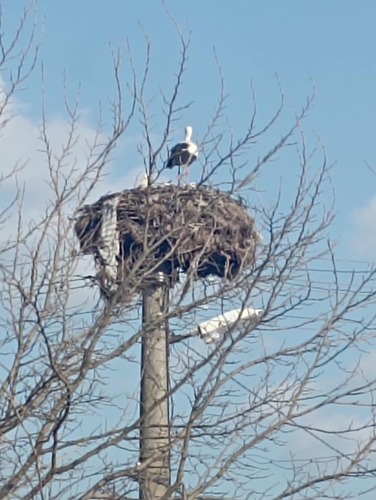
 GrasslandPlatform nestHuge · 3.4 kg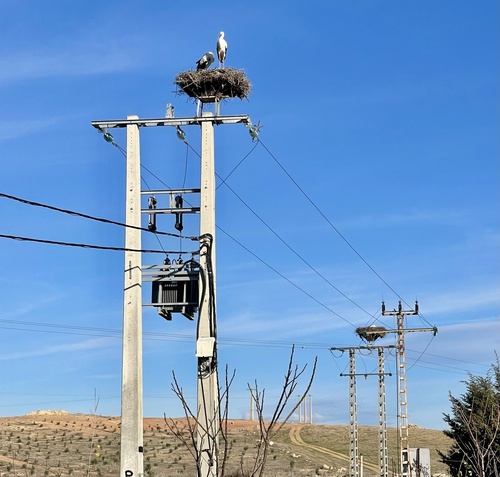
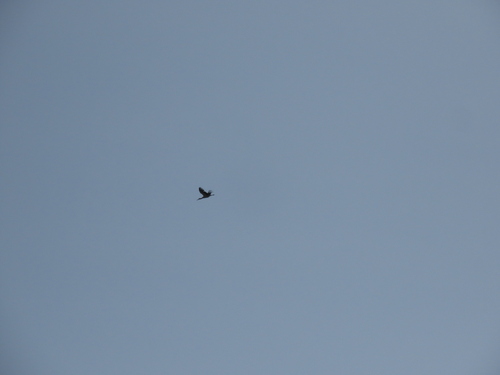
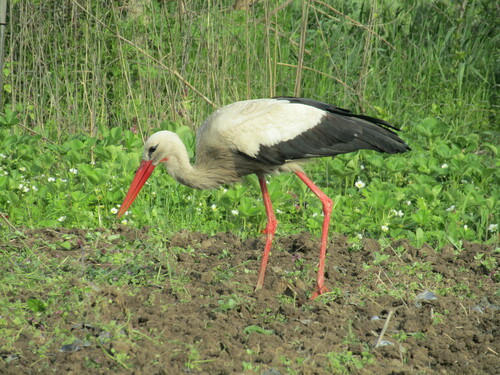

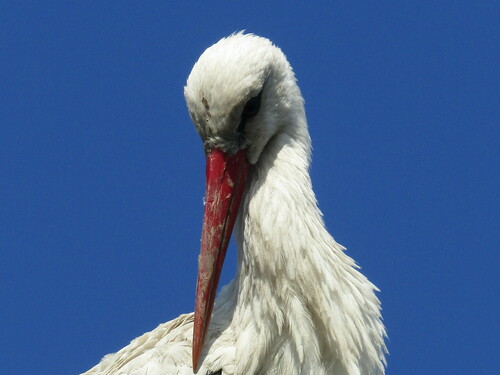
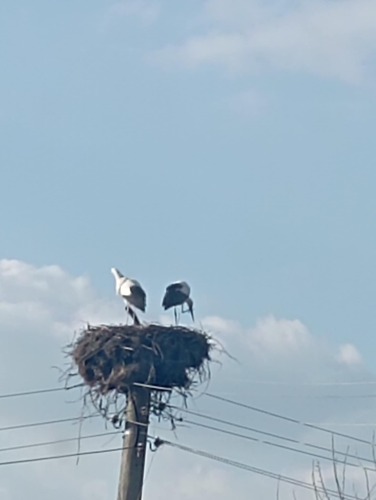
What the White Stork sounds like


ID tip
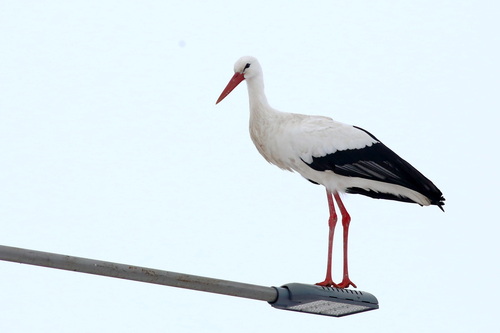
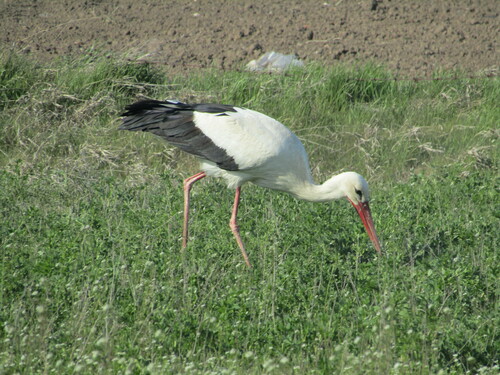
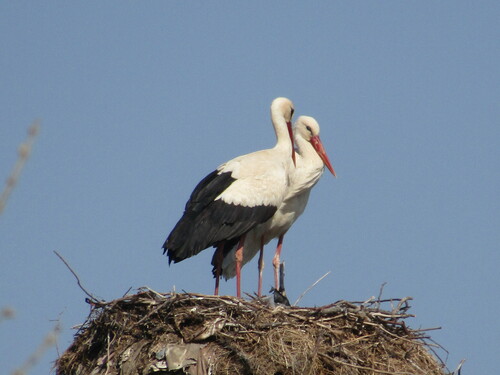
The white stork is a large bird. It has a length of 100–115 cm (39–45 in), and a standing height of 100–125 cm (39–49 in). The wingspan is 155–215 cm (61–85 in) and its weight is 2.3–4.5 kg (5.1–9.9 lb). Like all storks, it has long legs, a long neck and a long straight pointed beak. The sexes are identical in appearance, except that males are larger than females on average. The plumage is mainly white with black flight feathers and wing coverts; the black is caused by the pigment melanin. The breast feathers are long and shaggy forming a ruff which is used in some courtship displays.
Text from Wikipedia, licensed CC BY-SA 4.0.
When to see the White Stork
One bar for each month. Filled bars are the 10 months with records; pale bars are months with none. The wide bar is May, the month with the most records.
Where to see the White Stork
The map shades 100 countries with regular records, and 11 more in a lighter tone where the bird turns up only as a stray. Everything unshaded has no records. Countries are listed below the map.
Recorded as a rare visitor in Ireland, Angola, São Tomé & Príncipe, Martinique, Sri Lanka, Andorra, Congo - Brazzaville, Gabon, Costa Rica, China, Turkmenistan.
About the White Stork
The white stork is a large bird in the stork family, Ciconiidae. Its plumage is mainly white, with black on the bird's wings. Adults have long red legs and long pointed red beaks, and measure on average 100–115 cm (39–45 in) from beak tip to end of tail, with a 155–215 cm (61–85 in) wingspan. The two subspecies, which differ slightly in size, breed in Europe north to Finland, northwestern Africa, Palearctic east to southern Kazakhstan and southern Africa. The white stork is a long-distance migrant, wintering in Africa from tropical Sub-Saharan Africa to as far south as South Africa, or on the Indian subcontinent.
Text adapted from Wikipedia, licensed CC BY-SA 4.0.
Easily confused with
 Black StorkCiconia nigraThe black stork is a large bird, measuring between 95 and 100 cm (37 and 39 in) in length with a 145-to-155 cm (57-to-61 in) wingspan, and weighing around 3 kg (6.6 lb).
 Asian Woolly-necked StorkCiconia episcopusThe woolly-necked stork is a medium-sized stork at 75–92 cm tall.
 Maguari StorkCiconia maguariVoice: Adults utter wheezing, hissing, disyllabic whistles during up-down greeting displays at the nests about every 1–1.5 seconds.
Side by side: Black Stork vs White Stork · Asian Woolly-necked Stork vs White Stork · Maguari Stork vs White Stork
Watch the White Stork on live cams
 RETURNS MARCH
Browse all 118 bird cams worldwide, live and seasonal, by region and species.
Learn the White Stork in the BeakBrain App
Photo and call practice. Coming soon to iPhone and Android.
Play today's Daily BirdEvery photo and recording on this page is credited to its author under the licence shown. Spotted a problem with this page, or have a better photo? Contribute.