Learn what every symbol on the card means.Full credits and sources at beakbrain.com/symbols
 GrasslandPlatform nestHuge · 4.0 kg


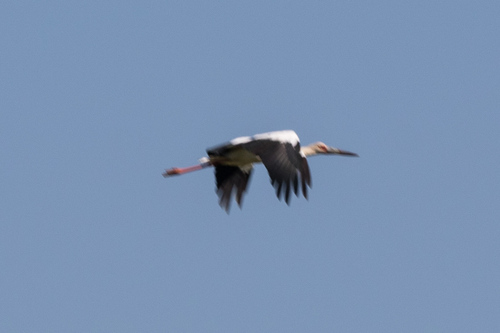
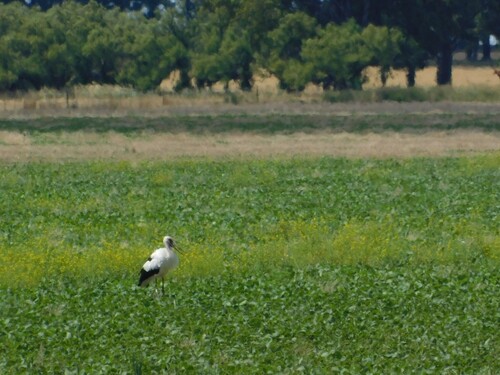
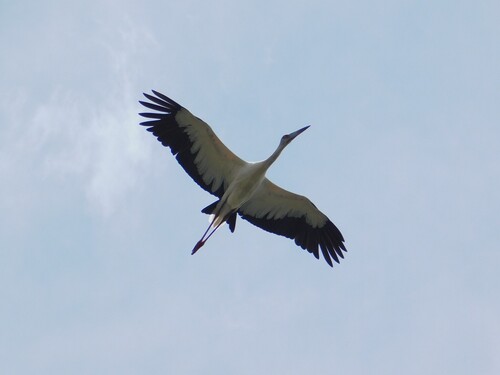
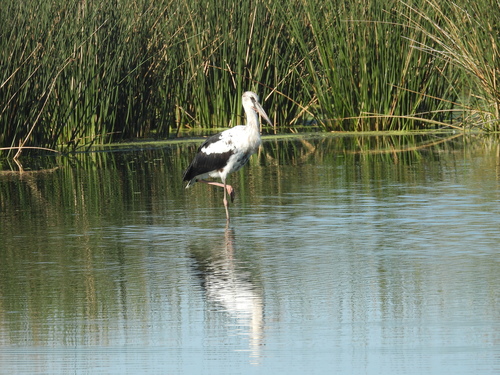


ID tip
Voice: Adults utter wheezing, hissing, disyllabic whistles during up-down greeting displays at the nests about every 1–1.5 seconds. These whistles are slower and lower pitched than the corresponding vocalisations of other Ciconia, but sound similar to those of the Abdim's stork and the woolly-necked stork.
Text from Wikipedia, licensed CC BY-SA 4.0.
When to see the Maguari Stork
One bar for each month, and every month is filled: this bird is recorded here in all twelve. The wide bar is October, the month with the most records.
Where to see the Maguari Stork
The map shades 13 countries with regular records, and 1 more in a lighter tone where the bird turns up only as a stray. Everything unshaded has no records. Countries are listed below the map.
Recorded as a rare visitor in Trinidad & Tobago.
About the Maguari Stork
The maguari stork is a large species of stork that inhabits seasonal wetlands over much of South America, and is very similar in appearance to the white stork; albeit slightly larger. It is the only species of its genus to occur in the New World and is one of the only three New World stork species, together with the wood stork and the jabiru.
Text adapted from Wikipedia, licensed CC BY-SA 4.0.
Easily confused with
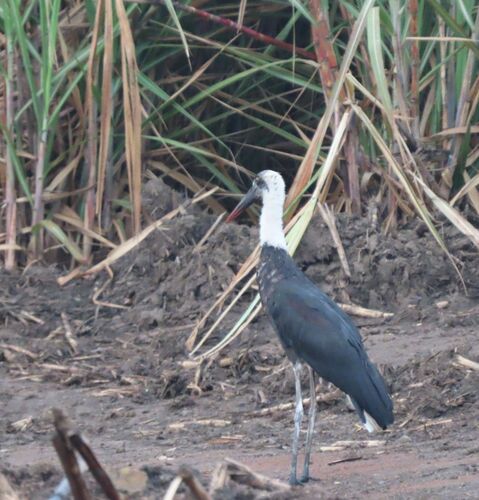 African Woolly-necked StorkCiconia microscelisThe African woolly-necked stork is a medium-sized stork at 75–92 cm tall.
 Abdim's StorkCiconia abdimiiCiconia abdimii is a black stork with grey legs, red knees and feet, grey bill and white underparts.
 Asian Woolly-necked StorkCiconia episcopusThe woolly-necked stork is a medium-sized stork at 75–92 cm tall.
Side by side: Maguari Stork vs White Stork · Black Stork vs Maguari Stork · Asian Woolly-necked Stork vs Maguari Stork · Jabiru vs Maguari Stork · African Woolly-necked Stork vs Maguari Stork · Abdim's Stork vs Maguari Stork
Learn the Maguari Stork in the BeakBrain App
Photo and call practice. Coming soon to iPhone and Android.
Play today's Daily BirdEvery photo and recording on this page is credited to its author under the licence shown. Spotted a problem with this page, or have a better photo? Contribute.