Learn what every symbol on the card means.Full credits and sources at beakbrain.com/symbols
 ForestCup nestSmall · 57 g

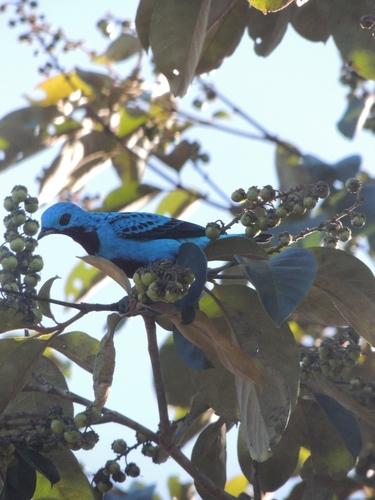
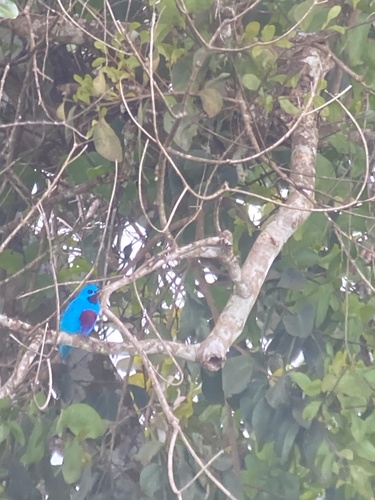
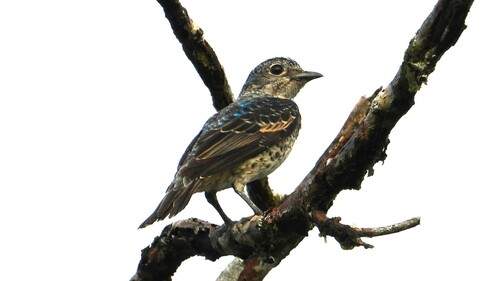
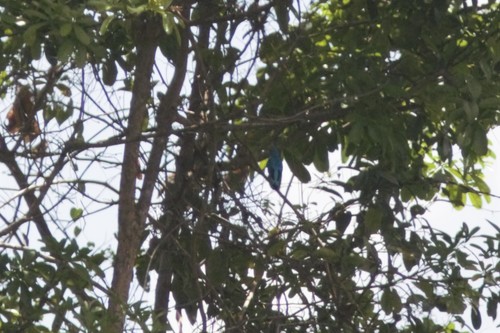
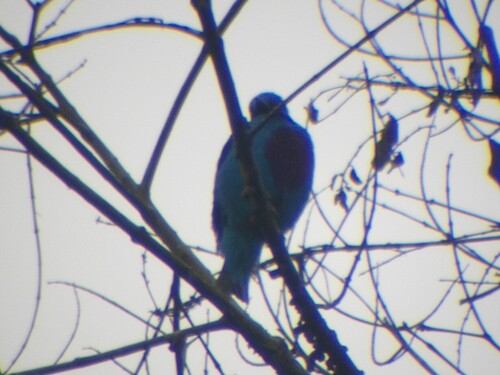
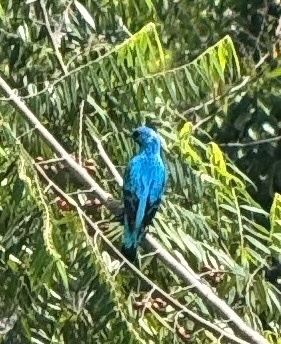
ID tip
The turquoise cotinga is 17 to 18.5 cm (6.7 to 7.3 in) long and weighs about 51 to 66 g (1.8 to 2.3 oz). The sexes are dramatically dimorphic. Adult males have deep turquoise-blue upperparts. Their wings are black with thin to moderately wide blue edges on most feathers. Their tail is black; their turquoise-blue uppertail coverts are long and cover much of the tail. Their chin and throat and separately their breast and upper belly are purple. Adult females are larger than males. They have mostly dark brown upperparts with buffish white feather tips that produce a scalloped appearance.
Text from Wikipedia, licensed CC BY-SA 4.0.
When to see the Turquoise Cotinga
One bar for each month. Filled bars are the 9 months with records; pale bars are months with none. The wide bar is March, the month with the most records.
Where to see the Turquoise Cotinga
The map shades 2 countries with regular records. Everything unshaded has no records. Countries are listed below the map.
About the Turquoise Cotinga
The turquoise cotinga or Ridgway's cotinga is a Vulnerable species of bird in the family Cotingidae. It is found in Costa Rica and Panama.
Text adapted from Wikipedia, licensed CC BY-SA 4.0.
Easily confused with
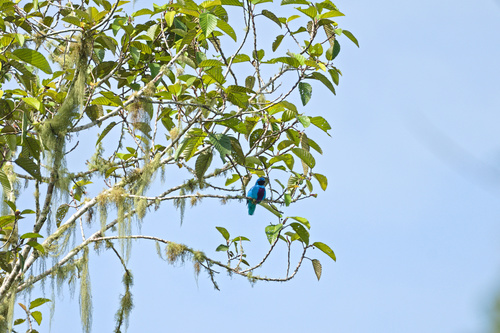 Lovely CotingaCotinga amabilisThe lovely cotinga is 18 to 20 cm (7.1 to 7.9 in) long and weighs 66 to 75 g (2.3 to 2.6 oz).
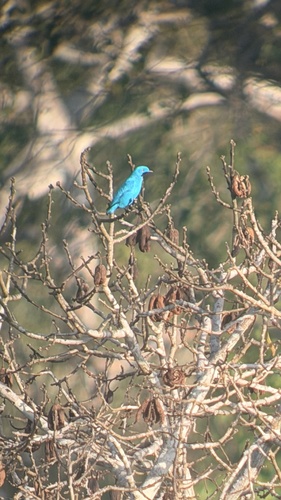 Plum-throated CotingaCotinga maynanaThe plum-throated cotinga is 19 to 20.5 cm (7.5 to 8.1 in) long and weighs about 70 g (2.5 oz).
 Blue CotingaCotinga nattereriiThe blue cotinga is a plump, dove-like bird with a small head.
Side by side: Spangled Cotinga vs Turquoise Cotinga · Blue Cotinga vs Turquoise Cotinga · Plum-throated Cotinga vs Turquoise Cotinga
Learn the Turquoise Cotinga in the BeakBrain App
Photo and call practice. Coming soon to iPhone and Android.
Play today's Daily BirdEvery photo and recording on this page is credited to its author under the licence shown. Spotted a problem with this page, or have a better photo? Contribute.