Learn what every symbol on the card means.Full credits and sources at beakbrain.com/symbols
 ForestSmall · 27 g


What the White-cheeked Antbird sounds like


ID tip
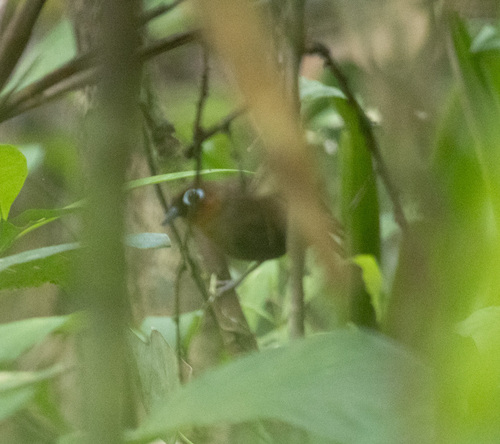
The white-cheeked antbird is 13.5 to 15 cm (5.3 to 5.9 in) long and averages about 24 g (0.85 oz). Adult males of the nominate subspecies G. l. leucaspis have a chestnut-brown crown and nape. They have bare blue skin around the eye and a blackish band from the lores through the eye that continues down the side of the neck and along the flanks. Their back, rump, wings, and tail are chestnut-brown with some rufous edging to the wing and tail feathers. Their cheeks, throat, and breast are white and their lower belly dark brown. Voice: The white-cheeked antbird's primary song is a series that "begins with upslurred whistles at even pitch that shorten into rather abrupt notes dropping in frequency and intensity, then lengthen and increase again in intensity, finally decreasing in intensity and becoming harsh".
Text from Wikipedia, licensed CC BY-SA 4.0.
When to see the White-cheeked Antbird
One bar for each month, and every month is filled: this bird is recorded here in all twelve. The wide bar is March, the month with the most records.
Where to see the White-cheeked Antbird
The map shades 8 countries with regular records. Everything unshaded has no records. Countries are listed below the map.
About the White-cheeked Antbird
The white-cheeked antbird is an insectivorous bird in subfamily Thamnophilinae of family Thamnophilidae, the "typical antbirds". It is found in Brazil, Colombia, Ecuador, and Peru.
Text adapted from Wikipedia, licensed CC BY-SA 4.0.
Easily confused with
Learn the White-cheeked Antbird in the BeakBrain App
Photo and call practice. Coming soon to iPhone and Android.
Play today's Daily BirdEvery photo and recording on this page is credited to its author under the licence shown. Spotted a problem with this page, or have a better photo? Contribute.