Learn what every symbol on the card means.Full credits and sources at beakbrain.com/symbols
 ForestPlatform nestMedium · 204 g


ID tip
Brown jays vary in plumage geographically: there are two main groups. Northern birds are almost completely dark brown, with lighter brown on the underparts. Southern birds are white-bellied and have bright white tips to the outer tail feathers. The intergrade zone is in Veracruz, Mexico. Adults in both populations have black bills, legs, and feet. Immatures have yellow bare parts, including yellow eye-rings. The voice is a loud but low-pitched pee-ah call and is often modified to suit its situation or mood.
Text from Wikipedia, licensed CC BY-SA 4.0.
When to see the Brown Jay
One bar for each month, and every month is filled: this bird is recorded here in all twelve. The wide bar is March, the month with the most records.
Where to see the Brown Jay
The map shades 9 countries with regular records. Everything unshaded has no records. Countries are listed below the map.
About the Brown Jay
The brown jay is a large jay native to Central America and southern Texas.
Text adapted from Wikipedia, licensed CC BY-SA 4.0.
Easily confused with
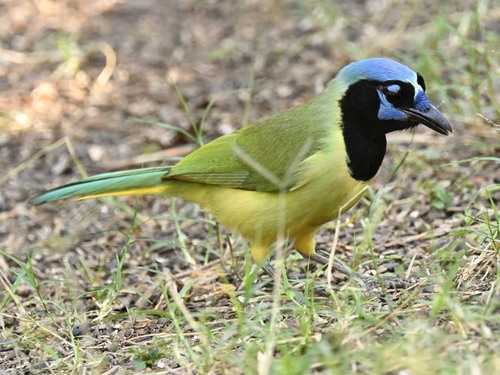 Green JayCyanocorax yncasThe Inca jay is 29.5–30.5 cm (11.6–12.0 in) in length.
 White-throated Magpie-JayCyanocorax formosusThe white-throated magpie-jay is between 43 and 56 cm (17–22 in) in length and weighs 205 to 213 g (7.2–7.5 oz).
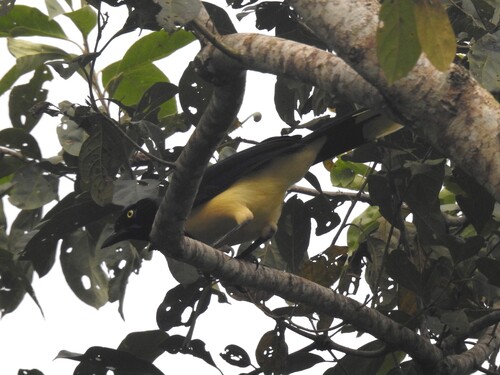 Black-chested JayCyanocorax affinisMeasuring 34 cm (13 in) long, this jay is easily recognized from its distinctive facial pattern and yellow eye.
Side by side: Brown Jay vs Green Jay · Brown Jay vs White-throated Magpie-Jay · Black-chested Jay vs Brown Jay
Learn the Brown Jay in the BeakBrain App
Photo and call practice. Coming soon to iPhone and Android.
Play today's Daily BirdEvery photo and recording on this page is credited to its author under the licence shown. Spotted a problem with this page, or have a better photo? Contribute.