
Brown Jay
Cyanocorax morio
Brown jays vary in plumage geographically: there are two main groups. Northern birds are almost completely dark brown, with lighter brown on the underparts. Southern birds are white-bellied and have bright white tips to the outer tail feathers. The intergrade zone is in Veracruz, Mexico. Adults in both populations have black bills, legs, and feet. Immatures have yellow bare parts, including yellow eye-rings. The voice is a loud but low-pitched pee-ah call and is often modified to suit its situation or mood.
ID text from Wikipedia, CC BY-SA 4.0
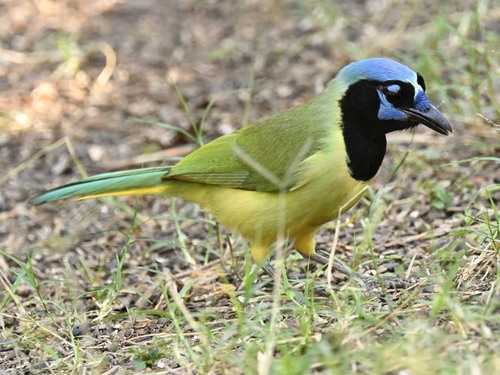
Green Jay
Cyanocorax yncas
The Inca jay is 29.5–30.5 cm (11.6–12.0 in) in length. The crown can appear mostly white, with blue limited to the frontal crest and nape. A black bib forms a broad band up to the sides of the head as well as a stripe through the eye line and one above it. The breast and underparts typically are bright yellow. The upper parts are rich green. The color of the iris is bright yellow. Voice: As with most of the typical jays, this species has a very extensive voice repertoire. The bird's most common call makes a rassh-rassh-rassh sound, but many other unusual notes also occur. One of the most distinctive calls sounds like an alarm bell.
ID text from Wikipedia, CC BY-SA 4.0

Where you might meet both
Learn this pair in the BeakBrain App
Photo and call practice. Coming soon to iPhone and Android.
Play today's Daily BirdPhotos and recordings are credited to their authors under the licence shown. Full profiles: Brown Jay and Green Jay.