Learn what every symbol on the card means.Full credits and sources at beakbrain.com/symbols
 ForestCup nestMedium · 79 g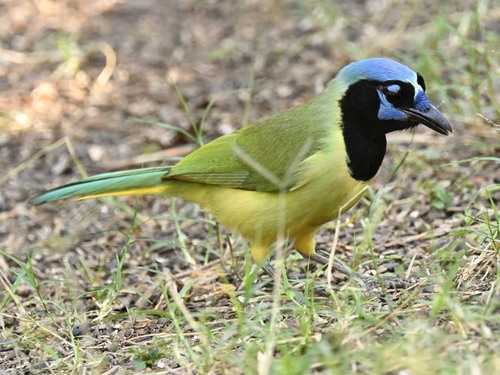
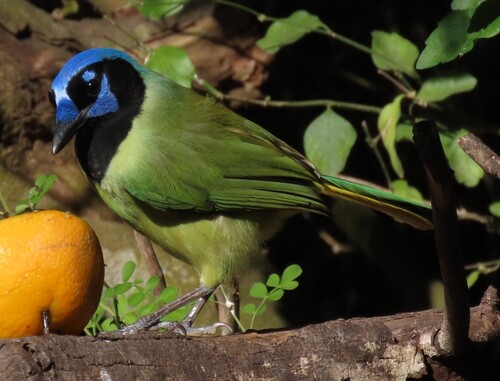
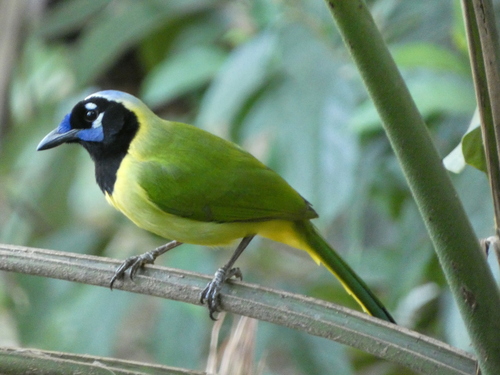
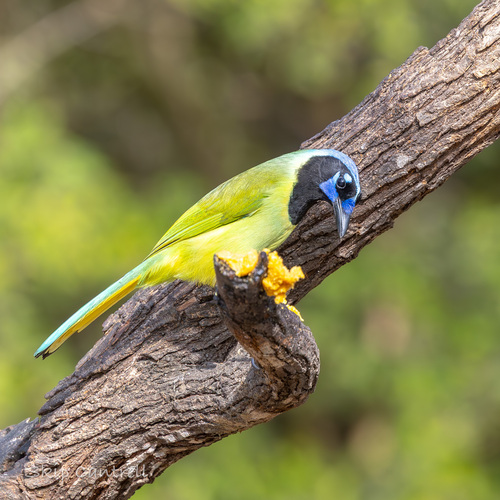
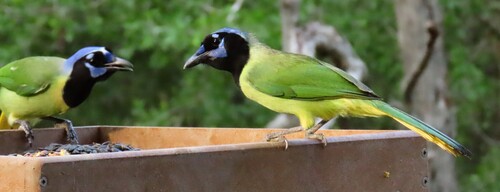
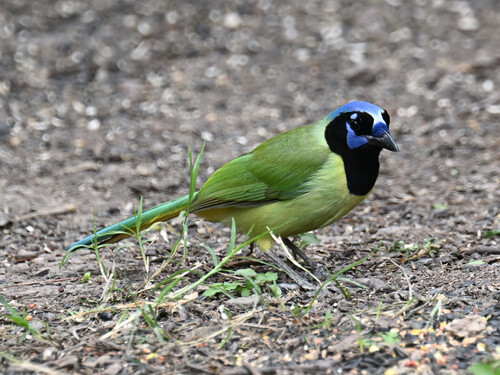


What the Green Jay sounds like


ID tip
The Inca jay is 29.5–30.5 cm (11.6–12.0 in) in length. The crown can appear mostly white, with blue limited to the frontal crest and nape. A black bib forms a broad band up to the sides of the head as well as a stripe through the eye line and one above it. The breast and underparts typically are bright yellow. The upper parts are rich green. The color of the iris is bright yellow. Voice: As with most of the typical jays, this species has a very extensive voice repertoire. The bird's most common call makes a rassh-rassh-rassh sound, but many other unusual notes also occur. One of the most distinctive calls sounds like an alarm bell.
Text from Wikipedia, licensed CC BY-SA 4.0.
When to see the Green Jay
One bar for each month. Filled bars are the 9 months with records; pale bars are months with none. The wide bar is November, the month with the most records.
Where to see the Green Jay
The map shades 10 countries with regular records. Everything unshaded has no records. Countries are listed below the map.
About the Green Jay
The Inca jay is a bird species of the New World jays, which is native to the Andes of South America. It is widely known as querrequerre in Spanish, an onomatopoeic name derived from the bird's call.
Text adapted from Wikipedia, licensed CC BY-SA 4.0.
Easily confused with
 Brown JayCyanocorax morioBrown jays vary in plumage geographically: there are two main groups.
 White-throated Magpie-JayCyanocorax formosusThe white-throated magpie-jay is between 43 and 56 cm (17–22 in) in length and weighs 205 to 213 g (7.2–7.5 oz).
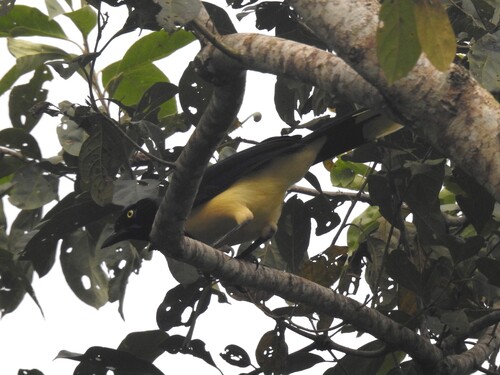 Black-chested JayCyanocorax affinisMeasuring 34 cm (13 in) long, this jay is easily recognized from its distinctive facial pattern and yellow eye.
Side by side: Brown Jay vs Green Jay · Green Jay vs White-throated Magpie-Jay · Black-chested Jay vs Green Jay
Learn the Green Jay in the BeakBrain App
Photo and call practice. Coming soon to iPhone and Android.
Play today's Daily BirdEvery photo and recording on this page is credited to its author under the licence shown. Spotted a problem with this page, or have a better photo? Contribute.