Learn what every symbol on the card means.Full credits and sources at beakbrain.com/symbols
 ForestScrapeSmall · 53 g

What the Eastern Whip-poor-will sounds like


ID tip
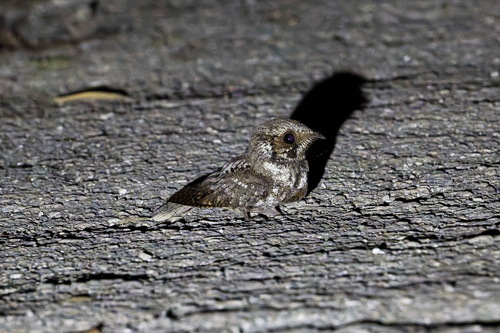
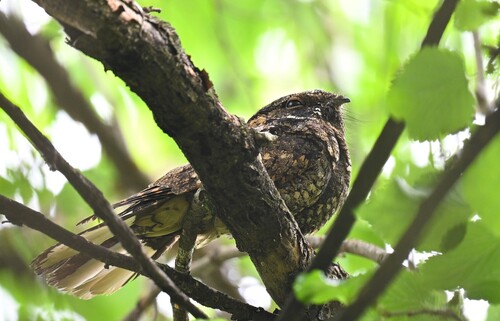
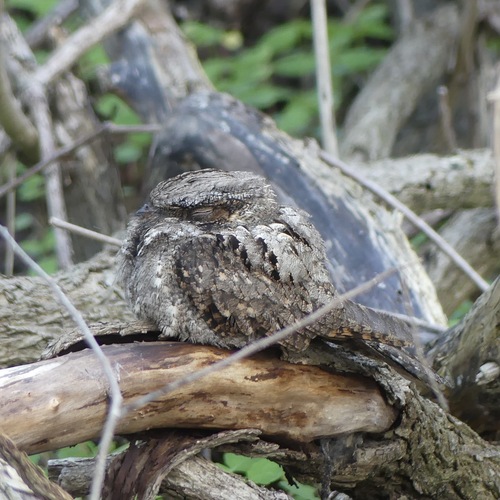
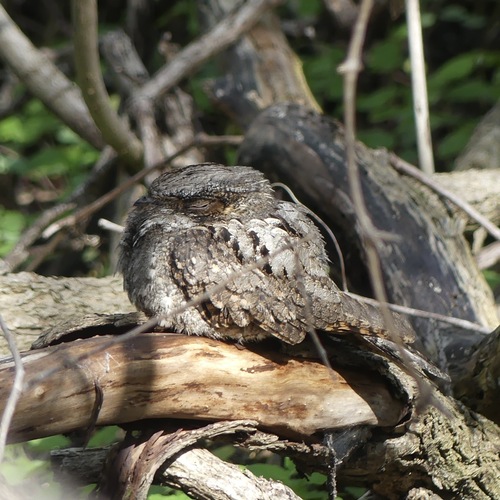
This medium-sized nightjar measures 22–27 cm (8+1⁄2–10+1⁄2 in) in length, spans 45–50 cm (17+1⁄2–19+1⁄2 in) across the wings and weighs 42–69 g (1+1⁄2–2+7⁄16 oz). Further standard measurements are a wing chord of 14.7 to 16.9 cm (5+13⁄16 to 6+5⁄8 in), a tail of 10.5 to 12.8 cm (4+1⁄8 to 5+1⁄16 in), a bill of 1 to 1.4 cm (3⁄8 to 9⁄16 in) and a tarsus of 1.5 to 1.8 cm (9⁄16 to 11⁄16 in). Adults have mottled plumage: the upperparts are grey, black and brown; the lower parts are grey and black. They have a very short bill and a black throat.
Text from Wikipedia, licensed CC BY-SA 4.0.
When to see the Eastern Whip-poor-will
One bar for each month. Filled bars are the 5 months with records; pale bars are months with none. The wide bar is May, the month with the most records.
Where to see the Eastern Whip-poor-will
The map shades 9 countries with regular records, and 3 more in a lighter tone where the bird turns up only as a stray. Everything unshaded has no records. Countries are listed below the map.
Recorded as a rare visitor in Mexico, Costa Rica, St. Pierre & Miquelon.
About the Eastern Whip-poor-will
The eastern whip-poor-will is a medium-sized bird within the nightjar family, Caprimulgidae, from North America. The whip-poor-will is commonly heard within its range, but less often seen because of its camouflage. It is named onomatopoeically after its song.
Text adapted from Wikipedia, licensed CC BY-SA 4.0.
Easily confused with
 Chuck-will's-widowAntrostomus carolinensisThe chuck-will's-widow has a short bill and a long tail typical of the nightjars.
 Mexican Whip-poor-willAntrostomus arizonaeThe Mexican whip-poor-will is 23 to 24 cm (9.1 to 9.4 in) long and weighs 45 to 50 g (1.6 to 1.8 oz).
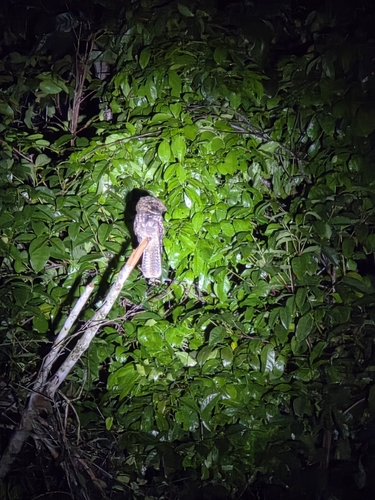 Rufous NightjarAntrostomus rufusThe rufous nightjar is 25 to 30 cm (9.8 to 12 in) long.
Side by side: Chuck-will's-widow vs Eastern Whip-poor-will · Eastern Whip-poor-will vs Mexican Whip-poor-will · Eastern Whip-poor-will vs Rufous Nightjar
Learn the Eastern Whip-poor-will in the BeakBrain App
Photo and call practice. Coming soon to iPhone and Android.
Play today's Daily BirdEvery photo and recording on this page is credited to its author under the licence shown. Spotted a problem with this page, or have a better photo? Contribute.