Learn what every symbol on the card means.Full credits and sources at beakbrain.com/symbols
 ForestCup nestSmall · 28 g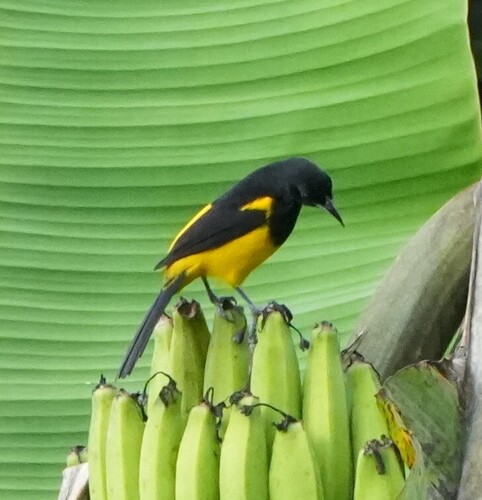
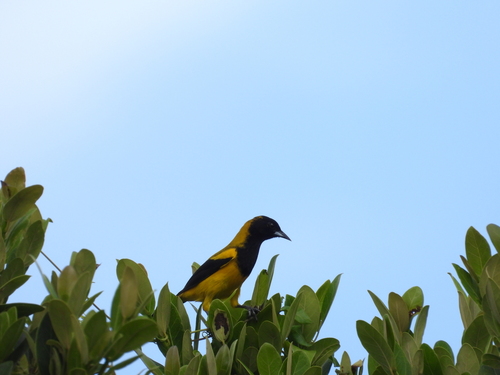
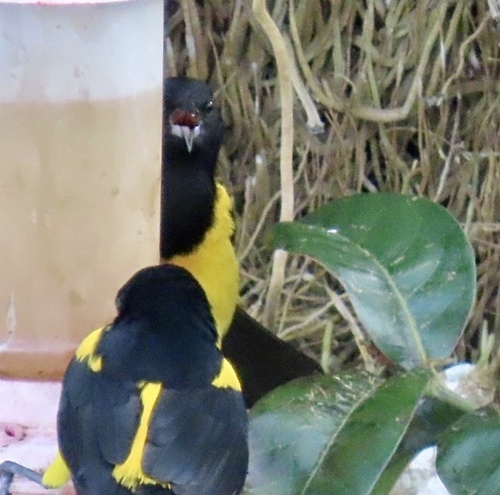
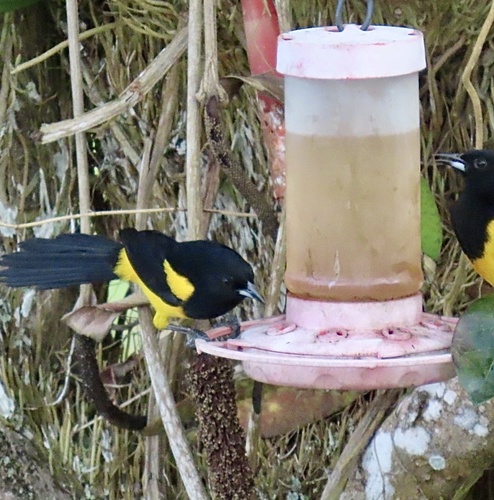


ID tip
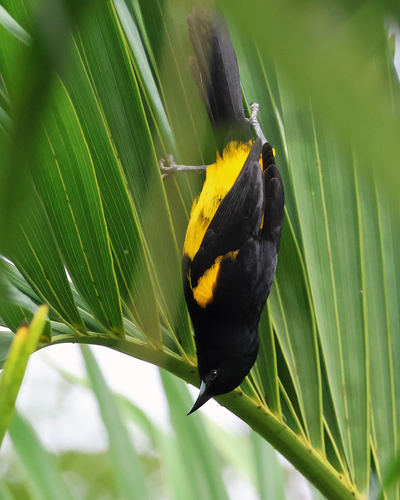
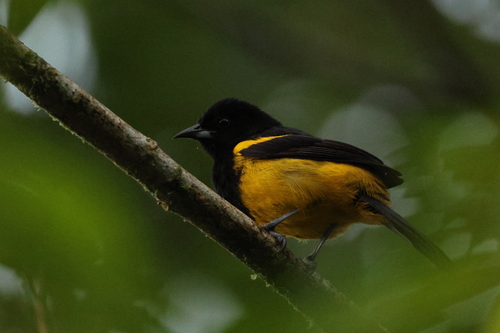
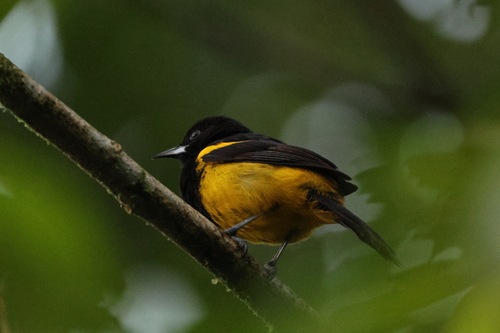
The black-cowled oriole is a medium-sized passerine, ranging in length from 18.5 to 21 cm (7.3 to 8.3 in). Males are larger and heavier than females, averaging 32.5 g (1.15 oz) while females average only 27.5 g (0.97 oz). In the north of the range, males and females are sexually dimorphic, while in the south, their plumages are similar. In both sexes, the bill is slender, slightly decurved, and black, with a silvery base to the lower mandible. The adult male's plumage is mostly black, with bright yellow patches on the shoulder, rump, and uppertail coverts. Voice: The bird's song is a fairly quiet, complicated series of soft, whistled notes and harsher chattering. These are described as being variously clear, metallic, slurred and mellow, and are delivered in an apparently random order. Its calls include a scratchy, rising weet, a nasal deep, a nasal eeaahnk, a quiet tee-u, and a sharper beehk or bihk.
Text from Wikipedia, licensed CC BY-SA 4.0.
When to see the Black-cowled Oriole
One bar for each month. Filled bars are the 10 months with records; pale bars are months with none. The wide bar is March, the month with the most records.
Where to see the Black-cowled Oriole
The map shades 7 countries with regular records. Everything unshaded has no records. Countries are listed below the map.
About the Black-cowled Oriole
The black-cowled oriole is a species of bird in the family Icteridae. It is common and widespread in the Caribbean lowlands and foothills from southern Mexico to western Panama. It lives primarily in humid or semihumid forest, as well as in clearings, along forest edges, in plantations, in semi-open areas with scattered trees and bushes, and in gardens. The adult male is black, with yellow on the belly, shoulder, rump, wing lining, and crissum. The female's plumage varies depending on location. In the south of its range, it is similar to that of the male. In the north, its crown and upperparts are olive-yellow, while its face, throat, upper breast, wings, and tail are black.
Text adapted from Wikipedia, licensed CC BY-SA 4.0.
Easily confused with
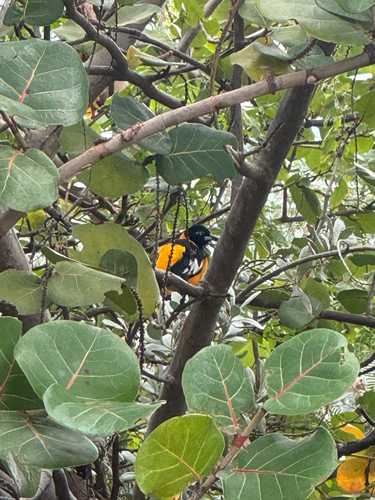 Venezuelan TroupialIcterus icterusVenezuelan troupials are fairly large in size, with a long tail and a bulky bill.
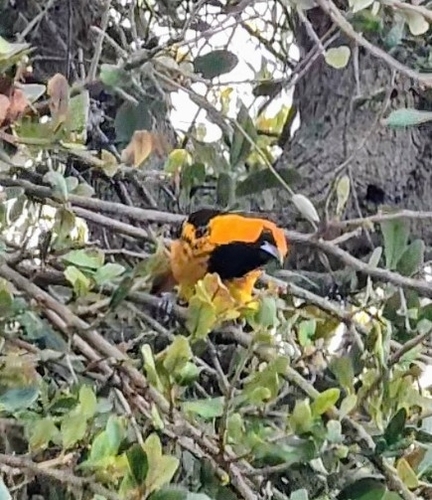 Spot-breasted OrioleIcterus pectoralisThe spot-breasted oriole is about 21 cm (8.3 in) long.
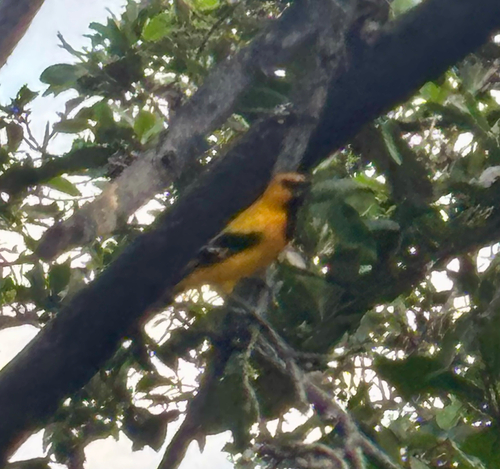 Yellow OrioleIcterus nigrogularisThe yellow oriole is 20 to 21 cm (7.9 to 8.3 in) long and weighs about 38 g (1.3 oz).
Side by side: Black-cowled Oriole vs Yellow Oriole · Black-cowled Oriole vs Venezuelan Troupial · Black-cowled Oriole vs Spot-breasted Oriole
Learn the Black-cowled Oriole in the BeakBrain App
Photo and call practice. Coming soon to iPhone and Android.
Play today's Daily BirdEvery photo and recording on this page is credited to its author under the licence shown. Spotted a problem with this page, or have a better photo? Contribute.