Learn what every symbol on the card means.Full credits and sources at beakbrain.com/symbols
 WoodlandDomed nestSmall · 40 g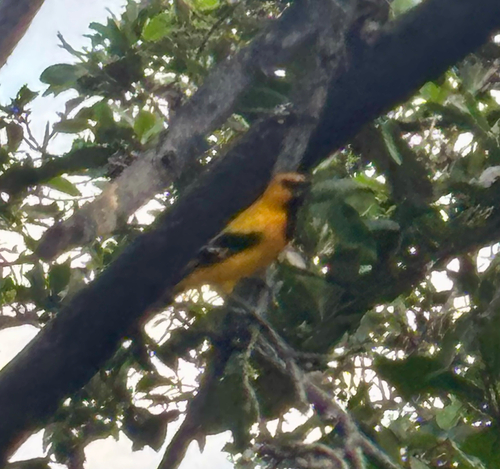


What the Yellow Oriole sounds like

ID tip
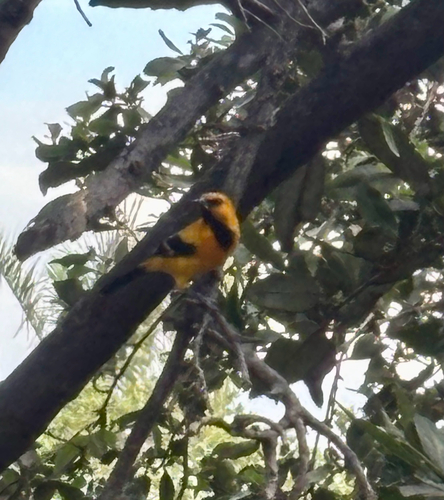
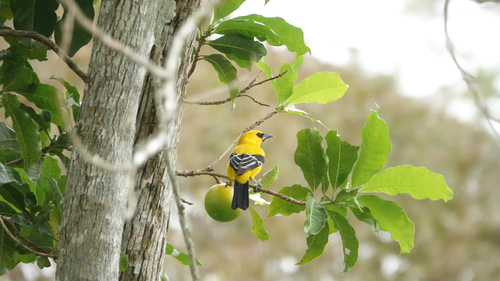
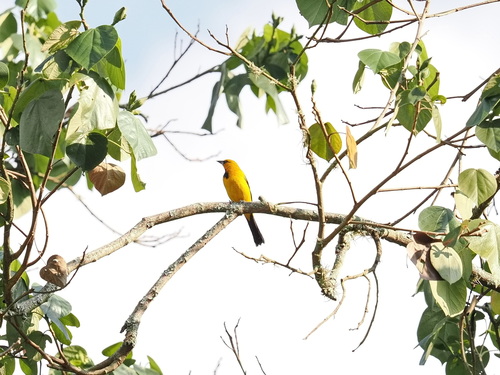
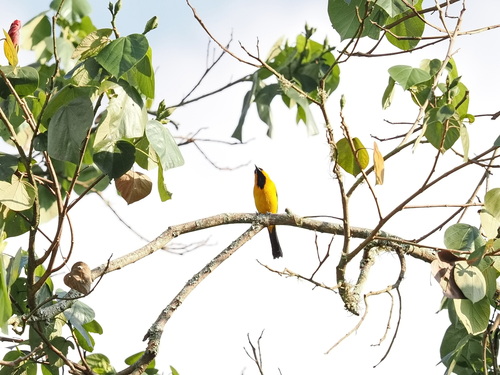
The yellow oriole is 20 to 21 cm (7.9 to 8.3 in) long and weighs about 38 g (1.3 oz). Adult males of the nominate subspecies I. n. nigrogularis are mostly bright yellow though somewhat paler on the belly. They have black lores, a black "mask", and a black "bib" from the chin to the upper breast. Their wings are mostly black with white edges on the flight feathers, yellow lesser and median coverts, and white tips on the greater coverts, tertials, and primaries. The last show as a white patch on the folded wing. Their tail is black with small white tips on the outer two pairs of feathers. Voice: The yellow oriole's song is "a detached of short musical phrases, tur-a-leet, tur-sweet, tuur...tweet, tweet and so on". It's dawn song adds "harsh and high-pitched notes". One call is "a rather sharp ka-chek over and over".
Text from Wikipedia, licensed CC BY-SA 4.0.
When to see the Yellow Oriole
One bar for each month, and every month is filled: this bird is recorded here in all twelve. The wide bar is May, the month with the most records.
Where to see the Yellow Oriole
The map shades 10 countries with regular records. Everything unshaded has no records. Countries are listed below the map.
About the Yellow Oriole
The yellow oriole is a passerine bird in the family Icteridae, the oropendolas, New World orioles, and New World blackbirds. It is found in Aruba, Bonaire, Brazil, Colombia, Curaçao, French Guiana, Guyana, Suriname, Trinidad, and Venezuela.
Text adapted from Wikipedia, licensed CC BY-SA 4.0.
Easily confused with
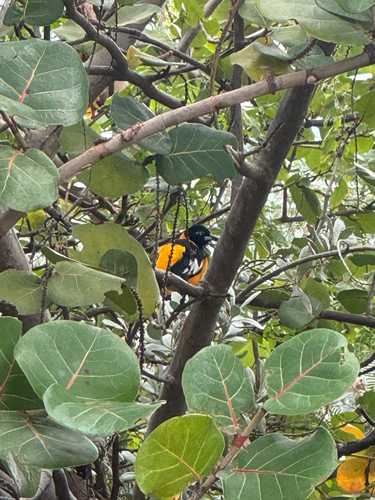 Venezuelan TroupialIcterus icterusVenezuelan troupials are fairly large in size, with a long tail and a bulky bill.
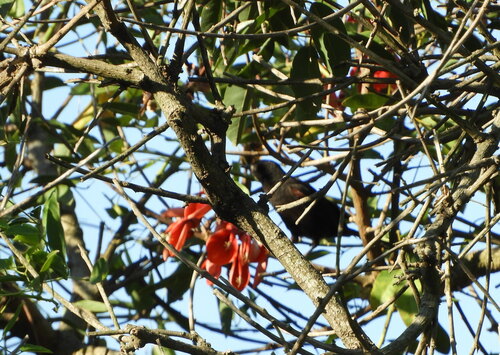 Epaulet OrioleIcterus cayanensisThe epaulet oriole is about 22 cm (8.7 in) long.
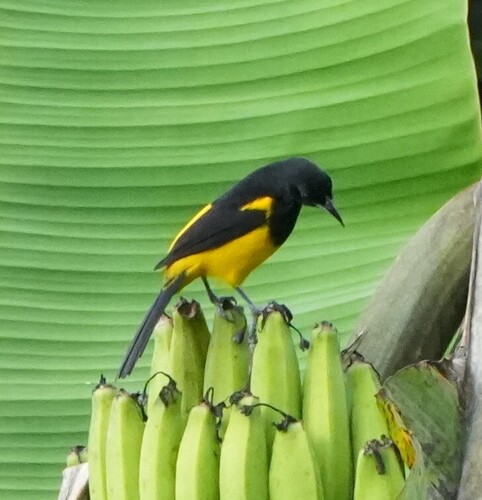 Black-cowled OrioleIcterus prosthemelasThe black-cowled oriole is a medium-sized passerine, ranging in length from 18.5 to 21 cm (7.3 to 8.3 in).
Side by side: Epaulet Oriole vs Yellow Oriole · Austral Blackbird vs Yellow Oriole · Venezuelan Troupial vs Yellow Oriole · Black-cowled Oriole vs Yellow Oriole
Learn the Yellow Oriole in the BeakBrain App
Photo and call practice. Coming soon to iPhone and Android.
Play today's Daily BirdEvery photo and recording on this page is credited to its author under the licence shown. Spotted a problem with this page, or have a better photo? Contribute.