Learn what every symbol on the card means.Full credits and sources at beakbrain.com/symbols
 WetlandPlatform nestSmall · 40 g


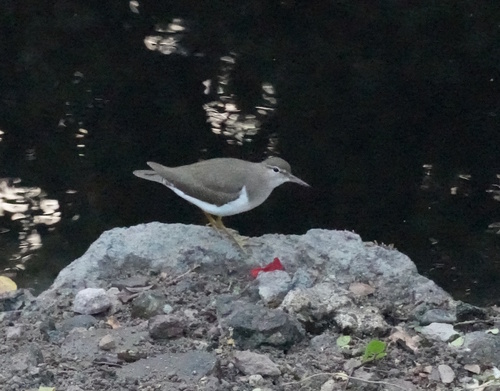

What the Spotted Sandpiper sounds like


ID tip
Adults have short yellowish legs and an orange bill with a dark tip. The body is brown on top and white underneath with black spots. These spots vary in degree over the course of spotted sandpipers' lives, becoming especially prevalent around the breeding season. The overall health of spotted sandpipers may be suggested by the "spottiness" of an individual. Generally, females with more "spottiness" were healthier than those who did not have as many spots. The condition of males based on the amount of spots they exhibit is yet to be determined.
Text from Wikipedia, licensed CC BY-SA 4.0.
When to see the Spotted Sandpiper
One bar for each month. Filled bars are the 8 months with records; pale bars are months with none. The wide bar is May, the month with the most records.
Where to see the Spotted Sandpiper
The map shades 63 countries with regular records, and 9 more in a lighter tone where the bird turns up only as a stray. Everything unshaded has no records. Countries are listed below the map.
Recorded as a rare visitor in France, Belgium, Netherlands, Denmark, Austria, Morocco, Falkland Islands, Czechia, Estonia.
About the Spotted Sandpiper
The spotted sandpiper is a small shorebird. Together with its sister species the common sandpiper, it makes up the genus Actitis. They replace each other geographically; stray birds may settle down with breeders of the other species and hybridize.
Text adapted from Wikipedia, licensed CC BY-SA 4.0.
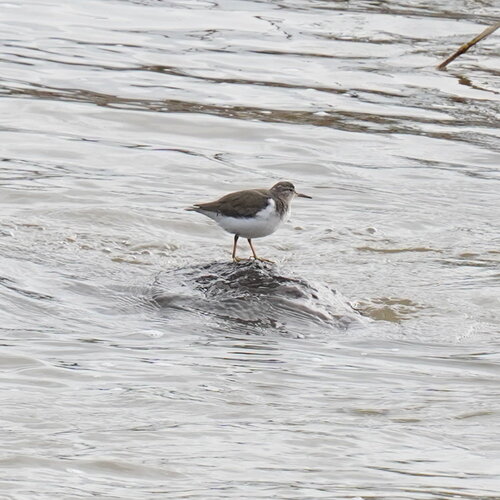
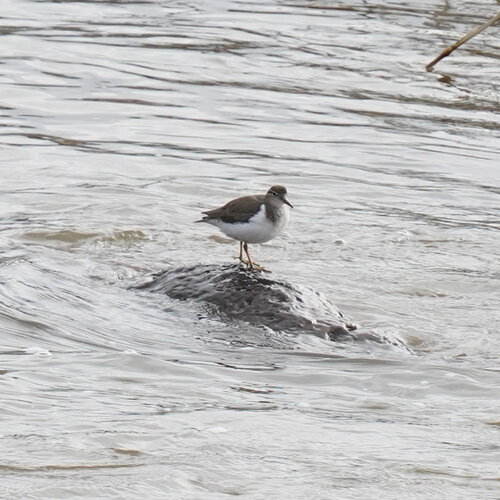
Easily confused with

Side by side: Common Sandpiper vs Spotted Sandpiper
Learn the Spotted Sandpiper in the BeakBrain App
Photo and call practice. Coming soon to iPhone and Android.
Play today's Daily BirdEvery photo and recording on this page is credited to its author under the licence shown. Spotted a problem with this page, or have a better photo? Contribute.