Learn what every symbol on the card means.Full credits and sources at beakbrain.com/symbols
 WoodlandCup nestTiny · 6 g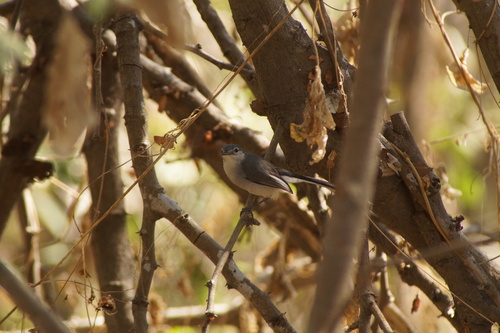
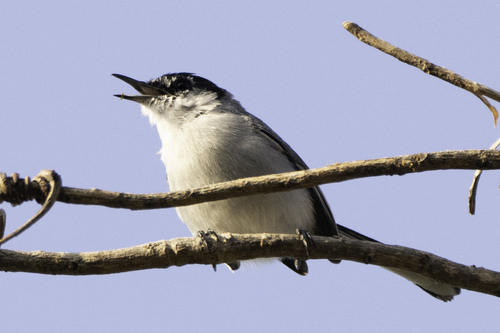
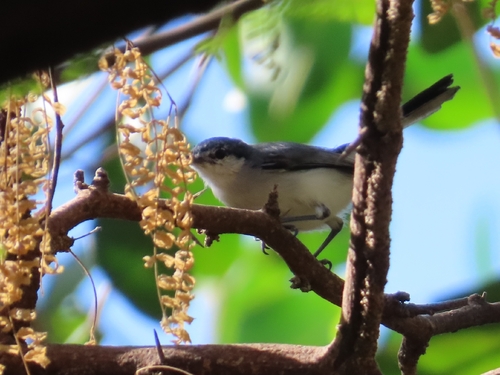
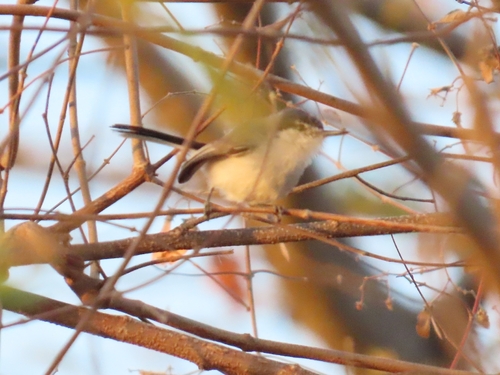


What the White-lored Gnatcatcher sounds like

ID tip
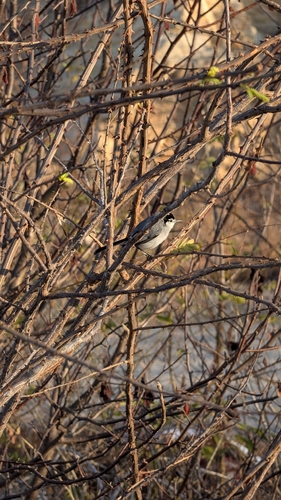
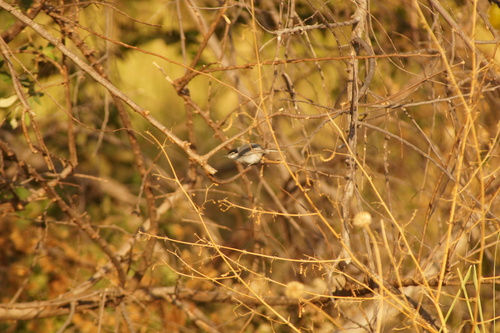
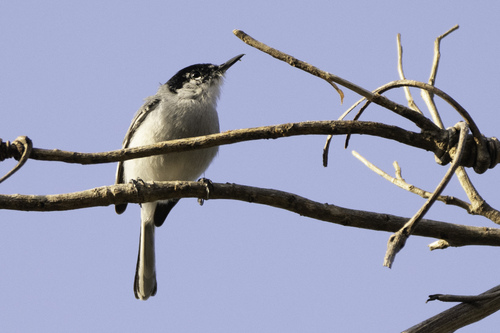
The white-lored gnatcatcher is 11 to 12 cm (4.3 to 4.7 in) long and weighs 6 to 9 g (0.21 to 0.32 oz). The nominate male in breeding plumage has a black cap down to the eyes and including the nape. The rest of the upperparts are bluish gray. The tail is black with white outermost feathers. The throat is white becoming pale bluish gray on the breast and flanks. The female has a dark gray cap and the eponymous white lores and supercilium. The juvenile is similar to the female but has browner upperparts. The male P. a. vanrossemi has a larger black cap and longer wings and tail than the nominate. Voice: The white-lored gnatcatcher has two songs, a "simple" and a "complex" . It also has a variety of calls, for which see Xeno-canto below.
Text from Wikipedia, licensed CC BY-SA 4.0.
When to see the White-lored Gnatcatcher
One bar for each month. Filled bars are the 11 months with records; pale bars are months with none. The wide bar is March, the month with the most records.
Where to see the White-lored Gnatcatcher
The map shades 6 countries with regular records. Everything unshaded has no records. Countries are listed below the map.
About the White-lored Gnatcatcher
The white-lored gnatcatcher is a species of bird in the family Polioptilidae. It is found in Costa Rica, El Salvador, Guatemala, Honduras, Mexico, and Nicaragua.
Text adapted from Wikipedia, licensed CC BY-SA 4.0.
Easily confused with
 Black-capped GnatcatcherPolioptila nigricepsThe black-capped gnatcatcher is 10 to 12 cm (3.9 to 4.7 in) long and weighs 5 to 8 g (0.18 to 0.28 oz).
 California GnatcatcherPolioptila californicaThe male California gnatcatcher is dusky gray overall, distinguished only by its black crown and thin black beak.
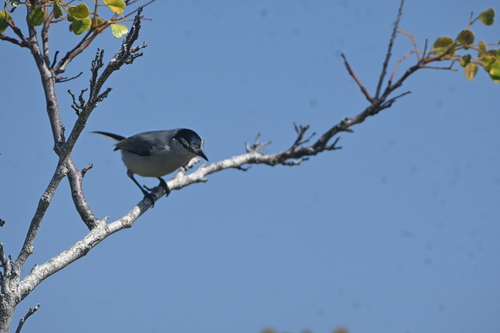 Yucatan GnatcatcherPolioptila albiventrisThe Yucatan gnatcatcher is 10 to 12 cm (3.9 to 4.7 in) long.
Side by side: Masked Gnatcatcher vs White-lored Gnatcatcher · California Gnatcatcher vs White-lored Gnatcatcher · Black-capped Gnatcatcher vs White-lored Gnatcatcher · White-lored Gnatcatcher vs Yucatan Gnatcatcher
Learn the White-lored Gnatcatcher in the BeakBrain App
Photo and call practice. Coming soon to iPhone and Android.
Play today's Daily BirdEvery photo and recording on this page is credited to its author under the licence shown. Spotted a problem with this page, or have a better photo? Contribute.