Learn what every symbol on the card means.Full credits and sources at beakbrain.com/symbols
 ForestCup nestSmall · 42 g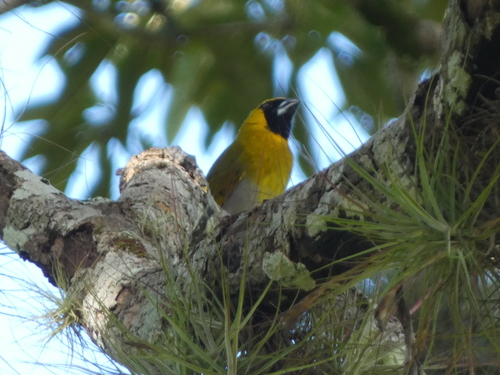
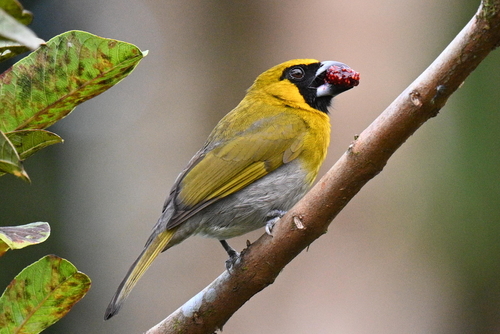
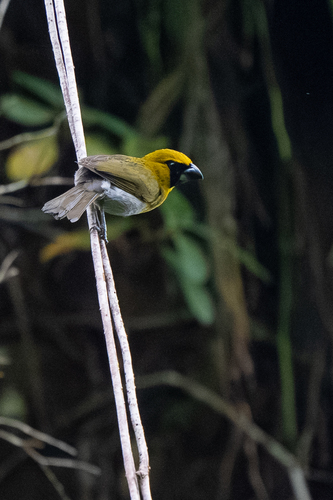
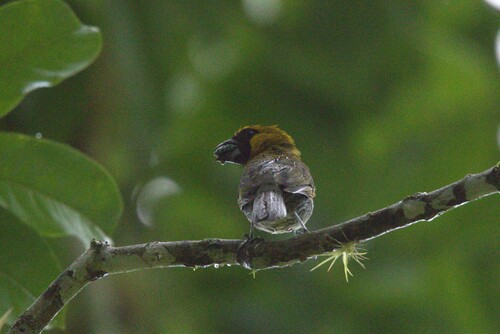
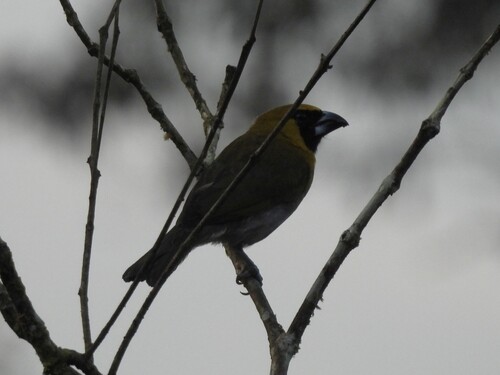
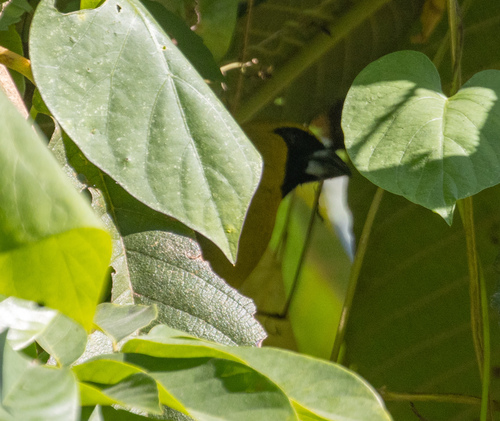

ID tip
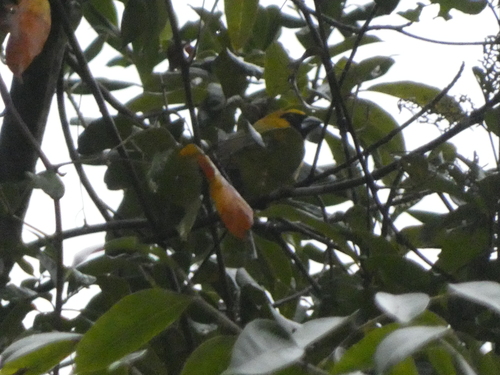
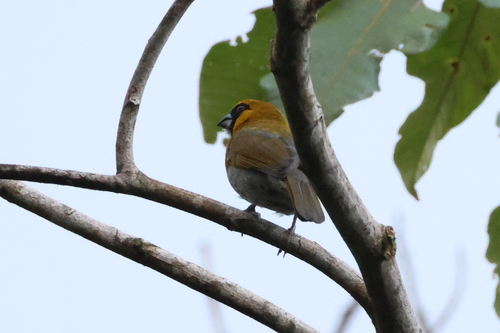
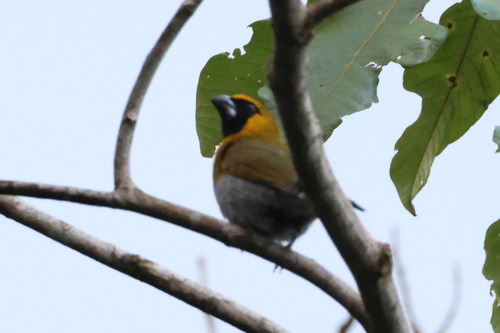
The adult black-faced grosbeak is 16.5 cm long, weighs 36 g, and has a heavy, mainly black, bill. It has a black face, yellow head, neck and breast, and olive back, wings and tail. The rump and belly are grey. Immatures are duller and have duskier face markings. The vocalisations include sharp chip or tweet calls, buzzes and whistles, and the song is a musical whistled cher chi weet, cher chir weet, cher chi chuweet.
Text from Wikipedia, licensed CC BY-SA 4.0.
When to see the Black-faced Grosbeak
One bar for each month. Filled bars are the 11 months with records; pale bars are months with none. The wide bar is March, the month with the most records.
Where to see the Black-faced Grosbeak
The map shades 7 countries with regular records. Everything unshaded has no records. Countries are listed below the map.
About the Black-faced Grosbeak
The black-faced grosbeak is a large seed-eating bird in the cardinal family (Cardinalidae), which is a resident breeding species from south-eastern Mexico to eastern Panama.
Text adapted from Wikipedia, licensed CC BY-SA 4.0.
Easily confused with
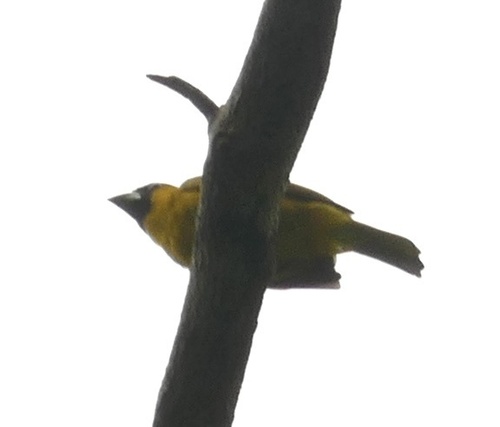
Side by side: Black-faced Grosbeak vs Blue Bunting
Learn the Black-faced Grosbeak in the BeakBrain App
Photo and call practice. Coming soon to iPhone and Android.
Play today's Daily BirdEvery photo and recording on this page is credited to its author under the licence shown. Spotted a problem with this page, or have a better photo? Contribute.