Learn what every symbol on the card means.Full credits and sources at beakbrain.com/symbols
 ForestPlatform nestMedium · 269 g


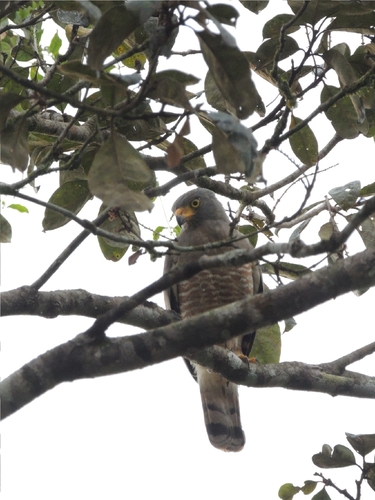
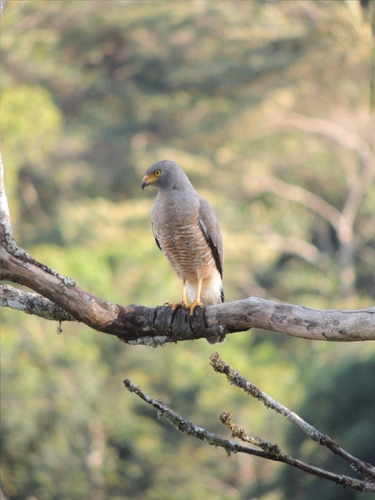
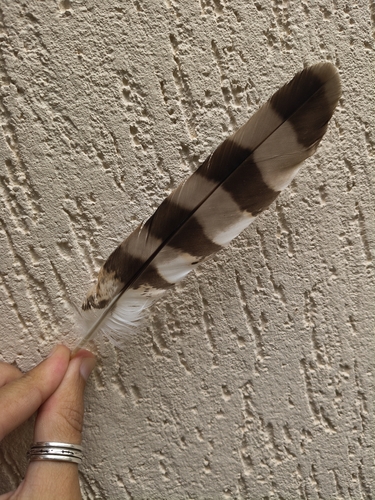
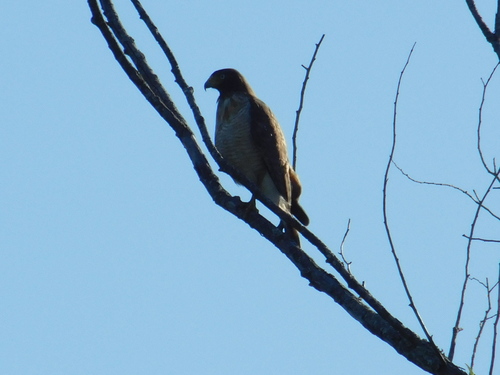
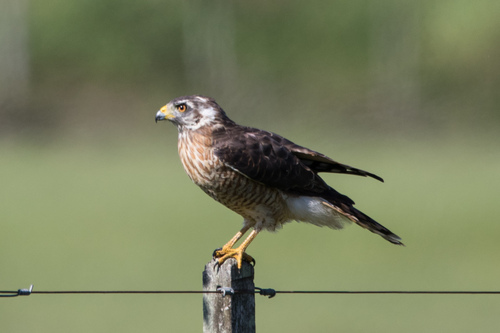
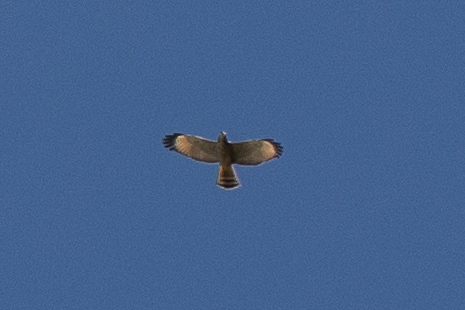
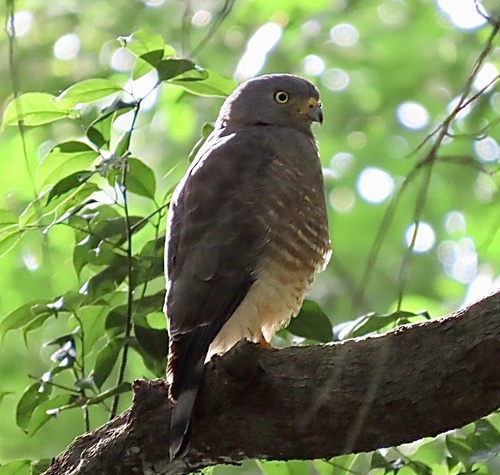
What the Roadside Hawk sounds like


ID tip
The roadside hawk is 31–41 cm (12–16 in) long and weighs 250–300 g (8.8–10.6 oz). Males are about 20% smaller than females, but otherwise the sexes are similar. In most subspecies, the lower breast and underparts are barred brown and white, and the tail has four or five grey bars. Twelve subspecies are usually recognised and there is significant plumage variation between these. Depending on the subspecies involved, the roadside hawk is mainly brown or grey. It is fairly common to observe a touch of rufous (i.e., a light reddish-brown) on the bird's wings, especially when seen in flight.
Text from Wikipedia, licensed CC BY-SA 4.0.
When to see the Roadside Hawk
One bar for each month, and every month is filled: this bird is recorded here in all twelve. The wide bar is October, the month with the most records.
Where to see the Roadside Hawk
The map shades 21 countries with regular records, and 2 more in a lighter tone where the bird turns up only as a stray. Everything unshaded has no records. Countries are listed below the map.
Recorded as a rare visitor in United States, Chile.
About the Roadside Hawk
The roadside hawk is a relatively small bird of prey found in the Americas. This vocal species is often the most common raptor in its range. It has many subspecies and is now usually placed in the monotypic genus Rupornis instead of Buteo.
Text adapted from Wikipedia, licensed CC BY-SA 4.0.
Easily confused with
 Rough-legged BuzzardButeo lagopusThis fairly large raptorial species is 46–68 cm (18–27 in) with wingspan ranging from 120 to 153 cm (47 to 60 in).
 Broad-winged HawkButeo platypterusThe broad-winged hawk is a relatively small Buteo, with a body size from 32 to 44 cm (13 to 17 in) in length and weighing 265 to 560 g (9.3 to 19.8 oz).
 Swainson's HawkButeo swainsoniSwainson's hawk is a raptor and a medium-sized member of the genus Buteo.
Side by side: Roadside Hawk vs Rough-legged Buzzard · Broad-winged Hawk vs Roadside Hawk · Roadside Hawk vs Swainson's Hawk
Learn the Roadside Hawk in the BeakBrain App
Photo and call practice. Coming soon to iPhone and Android.
Play today's Daily BirdEvery photo and recording on this page is credited to its author under the licence shown. Spotted a problem with this page, or have a better photo? Contribute.