Learn what every symbol on the card means.Full credits and sources at beakbrain.com/symbols
 ForestCup nestMedium · 70 g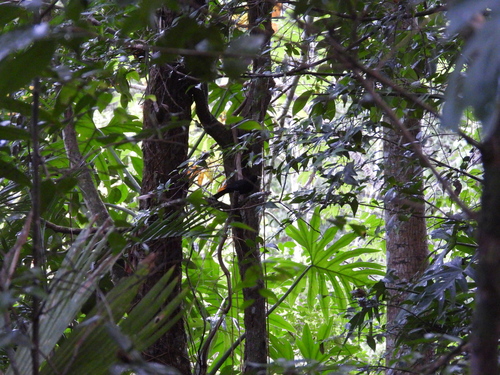
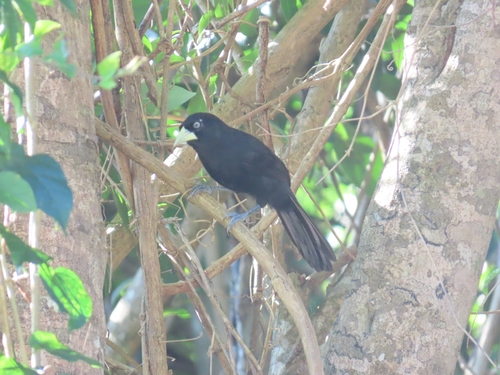
What the Yellow-billed Cacique sounds like


ID tip
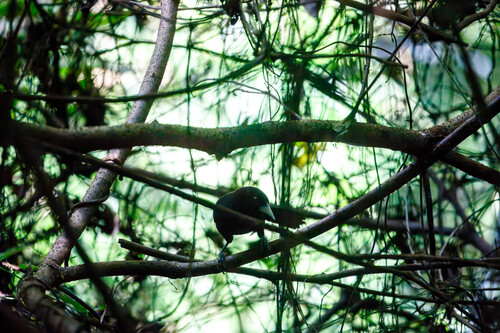
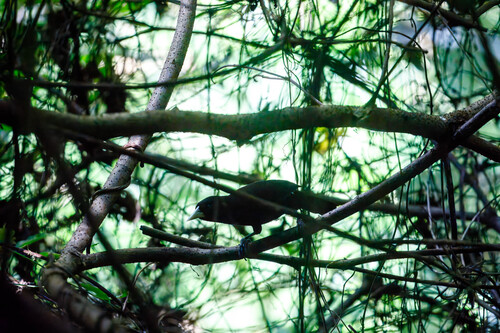
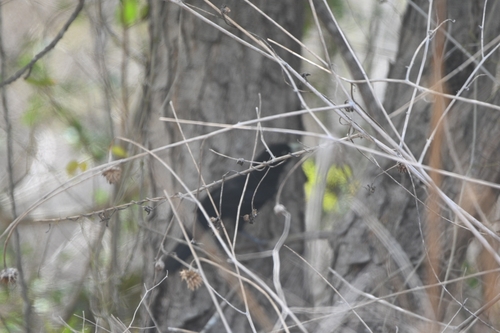
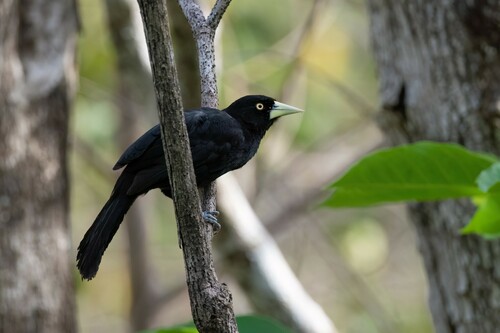
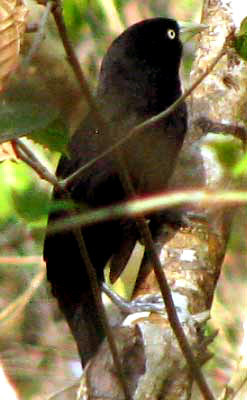
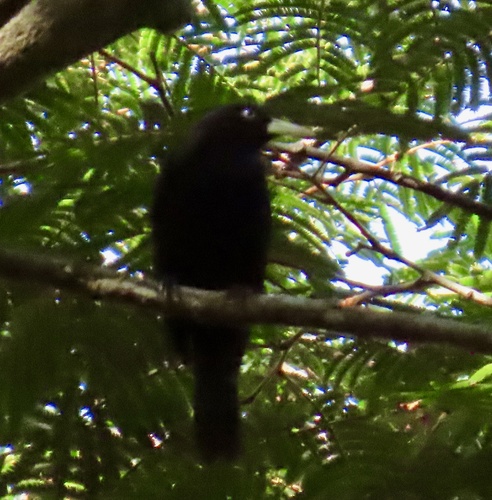
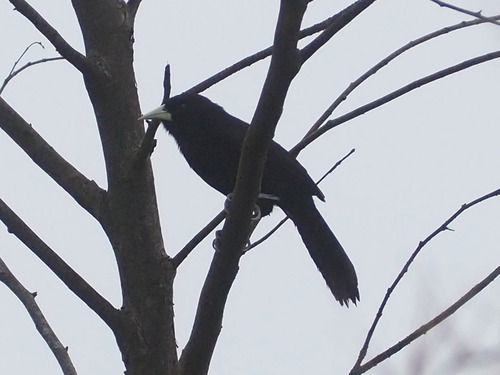
Yellow-billed cacique males are about 21.5 cm (8.5 in) and females about 20.5 cm (8.1 in) long. Males of subspecies A. h. holosericeus and A. h. flavirostris weigh an average of 69 g (2.4 oz) and females 53 g (1.9 oz). Males of subspecies A. h. australis weigh an average of 50 g (1.8 oz) and females 47 g (1.7 oz). Adult males of all three subspecies are entirely black and females are a slightly slaty black. Both sexes have a pale yellow iris and gray legs and feet. Juveniles are duller than adults and have a dark iris. All subspecies have a long bill whose tip is chisel-shaped. Voice: Pairs of yellow-billed caciques duet. Males sing "a loud Teeer-purr'weeuur!-Teeer-purr'weeuur-Teeer-purr'weeuur-Teeer-purr'weeuur..." and females reply with a "long down-slurred whistle, followed by a harsh nasal chatter". Their call is "a husky, burry scolding". In the western lowlands of Ecuador males sing "a series of loud ringing whistled notes, e.g. pee!-pee!-peeo-peeo-peeo...".
Text from Wikipedia, licensed CC BY-SA 4.0.
When to see the Yellow-billed Cacique
One bar for each month, and every month is filled: this bird is recorded here in all twelve. The wide bar is March, the month with the most records.
Where to see the Yellow-billed Cacique
The map shades 13 countries with regular records. Everything unshaded has no records. Countries are listed below the map.
About the Yellow-billed Cacique
The yellow-billed cacique is a species of bird in the family Icteridae. It is found in Mexico, every Central American country, Bolivia, Colombia, Ecuador, Peru, and Venezuela.
Text adapted from Wikipedia, licensed CC BY-SA 4.0.
Easily confused with
 Yellow-winged BlackbirdAgelasticus thiliusMale yellow-winged blackbirds average 17.9 cm (7.0 in) long.
 Scarlet-rumped CaciqueCacicus uropygialisThe scarlet-rumped cacique is sexually dimorphic like many Icteridae, though it mainly concerns size in this species.
 Giant CowbirdMolothrus oryzivorusThe male giant cowbird is 34 cm (13 in) long, weighs 174–242 g (6.1–8.5 oz) and is iridescent black, with a long tail, long bill, small head, and a neck ruff which is expanded in display.
Side by side: Yellow-billed Cacique vs Yellow-winged Blackbird · Giant Cowbird vs Yellow-billed Cacique · Scarlet-rumped Cacique vs Yellow-billed Cacique
Learn the Yellow-billed Cacique in the BeakBrain App
Photo and call practice. Coming soon to iPhone and Android.
Play today's Daily BirdEvery photo and recording on this page is credited to its author under the licence shown. Spotted a problem with this page, or have a better photo? Contribute.