Learn what every symbol on the card means.Full credits and sources at beakbrain.com/symbols
 ForestCavity nestMedium · 266 g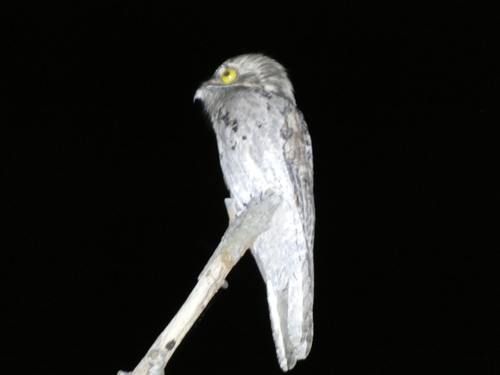
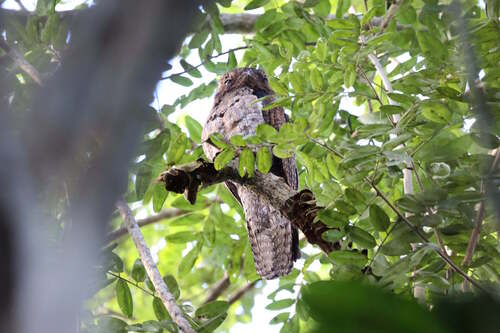
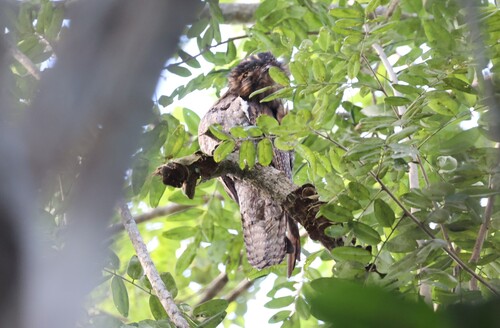
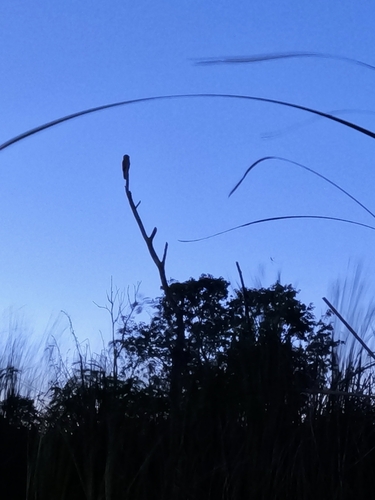


ID tip
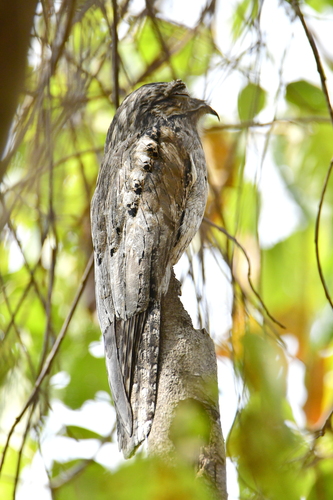
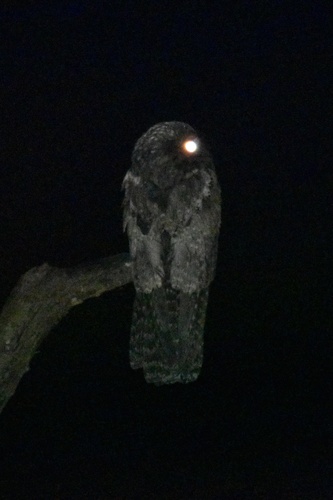
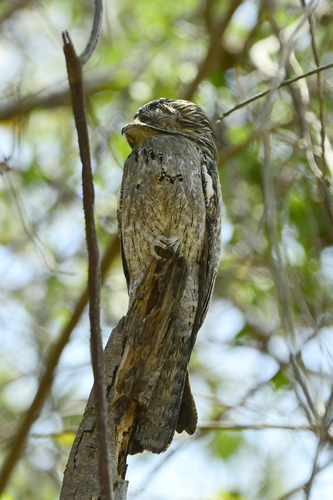
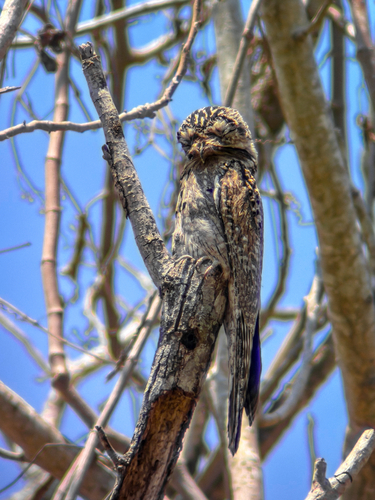
It is a fairly large bird with a length of 38–46 centimetres. It has a long tail, long pointed wings, large head, very short legs and a small bill with a large gape. It is most commonly seen perched motionless in an upright position on branches or posts. The plumage is grey-brown with an intricate pattern of black, grey and cream markings. The cheeks are pale with a dark malar stripe below them. The large eye has a yellow iris which can shine red in light at night. The bird's calls are hoarse and guttural.
Text from Wikipedia, licensed CC BY-SA 4.0.
When to see the Northern Potoo
One bar for each month. Filled bars are the 9 months with records; pale bars are months with none. The wide bar is March, the month with the most records.
Where to see the Northern Potoo
The map shades 9 countries with regular records, and 1 more in a lighter tone where the bird turns up only as a stray. Everything unshaded has no records. Countries are listed below the map.
Recorded as a rare visitor in Peru.
About the Northern Potoo
The northern potoo is a nocturnal bird belonging to the potoo family, Nyctibiidae. It is found from Mexico south to Costa Rica, and on the islands of Jamaica and Hispaniola. It was formerly classified as a subspecies of the common potoo but is now usually treated as a separate species based on differences in vocalizations.
Text adapted from Wikipedia, licensed CC BY-SA 4.0.
Easily confused with
 Long-tailed PotooNyctibius aethereusThe long-tailed potoo is 42 to 58 cm (17 to 23 in) long and weighs 280 to 447 g (9.9 to 15.8 oz).
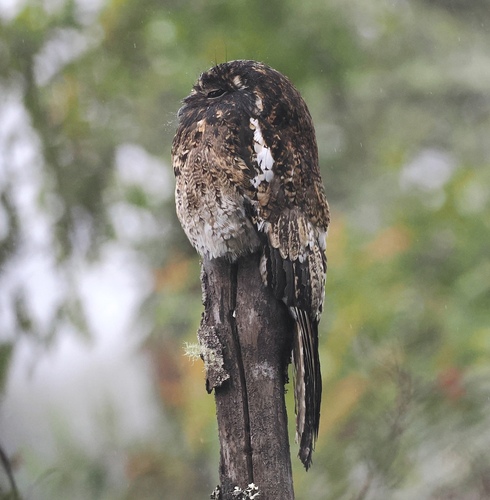 Andean PotooNyctibius maculosusThe Andean potoo is 34 to 40.5 cm (13 to 16 in) long.
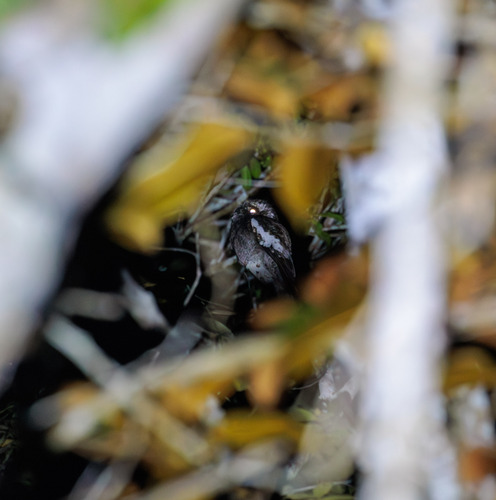 White-winged PotooNyctibius leucopterusThe white-winged potoo has two forms that differ significantly in size but are almost identical otherwise.
Side by side: Common Potoo vs Northern Potoo · Great Potoo vs Northern Potoo
Learn the Northern Potoo in the BeakBrain App
Photo and call practice. Coming soon to iPhone and Android.
Play today's Daily BirdEvery photo and recording on this page is credited to its author under the licence shown. Spotted a problem with this page, or have a better photo? Contribute.