Learn what every symbol on the card means.Full credits and sources at beakbrain.com/symbols
 ForestDomed nestTiny · 10 g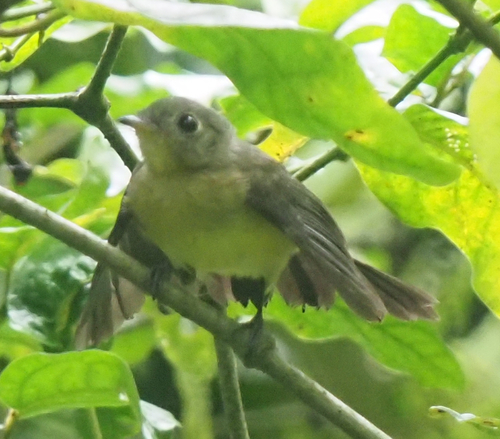
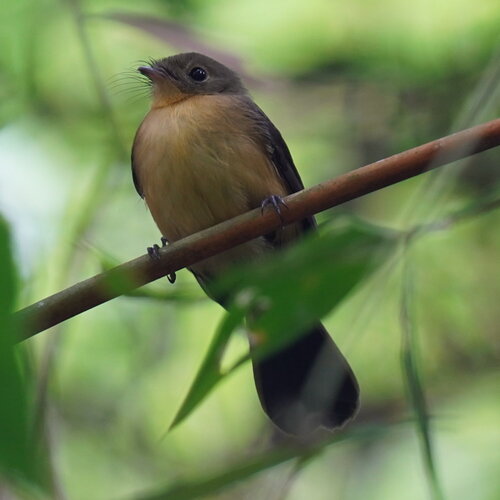
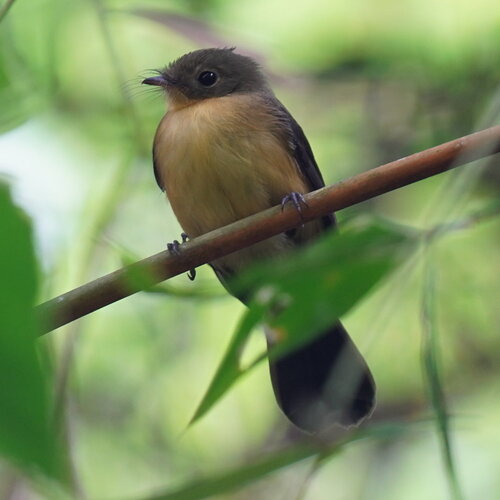

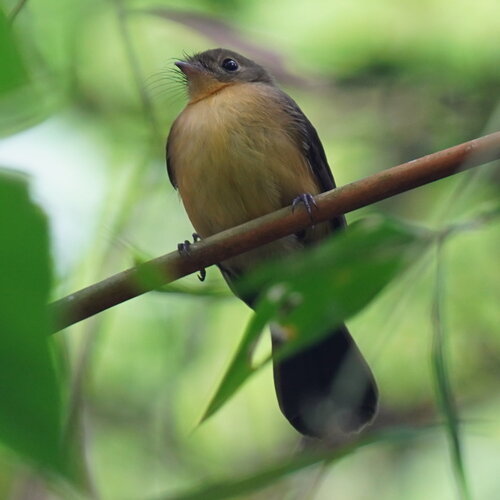
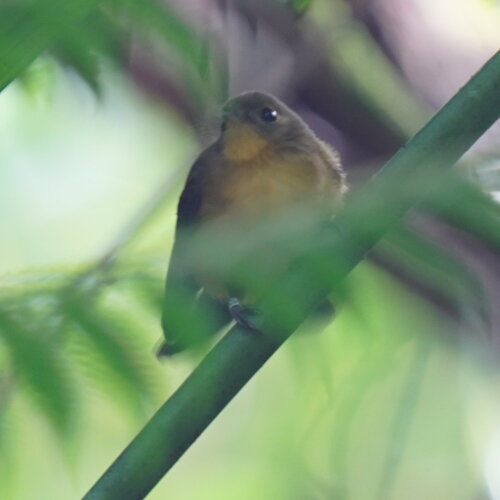
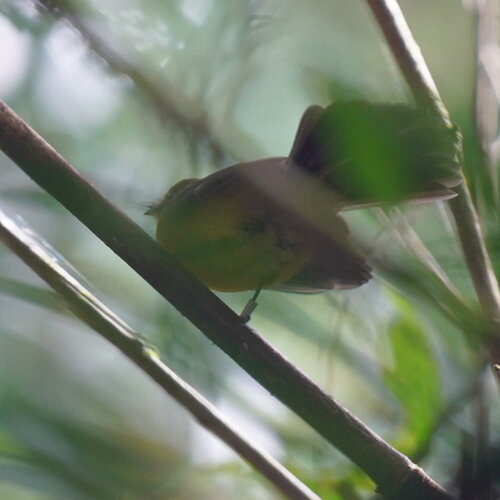
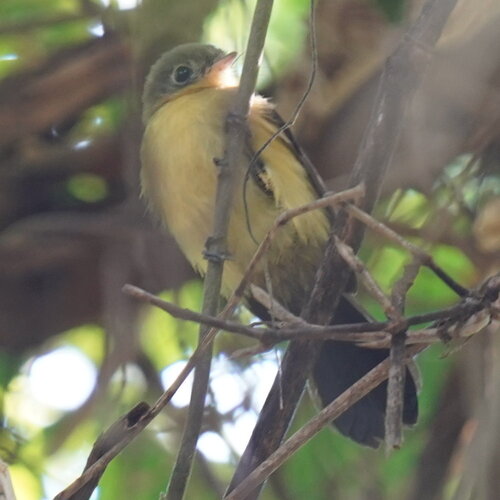
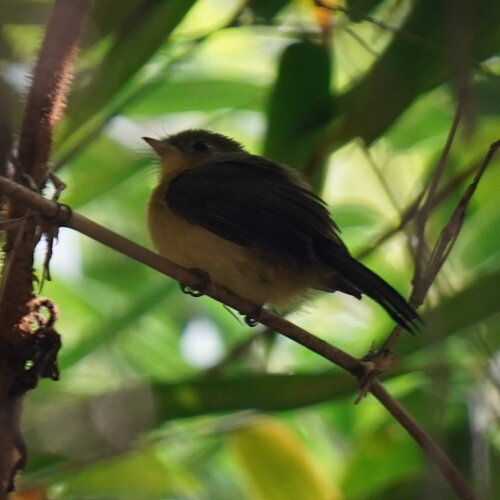
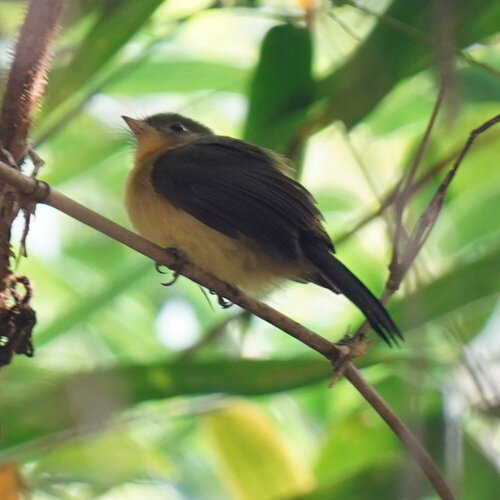
ID tip
The black-tailed myiobius closely resembles the whiskered myiobius (M. barbatus) and the sulphur-rumped myiobius (M. sulphureipygius) in appearance, with olive upper parts and a yellow rump. The underparts differ in being buff rather than tawny or greyish-olive, but birds living in eastern Brazil tend to have yellowish or yellowish-buff underparts. Another distinguishing feature is the location in which the bird is seen.
Text from Wikipedia, licensed CC BY-SA 4.0.
When to see the Black-tailed Myiobius
One bar for each month, and every month is filled: this bird is recorded here in all twelve. The wide bar is March, the month with the most records.
Where to see the Black-tailed Myiobius
The map shades 7 countries with regular records. Everything unshaded has no records. Countries are listed below the map.
About the Black-tailed Myiobius
The black-tailed myiobius or black-tailed flycatcher is a species of passerine bird in the family Onychorhynchidae. It was previously placed in family Tyrannidae or Tityridae. Black-tailed flycatchers are found in Brazil, Colombia, Costa Rica, Ecuador, Panama, Peru, and Venezuela. Their natural habitats are subtropical or tropical moist lowland forests and heavily degraded former forest. They are usually found alone or in pairs, but may join flocks of several species.
Text adapted from Wikipedia, licensed CC BY-SA 4.0.
Easily confused with
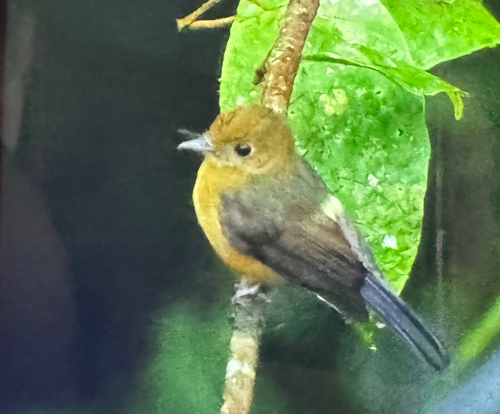 Tawny-breasted MyiobiusMyiobius villosusThe tawny-breasted myiobius grows to a length of about 14 cm (5.5 in).
 Sulphur-rumped MyiobiusMyiobius sulphureipygiusThe sulphur-rumped myiobius or sulphur-rumped flycatcher is a species of passerine bird in the family Onychorhynchidae.
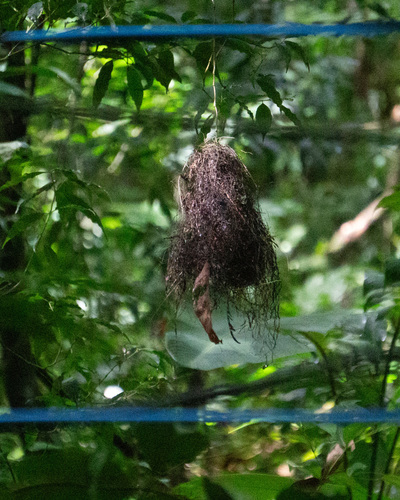 Whiskered MyiobiusMyiobius barbatusThe whiskered myiobius is very similar in appearance to several closely related species.
Side by side: Black-tailed Myiobius vs Whiskered Myiobius · Black-tailed Myiobius vs Ruddy-tailed Flycatcher · Black-tailed Myiobius vs Tawny-breasted Myiobius
Learn the Black-tailed Myiobius in the BeakBrain App
Photo and call practice. Coming soon to iPhone and Android.
Play today's Daily BirdEvery photo and recording on this page is credited to its author under the licence shown. Spotted a problem with this page, or have a better photo? Contribute.