Learn what every symbol on the card means.Full credits and sources at beakbrain.com/symbols
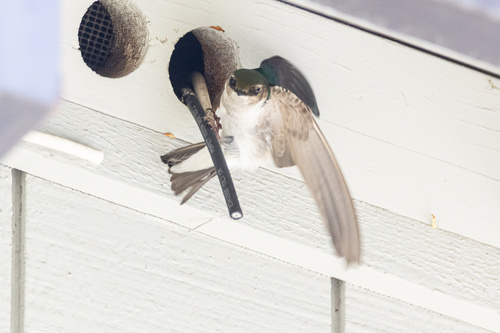
 ForestCavity nestTiny · 14 g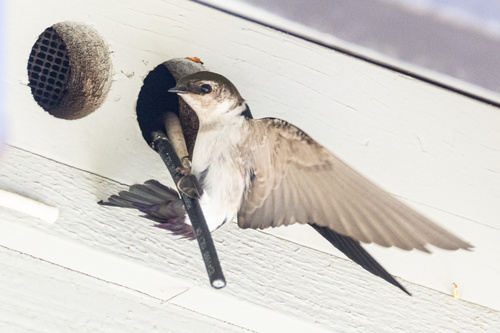


What the Violet-green Swallow sounds like

ID tip
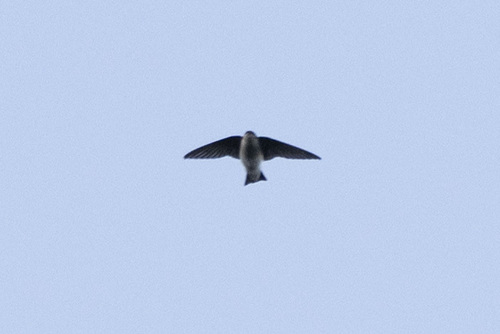
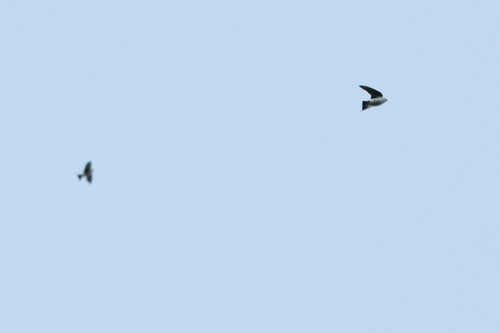
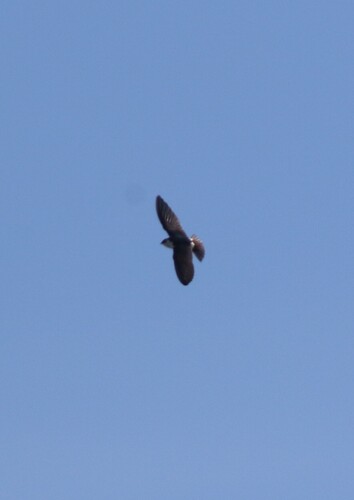
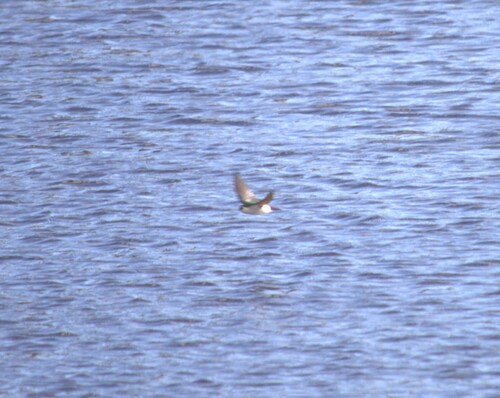
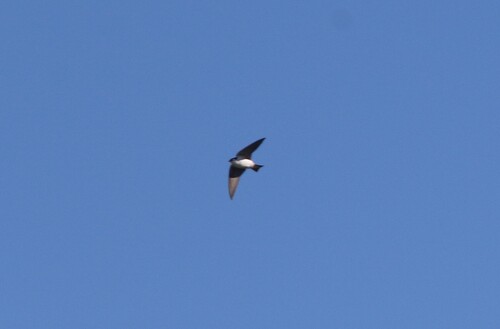
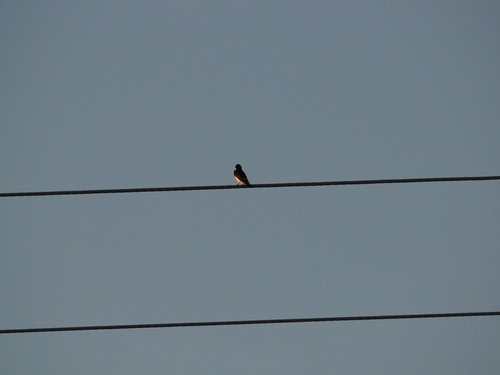
The distinct body form of swallows distinguishes them from other passerine birds. Their long pointed wings and slim, streamlined body evolved to catch insects while in flight; the violet-green swallow is no exception. With an average body length of 12–13 cm (4.7–5.1 in), the violet-green swallow is slightly shorter and appears more compact in flight compared to some other members of the genus Tachycineta. The violet-green swallow most closely resembles the tree swallow T. Voice: There are many knowledge gaps surrounding the vocalization behaviour of violet-green swallows. These gaps include vocalizations made during early development, alarm calls and the daily pattern of calls. The little information available suggests two main classes of vocalizations, the chee-chee calls and twitter calls.
Text from Wikipedia, licensed CC BY-SA 4.0.
When to see the Violet-green Swallow
One bar for each month. Filled bars are the 7 months with records; pale bars are months with none. The wide bar is May, the month with the most records.
Where to see the Violet-green Swallow
The map shades 10 countries with regular records. Everything unshaded has no records. Countries are listed below the map.
About the Violet-green Swallow
The violet-green swallow is a small North American passerine bird in the swallow family. These aerial insectivores are distributed along the west coast from Alaska to Mexico, extending as far east as Montana and Texas. With an appearance very similar to the tree swallow, these individuals can be identified by the white rump side-patches that appear to separate their green back and purple tail. Violet-green swallows are secondary cavity nesters, found in a number of habitats including deciduous and coniferous forest. In addition to nesting in tree holes within these habitats, they are also widely observed nesting in the cracks of large cliffs.
Text adapted from Wikipedia, licensed CC BY-SA 4.0.
Easily confused with
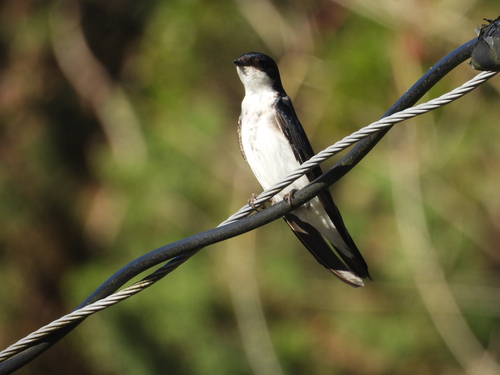 Chilean SwallowTachycineta leucopygaThe Chilean swallow is about 13 centimetres (5.1 in) in length and weighs 15–20 grams (0.53–0.71 oz).
 Mangrove SwallowTachycineta albilineaA relatively small swallow, the mangrove swallow is 11–12 centimetres (4.3–4.7 in) long and weighs about 14 grams (0.5 oz).
 White-winged SwallowTachycineta albiventerThe adult white-winged swallow is 14 cm (5.5 in) long and weighs 14–17 g (0.49–0.60 oz).
Side by side: Tree Swallow vs Violet-green Swallow · Chilean Swallow vs Violet-green Swallow · Mangrove Swallow vs Violet-green Swallow · Violet-green Swallow vs White-winged Swallow
Learn the Violet-green Swallow in the BeakBrain App
Photo and call practice. Coming soon to iPhone and Android.
Play today's Daily BirdEvery photo and recording on this page is credited to its author under the licence shown. Spotted a problem with this page, or have a better photo? Contribute.