Learn what every symbol on the card means.Full credits and sources at beakbrain.com/symbols
 ForestCavity nestSmall · 32 g
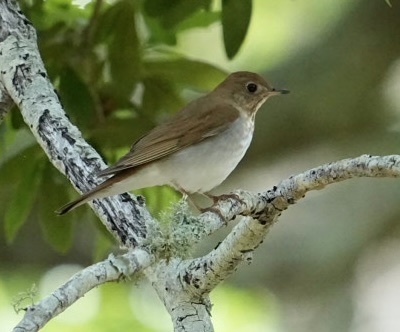
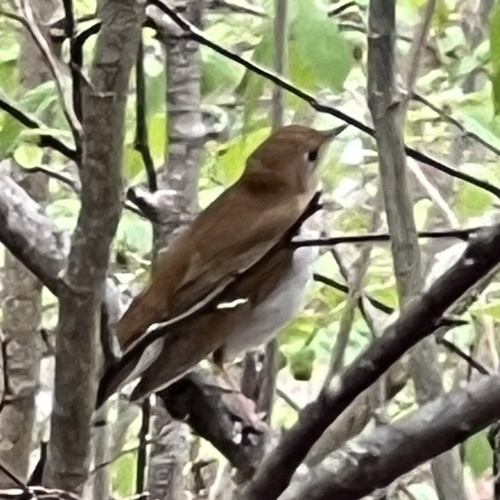
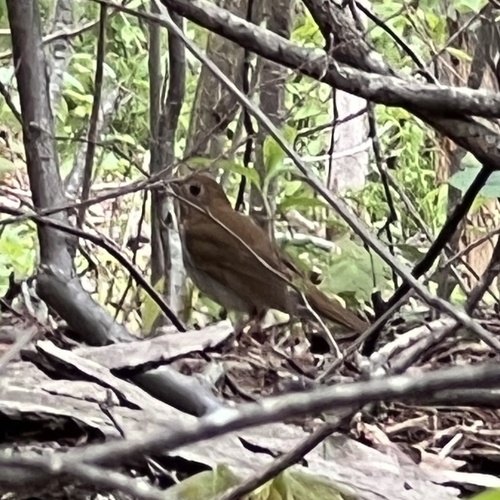


What the Veery sounds like


ID tip
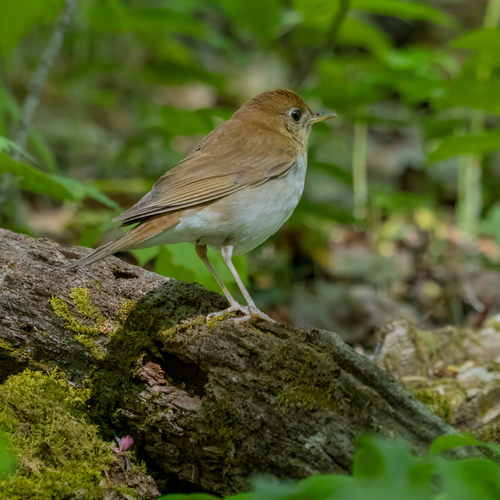
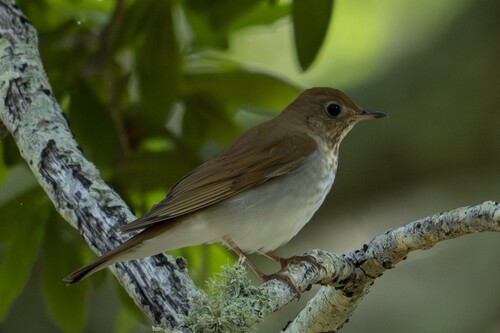
This species measures 16–19.5 cm (6.3–7.7 in) in length. Its mass is 26–39 g (0.92–1.38 oz), exceptionally up to 54 g (1.9 oz). The wingspan averages 28.5 cm (11.2 in). Each wing measures 8.9–10.4 cm (3.5–4.1 in), the bill measures 1.2–1.9 cm (0.47–0.75 in) and the tarsus is 2.7–3.25 cm (1.06–1.28 in). The veery shows the characteristic under-wing stripe of Catharus thrushes. Adults are mainly light brown on the upperparts. The underparts are white; the breast is light tawny with faint brownish spots. Veeries have pink legs and a poorly defined eye ring.
Text from Wikipedia, licensed CC BY-SA 4.0.
When to see the Veery
One bar for each month. Filled bars are the 4 months with records; pale bars are months with none. The wide bar is May, the month with the most records.
Where to see the Veery
The map shades 22 countries with regular records, and 9 more in a lighter tone where the bird turns up only as a stray. Everything unshaded has no records. Countries are listed below the map.
Recorded as a rare visitor in United Kingdom, Norway, Portugal, Peru, Aruba, Guyana, Puerto Rico, French Guiana, Jamaica.
About the Veery
The veery is a small North American thrush species, a member of a group of closely related and similar species in the genus Catharus, also including the gray-cheeked thrush, Bicknell's thrush, Swainson's thrush, and hermit thrush. Alternate names for this species include Wilson's thrush and tawny thrush. Up to six subspecies exist, which are grouped into the eastern veery, the western veery or willow thrush, and the Newfoundland veery.
Text adapted from Wikipedia, licensed CC BY-SA 4.0.
Easily confused with
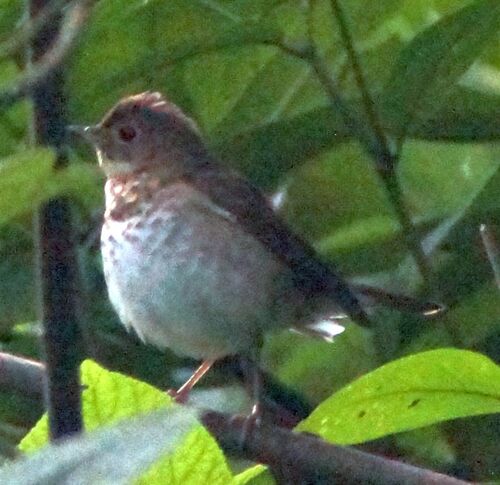 Swainson's ThrushCatharus ustulatusThis species is 16–20 cm (6.3–7.9 in) in length.
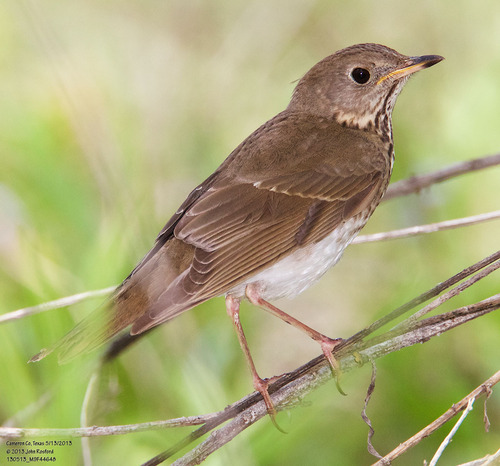 Grey-cheeked ThrushCatharus minimusThe gray-cheeked thrush is slightly larger than other Catharus thrushes, about 16 to 17 cm (6.7 in) in height and weighing between 26 and 30g.
 Orange-billed Nightingale-ThrushCatharus aurantiirostrisThe orange-billed nightingale-thrush is 15.5 to 17 cm (6.1 to 6.7 in) long and weighs 21 to 32 g (0.74 to 1.1 oz).
Side by side: Hermit Thrush vs Veery · Swainson's Thrush vs Veery · Grey-cheeked Thrush vs Veery · Orange-billed Nightingale-Thrush vs Veery
Learn the Veery in the BeakBrain App
Photo and call practice. Coming soon to iPhone and Android.
Play today's Daily BirdEvery photo and recording on this page is credited to its author under the licence shown. Spotted a problem with this page, or have a better photo? Contribute.