Learn what every symbol on the card means.Full credits and sources at beakbrain.com/symbols
 ForestCup nestTiny · 3 g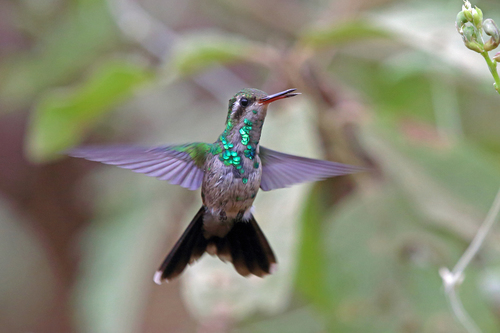
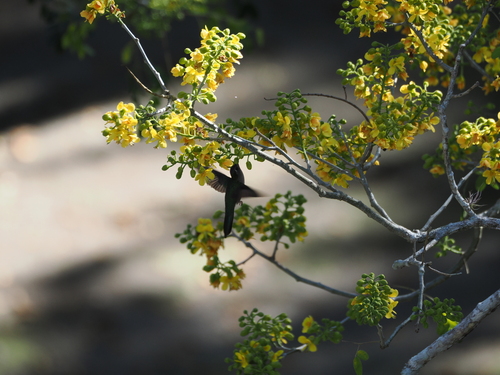
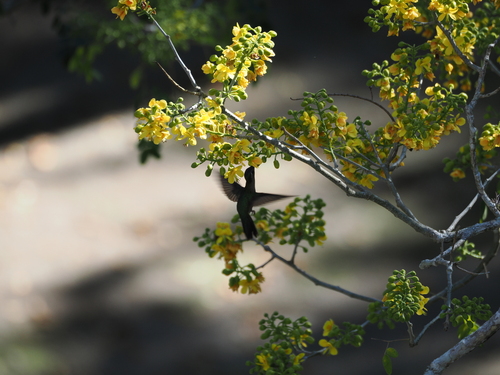
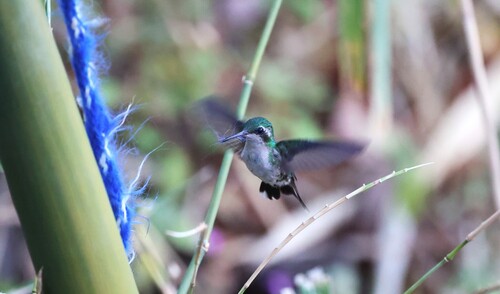
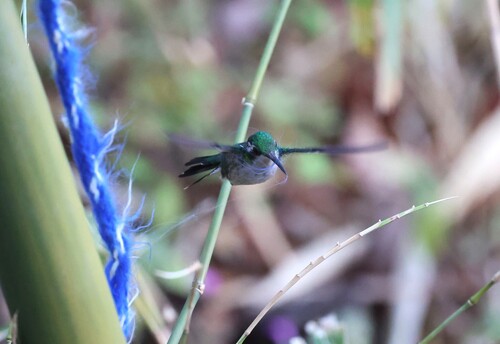


ID tip
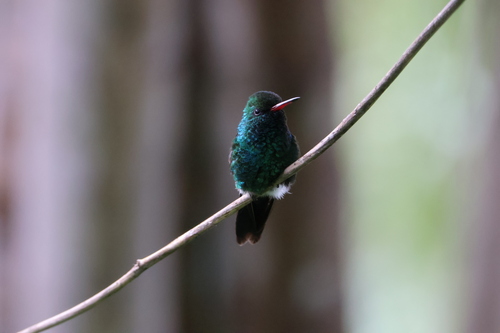
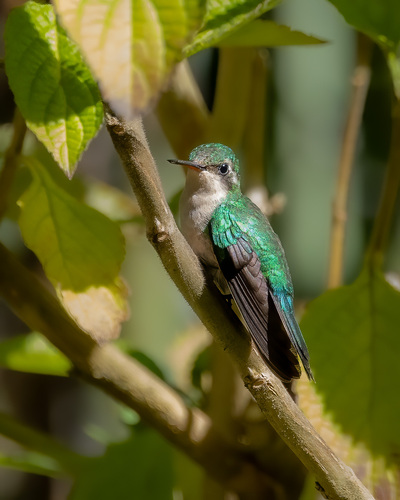
Male Canivet's emeralds are 7.8 to 9.3 cm (3.1 to 3.7 in) long and weigh 2.1 to 2.8 g (0.074 to 0.099 oz). Females are 7.5 to 8.6 cm (3.0 to 3.4 in) long and weigh about 2.3 g (0.081 oz). Males of the nominate subspecies have a red bill with a black tip. Their crown is bright golden to golden green and the rest of the upperparts a less brilliant golden green. Their underparts are brilliant golden green with white tibal tufts. The tail is long and forked, blue-black or black with a blue gloss, and the central two or three pairs of feathers have dark brownish gray tips. Voice: What is thought to be the Canivet's emerald song is "an endlessly repeated, characterless wiry tseee tseeree". Its call has been described as "a dry, scratchy chut or chit, sometimes run together into a soft, staccato chatter"
Text from Wikipedia, licensed CC BY-SA 4.0.
When to see the Canivet's Emerald
One bar for each month, and every month is filled: this bird is recorded here in all twelve. The wide bar is March, the month with the most records.
Where to see the Canivet's Emerald
The map shades 7 countries with regular records. Everything unshaded has no records. Countries are listed below the map.
About the Canivet's Emerald
Canivet's emerald is a species of hummingbird in the "emeralds", tribe Trochilini of subfamily Trochilinae. It is found in Belize, Costa Rica, El Salvador, Guatemala, Honduras, Mexico, and Nicaragua.
Text adapted from Wikipedia, licensed CC BY-SA 4.0.
Easily confused with
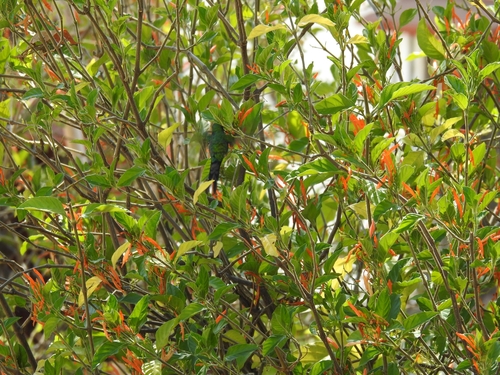 Golden-crowned EmeraldCynanthus auricepsThe golden-crowned emerald is 7.5 to 9.5 cm (3.0 to 3.7 in) long and weighs about 2.2 g (0.078 oz).
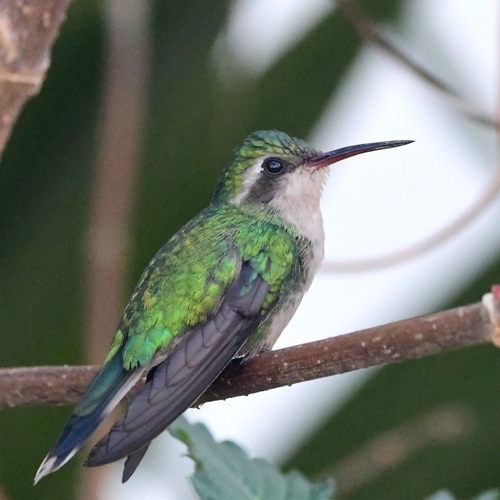 Cozumel EmeraldCynanthus forficatusMale Cozumel emeralds are 9 to 10.5 cm (3.5 to 4.1 in) long and females 8 to 9.1 cm (3.1 to 3.6 in).
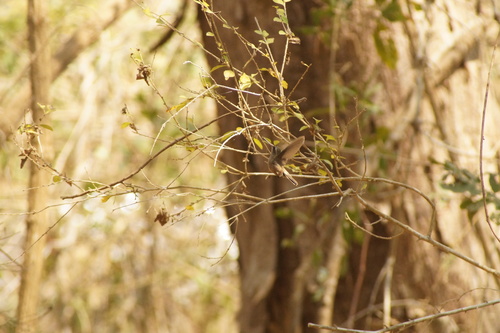 Turquoise-crowned HummingbirdCynanthus doubledayiThe Cornell Lab of Ornithology's Birds of the World does not describe the turquoise-crowned hummingbird separately from the broad-billed hummingbird.
Side by side: Broad-billed Hummingbird vs Canivet's Emerald · Canivet's Emerald vs Violet-headed Hummingbird · Canivet's Emerald vs Golden-crowned Emerald · Canivet's Emerald vs Cozumel Emerald · Canivet's Emerald vs Turquoise-crowned Hummingbird
Learn the Canivet's Emerald in the BeakBrain App
Photo and call practice. Coming soon to iPhone and Android.
Play today's Daily BirdEvery photo and recording on this page is credited to its author under the licence shown. Spotted a problem with this page, or have a better photo? Contribute.