Learn what every symbol on the card means.Full credits and sources at beakbrain.com/symbols
 UrbanCup nestTiny · 11 g


ID tip
The variable seedeater is a small, robust bird with a black conical bill. It is 10.5 cm (4.1 in) long and weighs 11 g (0.39 oz). There are four subspecies, which differ primarily in the plumage of the male: S. c. corvina – (P.L. Sclater, 1860): (nominate), found from southern Mexico and along the Caribbean slope from Belize south to Panama. Adult males are entirely black apart from a small white wing-speculum and white wing linings. S. c. hoffmannii – Cabanis, 1861: found on the Pacific slope of Costa Rica and Panama. Males resemble males S. c.
Text from Wikipedia, licensed CC BY-SA 4.0.
When to see the Variable Seedeater
One bar for each month, and every month is filled: this bird is recorded here in all twelve. The wide bar is March, the month with the most records.
Where to see the Variable Seedeater
The map shades 10 countries with regular records. Everything unshaded has no records. Countries are listed below the map.
About the Variable Seedeater
The variable seedeater is a passerine bird which breeds from southern Mexico through Central America to the Chocó of northwestern South America. The taxonomy is confusing, and it was formerly considered a subspecies of Sporophila americana. Even within the variable seedeater as presently defined, there are great variations in plumage.
Text adapted from Wikipedia, licensed CC BY-SA 4.0.
Easily confused with
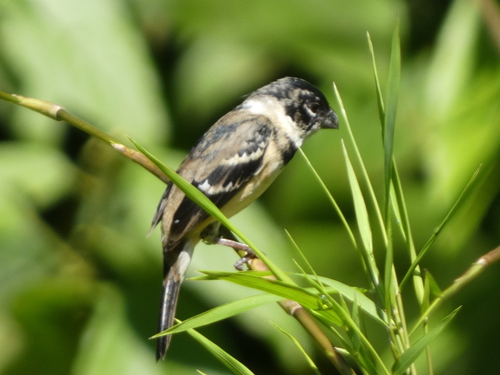 Morelet's SeedeaterSporophila morelletiMorelet's seedeater is a passerine bird in the typical seedeater genus Sporophila.
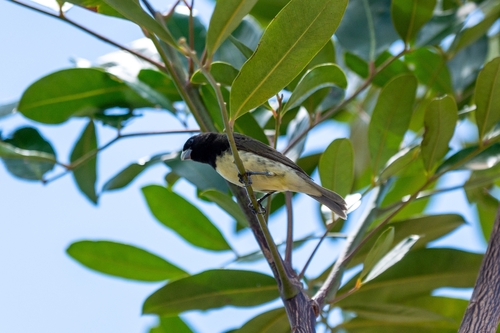 Yellow-bellied SeedeaterSporophila nigricollisThe yellow-bellied seedeater is a species of bird in the family Thraupidae, formerly placed with the New World sparrows in the Emberizidae.
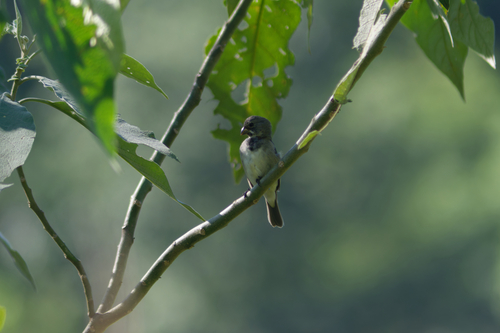 Double-collared SeedeaterSporophila caerulescensIt is a dimorphic species, with the male having a gray head and back, a black-collared throat, paired with a black band just below, across the upper whitish breast.
Side by side: Variable Seedeater vs Yellow-faced Grassquit · Double-collared Seedeater vs Variable Seedeater
Learn the Variable Seedeater in the BeakBrain App
Photo and call practice. Coming soon to iPhone and Android.
Play today's Daily BirdEvery photo and recording on this page is credited to its author under the licence shown. Spotted a problem with this page, or have a better photo? Contribute.