Learn what every symbol on the card means.Full credits and sources at beakbrain.com/symbols
 UrbanCavity nestTiny · 10 g


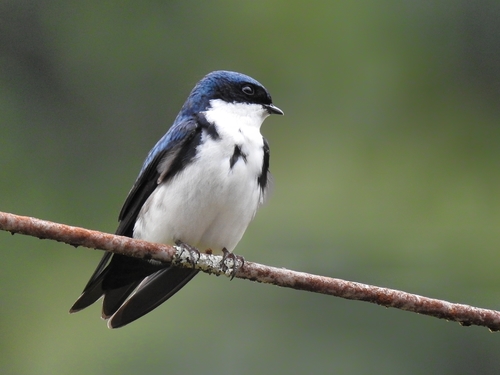
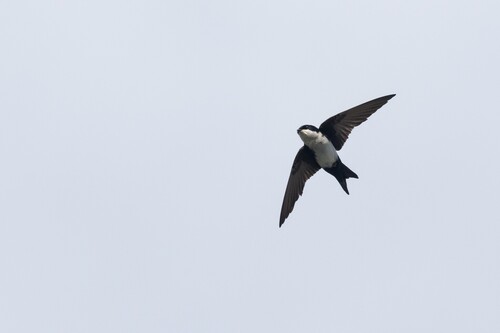
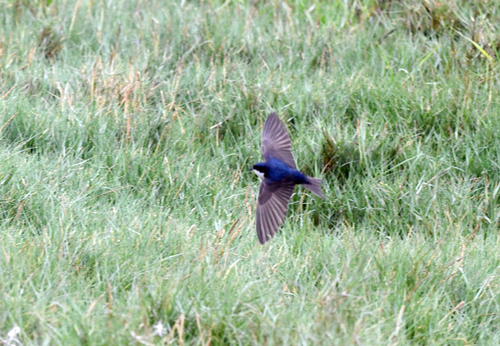
What the Blue-and-white Swallow sounds like


ID tip
The adult blue-and-white swallow averages 11–12 cm (4.3–4.7 in) long and weighs about 10 g (0.35 oz). It has dark blue upperparts and white underparts, and its underwings and the undersurface of its short forked tail are blackish. The juvenile is brown above, buff-tinted below, and has a less forked tail. The call is a buzzing dzzzhreeee. There are three subspecies. The nominate N. c. cyanoleuca occurs from Nicaragua and Trinidad south to northwestern Argentina, Paraguay and Uruguay. The migratory southern race N. c. patagonica is larger, 13.5 cm (5.
Text from Wikipedia, licensed CC BY-SA 4.0.
When to see the Blue-and-white Swallow
One bar for each month, and every month is filled: this bird is recorded here in all twelve. The wide bar is October, the month with the most records.
Where to see the Blue-and-white Swallow
The map shades 17 countries with regular records, and 1 more in a lighter tone where the bird turns up only as a stray. Everything unshaded has no records. Countries are listed below the map.
Recorded as a rare visitor in United States.
About the Blue-and-white Swallow
The blue-and-white swallow is a passerine bird that breeds from Nicaragua south throughout South America, except in the deserts and the Amazon Basin. The southern race is migratory, wintering as far north as Trinidad, where it is a regular visitor. The nominate northern race may have bred on that island.
Text adapted from Wikipedia, licensed CC BY-SA 4.0.
Easily confused with

Learn the Blue-and-white Swallow in the BeakBrain App
Photo and call practice. Coming soon to iPhone and Android.
Play today's Daily BirdEvery photo and recording on this page is credited to its author under the licence shown. Spotted a problem with this page, or have a better photo? Contribute.